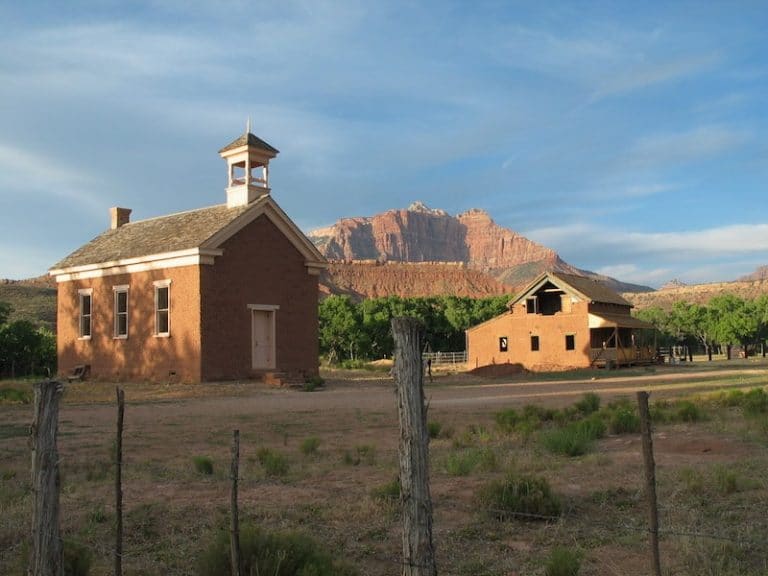
Covered in dust and aged by tragedy, there’s an old town situated outside of Zion National Park. Now a ghost town, Grafton was repeatedly abandoned by Mormon settlers because of its inhospitable environment. Illness, severe elements, and Indian attacks made the town lethal to most of its inhabitants.
In 1859, five families settled along the Virgin River in what would become the town of Wheeler. Together, the families planted crops, built structures, and practiced their Mormon faith in peace. With the rise of the Civil War, the families focused on planting cotton, and their efforts paid off. But it only took three short years for a flood to destroy a majority of the town, forcing the survivors to start over again.
Due to the tragic circumstances, the town’s inhabitants re-located their lives about a mile from their original homestead, thinking that the new town might be situated in a safer location.
Rebuilding their lives would allow the families to carry out God’s plan — to populate the region and spread the word. The resulting community became the town of Grafton.
Soon after, Grafton also flooded. According to Grafton Heritage, a resident of Virgin wrote, “The houses in old Grafton came floating down with the furniture, clothing and other property of the inhabitants, some of which was hauled out of the water, including three barrels of molasses.”
Brigham Young saw tremendous opportunity for the Mormon community in the South. He hoped that proper irrigation would lead to cotton production, and the town of Grafton attempted to fulfill this vision. Grafton was part of a large-scale operation that Young called his “Cotton Mission.”
According to the US census, Grafton had just 28 inhabitants in 1864. Settlers repeatedly struggled with irrigation systems because the sand would cave into them regularly, and farming efforts were continuously sabotaged by the harsh elements.
The Virgin River seemed to both give and take life. By 1890, most of Grafton’s inhabitants had abandoned the town in search of a safer home. The nearby town of Hurricane brought economic opportunity for struggling families when a canal was built, and the construction gave many Grafton families the perfect reason to relocate again.
When another devastating flood occurred in 1909, most of the remaining Grafton families sought refuge in safer towns, leaving just three families in the desolate town. By 1945, the town of Grafton was entirely abandoned again, leaving only ghosts to walk the streets.
Legend has it that Grafton’s cemetery is haunted. Visitors report hearing infants crying. Some have even seen a woman walking through the lonely cemetery. With more than 80 graves in a town with such a short history, it’s no wonder the empty structures seem ominous.
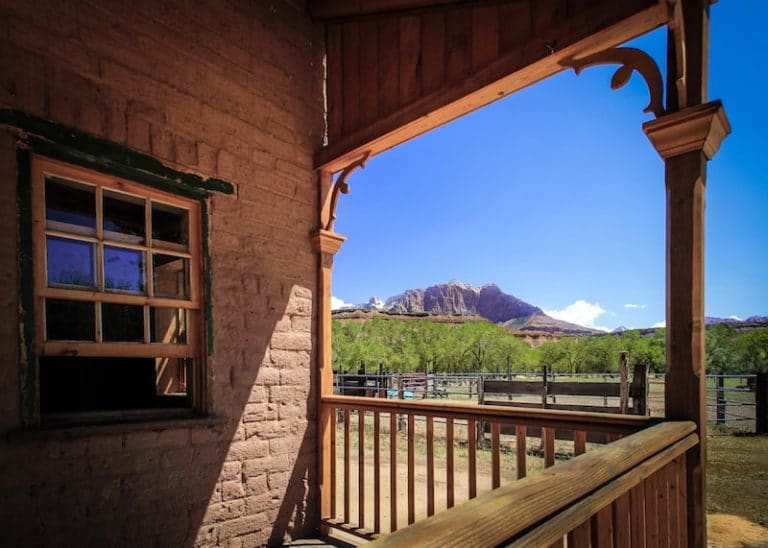
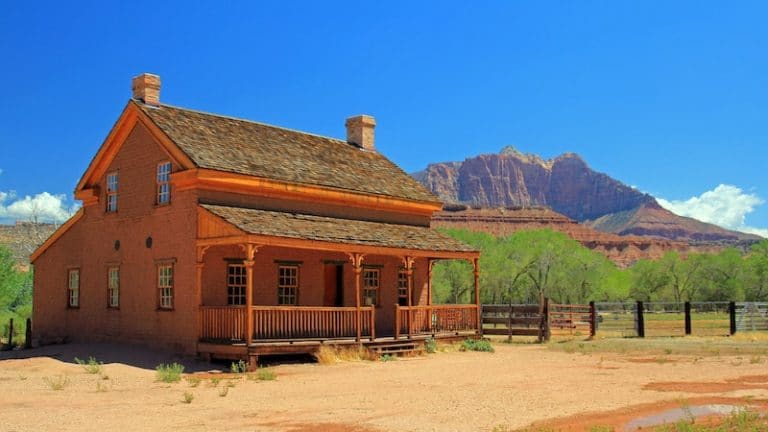
Known as “The most photographed ghost town in the west,” Grafton saw a revival when it served as a backdrop for several western movies, including Butch Cassidy and the Sundance Kid.
Some of Grafton’s structures still stand proud against the desert heat, looking tired and beaten by time and history, yet determined to stand, leaving visitors curious about the town’s troubled past.