Podcast

The End of History

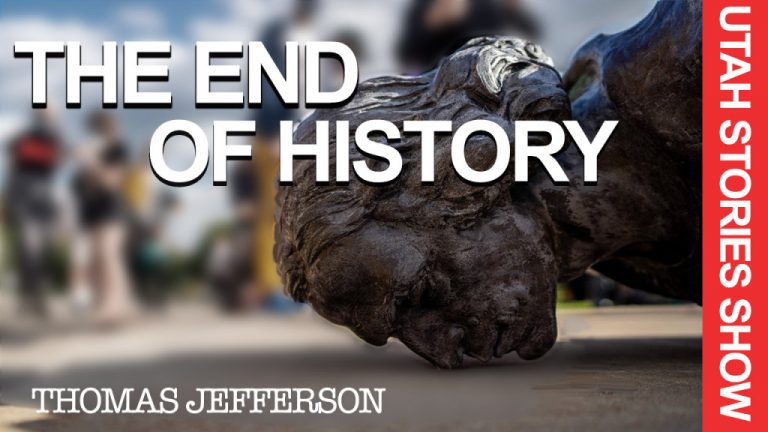
The New York Times is endorsing the actions of protestors tearing down statues of figures such as Thomas Jefferson and Abraham Lincoln. Will history now rewrite our founding fathers as racist white supremecists?

|


The New York Times is endorsing the actions of protestors tearing down statues of figures such as Thomas Jefferson and Abraham Lincoln. Will history now rewrite our founding fathers as racist white supremecists?

The same man who insisted be written in our Constitution that “All men are created equal.” and the same man who abolished slavery should now be forgotten. These are the ideas behind the 1619 project that the New York Times is now endorsing. That the United States was founded on racist principles is absurd, and it’s time we fight back at this ridiculous claim.

We also discuss an idea in a city outside of Dallas, Texas that shows promise in providing inner city food, jobs and much greater hope than any of the other ideas that are coming out of the current political storms. In these troubling times we call for sanity, better judgement and thoughtful discussion. See the article here.

Finally, at the end of the show we make a visit to Millcreek Canyon’s Church fork with dogs Joey and Scamps.

Subscribe to our weekly newsletter at UtahStories.com

FOR MORE UTAH STORIES PODCASTS GO HERE.



Join our newsletter.
Stay informed.


  • Left in a Box as a Baby: Trauma, Alcoholism, and Addiction

    A man abandoned as a baby builds a structured life in law enforcement, but unresolved trauma and alcoholism slowly begin to unravel it. His story raises a harder question about how change actually happens.


  • Cottonwood Heights Corruption Allegations: A Case That Never Reached a Courtroom

    A year ago, we here at Utah Stories recorded a podcast episode that we never published. We were revisiting corruption allegations from ten years ago. We decided not to publish the video, so it sat there on YouTube for nearly 12 months.

    Then somehow the video was published. How? We are not sure, but once it got out there, the comments came pouring in.

    Dozens of viewers, then hundreds, supported the video with their comments on our examination of allegations of police misconduct in Cottonwood Heights. The video recounts how the Police Department was reported by business owners as focusing enforcement on customers of the former Canyon Inn bar. These allegations did not result in a publicly documented, full investigation by Utah’s Justice Department nor the FBI (at least to our knowledge). So why rehash the past?

    We believe the story of The Canyon Inn (and other area business owners) vs. CHPD and Cottonwood Heights Mayor Kelvin Cullimore raises questions about what can happen when allegations surface and do not move forward through a formal legal process with state or federal oversight.

    In 2012, Cottonwood Heights business owners at the mouth of the canyons began publicly objecting to police activity whereby up to seven cruisers were pulling over 711 and Canyon Inn bar customers on their busiest evenings.

    According to those accounts, drivers leaving the bar were frequently pulled over by police and were given DUI tickets, sometimes even after passing a sobriety examination. The volume and concentration of those stops led residents and business owners to complain about the “heavy-handed treatment” of CHPD toward motorists, especially in and around the Canyon Inn and neighboring 711, and eventually the Porcupine Pub.

    Customers responded in predictable ways. Some chose not to return and avoid the area. Others went to different establishments. Over time, the owner of the Canyon Inn, Jim Stojack, stated that his revenue declined by 70% and that he believed police activity near his business was the main contributing factor.

    Utah Stories reported on these concerns by conducting interviews; gathering video documentation provided by those involved; and making public records requests. Through our GRAMA requests, we reviewed DUI citations issued by the Cottonwood Heights Police Department and examined how those cases were resolved in Holladay Justice Court. During that period, we observed a higher number based on our review of DUI cases dismissed in court due to lack of evidence compared to other jurisdictions. One DUI attorney, Tyler Ayers, went on record saying that CHPD was issuing a high volume of DUI citations that were later dismissed.

    That observation raised questions about how cases were being documented and prosecuted. It did not, on its own, establish intent or misconduct, but it became part of a broader set of concerns raised by multiple sources.

    Continue reading and support independent Utah journalism with a purchase of Utah Stories (Digital + Print) or 3 month free trial (Digital).


  • From LDS Mission to Heroin Addiction: A Utah Man’s Descent and Recovery

    More than 100,000 Americans died from drug overdoses in a single year. That number is often repeated, rarely absorbed, and almost never understood in a way that forces real reflection. Because addiction doesn’t usually look like chaos at the beginning.


  • The Reality of Meth Psychosis on Utah’s Streets

    On the streets of downtown Salt Lake City, psychosis has become part of the landscape.

    People scream at invisible enemies. Some believe they are prophets. Others wander through traffic carrying conversations with voices nobody else can hear. To passersby, it can look theatrical, bizarre, and absurd. But behind many of those episodes is a darker reality few people want to confront directly: methamphetamine-induced psychosis, prolonged sleep deprivation, trauma, addiction, and the slow destruction of a person’s ability to distinguish reality from delusion.