The Slippery Slope of Denying Businesses and Consumers Free Market Access
Utah needs to allow restaurants and bars to operate under the same conditions in which they allow big-box stores and state liquor stores to operate.
Nobody can dispute that the government measures regarding containment of the COVID-19 virus over the past month were completely necessary. Perhaps urban areas should have acted more quickly and prevented the spread — and certainly there are hot spots which require more attention.
But now that Utah has the availability to test up to 4,000 patients per day, but are only receiving 800 people per day to take tests, with 5% positive cases– It’s becoming clear we are getting very close to containment. This is very good news, but this isn’t the news the media wants to report. Because as one reader told me, to report how drastically different the reality is proving compared to models state leaders were operating under one month ago is “irresponsible reporting.”
I find it very interesting that we live in an age where it is “irresponsible” to report on the truth.
Utah State Epidemiologist Dr. Angela Dunn is telling residents to no longer wait for multiple symptoms but instead to visit a testing location if “any signature symptoms” are present. This is also good news because now medical professionals will be able to much more quickly identify and quarantine patients. What should be duly noted is that the spread of the Coronavirus, with a few exceptions, has been largely contained in Utah. Certainly, this could change if we reopen our economy too soon. But nobody is suggesting that.
Now, however is the time to allow restaurants and bars to allow customers the same standards by which the state allows grocery stores, big box stores and liquor stores to remain open.
- Limited customers allowed in space
- Hyper-vigilant sanitation
- All employees wearing masks
- Social distancing measures strictly enforced
- Daily checking of employees’ temperatures prior to their shifts
We all know the drill. Social distancing is working and I strongly argue that restaurants and bars are just as essentials to communities as State Liquor Stores.
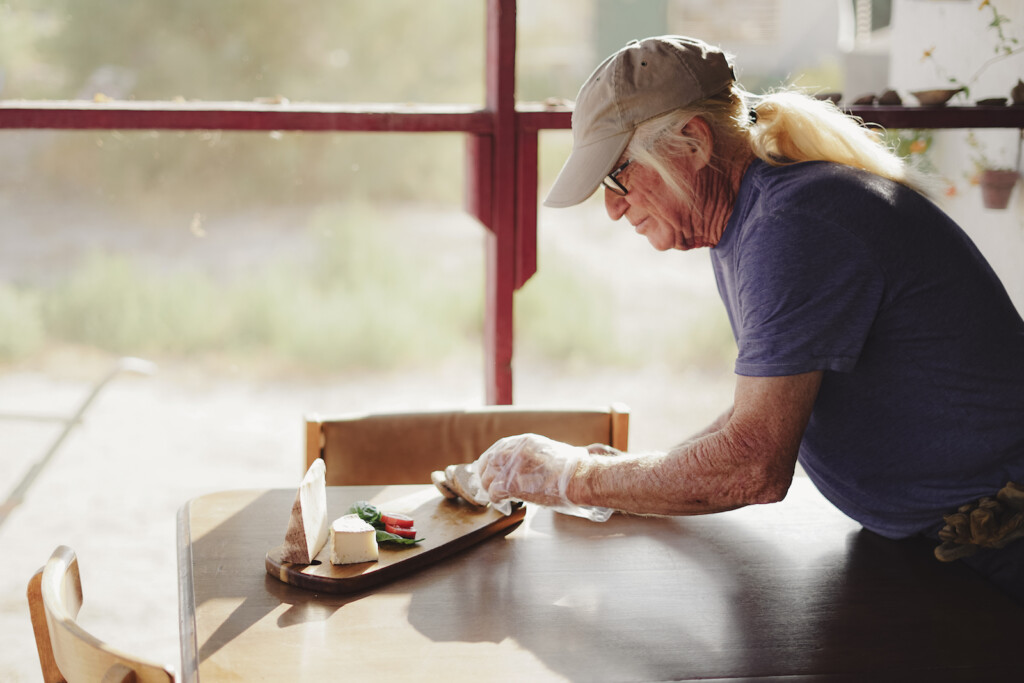
Utah Stories spoke to Yoshis owner Eddee Johanson about the double standard being applied where State Liquor stores have maintained customer access whereas restaurants have not. He is aware personally of several restaurant owners who will not make it, if closures remain much longer. He believes he can likely last until the end of May without government assistance, but the owner of two food trucks and two locations has seen his business decline by 75%. I asked Johanson:
“Do you see any reason why restaurants couldn’t implement the same systems that the State Liquor stores and Costco have put in place?”
“I don’t. I think we could do it. We could just seat far fewer customers and our servers could all wear masks and we already maintain the highest standards of sanitary conditions,” said Johanson.
Johansen added that he knows of many food truck owners who are greatly suffering, who got in when it was “gangbusters.” and now they have little or no business at all.
The state, city and county leaders find themselves in a position where they are able to essentially pick economic winners and losers. Now a month into this Utah has seen it’s worst unemployment figures on record, with the highest number of unemployment claims in Utah’s history as well. Today there are four people who have lost their jobs for every single Coronavirus case.
It’s becoming increasingly clear that as Utah is better and more prepared for disaster than at just about every other state — it’s time that city and county leaders work with the small business community to begin to roll out the next phase of Coronavirus containment and economic conditions. Utah has led the country in how to build an incredible economy, now we should lead the country in how to safely roll-out our economic recovery under Coronavirus containment.
Clearly we need to protect our most vulnerable residents. Probably seniors should still be strongly advised to not go to restaurants for a few more months. But with the availability of testing supplies now outpacing demand, we can use this extra supply to benefit small businesses by allowing restaurants and small businesses to operate under a new protocol which could literally save thousands of jobs, without risking undue harm.
———————
Where am I wrong? Do you believe it irresponsible to point out the perilous economic danger we are facing? Please let me know your comments. I’ll read them on the next Utah Stories Show.