Beer Stories

Raise a Cheer for Sour Beer and Where To Find them in Salt Lake Valley

Whether you’re looking for a well-balanced sour like a fine wine, or a beer reminiscent of liquid Sour Patch Kids, here are the breweries you don’t want to miss.

|


sour beers in Salt lake
Photos by Claire McArthur

Before advances in refrigeration, sanitation, and fermentation in the mid-19th century, most beer was, to a certain degree, sour. The culprits? Wild bacteria and yeast that infiltrated the beer to create unwanted tartness and funk.

Today, as the craft beer industry continues its meteoric rise, sours are making a comeback as modern day brewers infect their beers with the same microorganisms that their predecessors worked so diligently to eradicate.

“Up until about 10 years ago, people thought that the only place you could make sours was Belgium, and everywhere else had too much weird yeast in the air,” says Sage Dawson, co-owner of Toasted Barrel Brewery in SLC, which is proving that this is very much not the case.

“As far as what makes a sour beer, you can look at it scientifically from a pH standpoint, or it can be about taste and perception,” notes Dawson, who experiments with different fruits and barrels to enhance his sour beers.

Due to the increased difficulty of brewing, a larger margin of error, and the potential for contamination of other non-sour beers, you won’t find sours at every brewery in the Salt Lake Valley.

Whether you’re looking for a well-balanced sour like a fine wine, or a beer reminiscent of liquid Sour Patch Kids, here are the breweries you don’t want to miss.

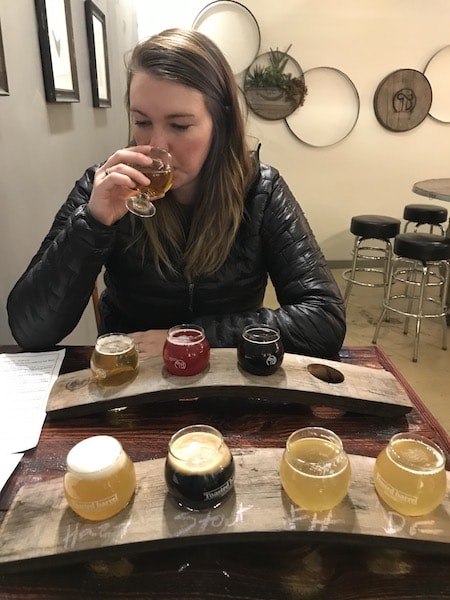
Toasted Barrel Brewery

If you’re a fan of sour beers, then Toasted Barrel Brewery should be stop Number One on your list.

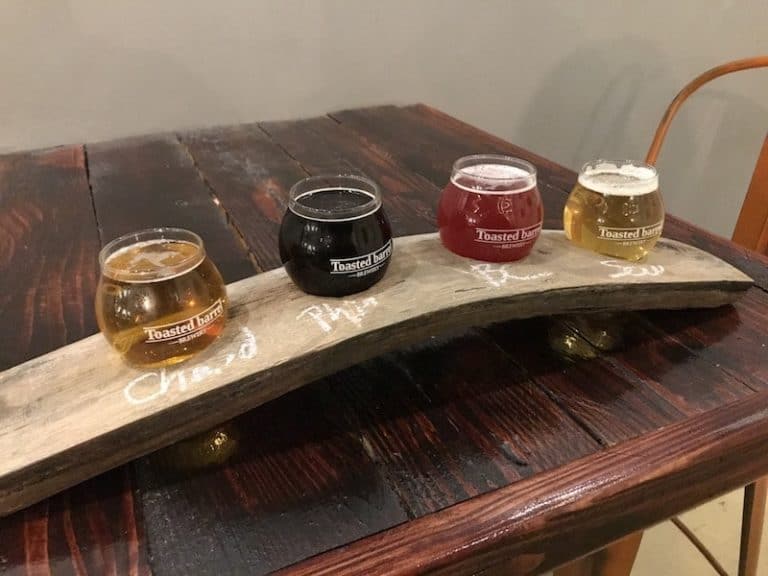
Toasted Barrel is best known for barrel-aged sours. Co-owners Dawson and Lynn Litchfield add yeast like brettanomyces and lactobacillus or pediococcus (bacteria) to their brews before aging them in barrels that have contained everything from bourbon and chardonnay to maple syrup and tequila. Their Chardonnay Barrel-Aged Farmhouse is a must-try.

But don’t sleep on their fruit-forward kettle sours! The Black Currant Sour has a beautiful purple hue and tons of tartness. Another fruity sour to try is the Phineas, named for a “wonky cat” and flavored with fresh raspberries and vanilla bean at the end of fermentation.

Uinta Brewing

Uinta Brewing’s limited edition sours should not be overlooked, especially the Pit Stop—a kettle-soured IPA brewed with apricots and a trio of hops. It’s complex, fruity and tart.

T.F. Brewing

Ask the bartenders at T.F. Brewing what the ultimate sour beer is, and their answer is unanimous: the Pineapple Berliner Weisse—a German-style wheat beer complimented perfectly with the sweetness and tartness of the spiky tropical fruit.

Depending on what’s available, T.F. Brewing’s Berliner Weisse has also been flavored with passionfruit and a combination of pomegranate and blackberry.

Epic Brewing Company

Epic Brewing Company’s limited release of fruited and oak-aged sours, dubbed the Oak and Orchard series, are as creative as they are fleeting. Sample a tiki-style sour ale flavored with coconut, almond, pineapple and orange, another oak-aged sour enhanced with pink guava and habanero, or a dark sour mixed with plum and perfected in a whiskey barrel.

SaltFire Brewing Co.

SaltFire’s Mobius Trip is a Golden Ale soured in chardonnay barrels with either tart raspberries or citrusy blood orange and tangerine zest. The result is a truly sour, fruity beer that makes you wonder why we ever mix mimosas in the first place. U

,

Join our newsletter.
Stay informed.


  • Utah Craft Whiskey: How Barrels and Utah’s Climate Shape Flavor

    Utah’s craft whiskey scene is shaped by more than grain, yeast, and time. The state’s dry climate plays an unusually powerful role in how spirits age, intensifying the relationship between whiskey and the barrels that hold it.

    Low humidity accelerates evaporation during aging, often claiming 14–18 percent of a barrel’s contents as the “angel’s share.” Unlike more humid regions where alcohol evaporates faster, Utah barrels tend to lose more water, concentrating flavor and driving proof upward over time. That accelerated interaction pulls sugars, tannins, and spice from the wood more quickly, creating whiskeys that often taste older and more structured than their age statements suggest.

    To understand how Utah distillers are deliberately harnessing climate, char, and finishing barrels to shape flavor, two producers at the forefront of that experimentation — Sugar House Distillery and Spirits of the Wasatch — shared how barrel choices influence everything from sweetness and spice to texture and proof.

    *The remainder of this article is available to Utah Stories subscribers and includes in-depth reporting from Utah distillers on barrel selection, aging techniques, and experimental finishes.

    To access this post, you must purchase Utah Stories (Digital + Print) or 3 month free trial (Digital).


  • Sugar House Businesses Recover After Prolonged Road Construction

    For nearly two years, construction along 2100 South reshaped daily life in Sugar House, testing the patience and resilience of local businesses. With roads and sidewalks finally reopened, owners are beginning to take stock of what was lost, what changed, and what recovery might actually look like.


  • Why Price, Utah, Needed a Rock and Fossil Shop

    After years in Salt Lake City and an interlude in Oregon, Kathie Chadbourne settled on Price as the location for her new rock shop. The town appealed to her because of its strong ties to geology and archeology, and its place within the Dinosaur Diamond. At first, she wondered whether a shop like hers might already exist there.


  • An Argentine Food Tradition Finds a Home in Sugar House

    In Sugar House, Maria Florencia Farr makes empanadas that carry more than filling. They carry memory. Each one recalls suburban Buenos Aires, where families gathered late at night and meals were unhurried, familiar, and shared.

    “In Argentina, dinner doesn’t happen at five,” she says. Empanadas were a constant in her childhood, as ordinary and dependable as cookies in an American home. Learning to seal them, shaping the distinctive repulgue by hand, marked a small but meaningful rite of passage.

    When Florencia moved to the United States 18 years ago, food became one of the clearest reminders of what she had left behind. She missed the everyday tastes of home and kept searching for them. Over time, that longing evolved into something larger, shaping the decision to build a place rooted in tradition, meant to be shared.

    The remainder of this story is available to subscribers.

    To access this post, you must purchase Utah Stories (Digital + Print) or 3 month free trial (Digital).