
Community Relations

Chains Not Interested in Sugar House Decorations

These questions remain: Shouldn’t the large regional and national businesses in the SHBD support the community that supports them? Where will the Santa Shack go at the end of this holiday season, when it must be removed from the Sugarmont Plaza? After 75 years, will Sugar House still have a place for Santa’s House?

|


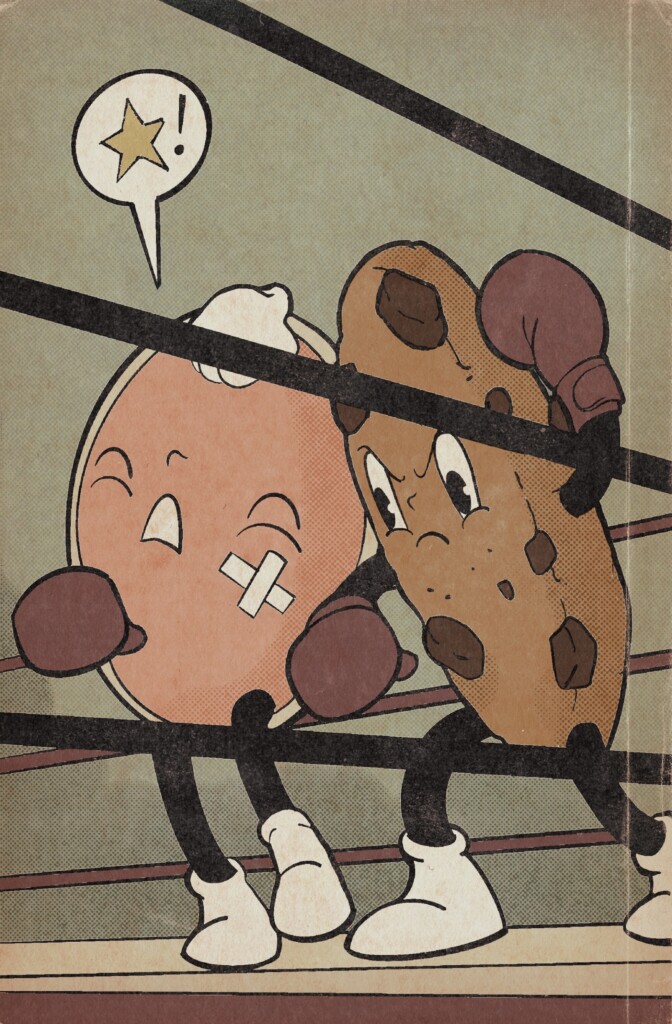
Illustration by Chris Bodily.

For decades, the Sugar House Chamber of Commerce paid the cost of setting up the iconic Santa House on the Monument Plaza at Christmastime and decorating it with lights and garlands of greenery. Now, the Chamber’s membership has dwindled to less than half, and its income is insufficient to support large public events such as Santa’s arrival or the expense of holiday decorations.

Besides the now privately-owned Santa Shack, the only other holiday decorations in downtown Sugar House will be those put up by area businesses.

When Sugar House merchants first invited the public to “See Santa in Sugar House,” it was a novel contrast to the usual department-store Santa, whose role was to boost the sale of holiday gifts and children’s toys.

“I remember it so well, right there on the Monument island. Mr. Santa Claus was always there, then later Mrs. Santa joined him in a candy-cane striped gazebo. The kids would line up forever to talk to Santa and get a candy cane from him. It was the constant in our Christmas tradition. I think the memory of that experience is so vivid because they always had the best Santas, and he took time with the children,” said Marie Reiter, 83. “[It was] a tradition that really meant something to the children and parents of Sugar House.”

In 2013, plans were made for remodeling the Monument Plaza to accommodate a variety of public activities. When construction began, a new, larger version of the Santa House was relocated to Sugarmont Plaza at 2234 S Highland Drive, the site of the old Deseret Industries building. This is the sixth year that Santa’s house has appeared at that location. About 750 families visited Santa Claus there in 2018, some coming from as far as Tooele and Park City.

In 2015, Salt Lake City Public Services delayed a return to the main plaza while they considered challenges posed by the size of the new Santa Shack and the current configuration of the Monument Plaza. Protecting the surface of the plaza required a crane and a forklift to set the four-ton cottage into position, a cost that neither private sources nor the Chamber could afford. For the past two years, Ascent Construction donated this service, but now they no longer work in the area.

Monique Higginson is the treasurer of the Sugar House Chamber. She said that recent commercial development has resulted in more national businesses in Sugar House. There are fewer small- and middle-sized local concerns to provide the funding and human resources to support traditional Chamber activities.

“Large businesses show little interest in investing in the community. They are not bound to the community in the same way as small businesses,” Higginson said. “It’s perplexing, since they benefit the most from traffic to their stores, restaurants and pubs in downtown Sugar House.”

Sugar House is one of six Chambers along the East Bench that are part of the Wasatch Business Series (WBS), including the City of Holladay, South Salt Lake City, and Murray City. But Sugar House has always been “a city within a city.” Benjamin Sessions, president of the Chamber, said that Sugar House is the only WBS member that is not subsidized by its municipal parent and does not get direct funding from its city.

Another explanation for the lack of funding is that while national chains have replaced some locally-owned stores, ownership of the land may not have changed. In SLC’s Central Business District, cultural events and promotions are funded by the Downtown Alliance, with 40% of their $2.5 million budget coming from a special tax assessment on commercial properties. An effort to organize a similar Sugar House Alliance several years ago was not successful.

These questions remain: Shouldn’t the large regional and national businesses in the SHBD support the community that supports them? Where will the Santa Shack go at the end of this holiday season, when it must be removed from the Sugarmont Plaza? After 75 years, will Sugar House still have a place for Santa’s House?

,

Join our newsletter.
Stay informed.


  • Has Utah’s Soft-on-Crime Justice Reform Made Communities Safer?

    Has this “soft-on-crime” approach resulted in safer streets?

    SALT LAKE CITY — A decade has passed since former Utah Governor Gary Herbert signed a massive justice reform bill into law in hopes that the state could reduce its prison population and manage low-level offenders through rehabilitation programs instead of incarceration. Has this reinvestment resulted in lower crime and recidivism rates?

    According to the Utah Department of Corrections, that landmark Justice Reinvestment Initiative aimed to “continue holding offenders accountable and securing our communities, but in a way that considers individual risks and treatment needs.”

    Are communities really safer when mental health and substance use needs are addressed through programs administered outside prison walls? The idea was to treat criminals differently based on their mental health needs and backgrounds. But at least one retired Adult Probation and Parole Officer, believes this “soft-on-crime” approach hasn’t resulted in safer streets.

    LOOKING BACK

    State Senator Todd Weiler, in that legislative role since 2012, helped drive the passage of the Justice Reinvestment Initiative (JRI), a massive bill that enjoyed broad-based approval among state officials and the Legislature as a whole.

    In November 2014, Weiler attended the national summit on the issue in San Diego, an event hosted by Pew Charitable Trusts. 

    “I was very involved in it. We had a lot of high hopes,” Weiler, a Woods Cross Republican, said in a recent interview. “That was about the time we were finalizing plans for the new prison. And we actually said that because of JRI we don’t need as many beds because we’ll be incarcerating fewer people. So that new prison was designed with this idea.”

    A key part of JRI dealt with adjusting sentencing for crimes related to addiction, dividing offenders into two basic groups: dangerous criminals who are a threat to society (that group goes to prison), and low-level offenders who get help kicking addictions through state-sponsored programs or private-sector rehabilitation.

    “The ultimate goal was if we have an otherwise good person who got caught up in an addiction, and as a result committed crimes, they need to be punished for their crimes,” Weiler said. “It’s not that we’re going to overlook what they did, but we wanted to focus primarily on helping them overcome their addiction and [that means] getting them back to their job and their family.” 

    Before JRI, low-level drug offenders with felonies would spend years in prison, which wreaked havoc with their lives and future prospects. Addressing the root cause of their theft and property crimes through supervision and treatment made sense. 

    “We’re all imperfect people,” Weiler said. “So we want people working their jobs, paying their bills and raising their kids rather than sitting in jail and watching TV or playing cards.”

    To access this post, you must purchase Utah Stories (Digital + Print) or 3 month free trial (Digital).


  • Salt Lake City Newcomers Club: Finding Friendship and Belonging Since 1948

    Moving away from your hometown can come with many blessings. But for some, it also comes with just as many bouts of loneliness. That ache of not knowing where to meet people, or grieving the friends you left behind, comes in waves. Workplaces and churches can sometimes provide ready-made communities, but what happens when they don’t? Where do you go to find true belonging?


  • A Ski Village or a Tipping Point? Nordic Valley Expansion Divides Ogden Valley

    The project, known as Nordic Village, is expected to roll out over the next decade and represents one of the largest tourism developments in the valley’s history.


  • Fiddler’s Is Back in Sugar House: Revival of a Neighborhood Favorite

    Walking into Fiddler’s today, longtime patrons will recognize the feeling of the old neighborhood, even though nearly everything else has changed.

    The menu, for one, is tight, intentional, and scratch-made. “We created a simpler menu where we utilize most of our ingredients between different dishes,” Jordanna explains. “You can’t waste anything.”

    Everything is made thoughtfully and often gluten-free by default.