


Sheela’s Story
Sheela* left home at age eighteen. She describes herself as having been a good kid. She was an A-student, went to church, and did what her parents expected of her. In high school, Sheela became the target of a sexual predator.
“He was someone I knew and trusted,” Sheela confides. “He groomed me for a long time. I didn’t realize how abusive of a situation I was in until I grew up a little more.”
A high school teacher and his wife had hired Sheela to babysit their young children. One evening, Sheela arrived at the house for a babysitting job to learn that the wife had left town on a business trip and the children were already asleep. The husband never did leave that night. It was the start of a period of predation that would end up running the course of about 3 years.
“Looking back, I can see how much of a child I still was, but at the time, I thought that I had everything under control.”
Teen Homelessness
A little more than a year into this situation, Sheela’s family forcibly removed her from their home.
“I had been at a friend’s house the evening before,” Sheela explains. “I fell asleep while watching a movie, and inadvertently spent the night there. When I came home the next morning, I learned that my parents had left town. My parents had instructed my siblings not to let me in the house, so they didn’t. My brothers and sisters passed me my belongings through my bedroom window and I left home. I never did return to live with my family.”
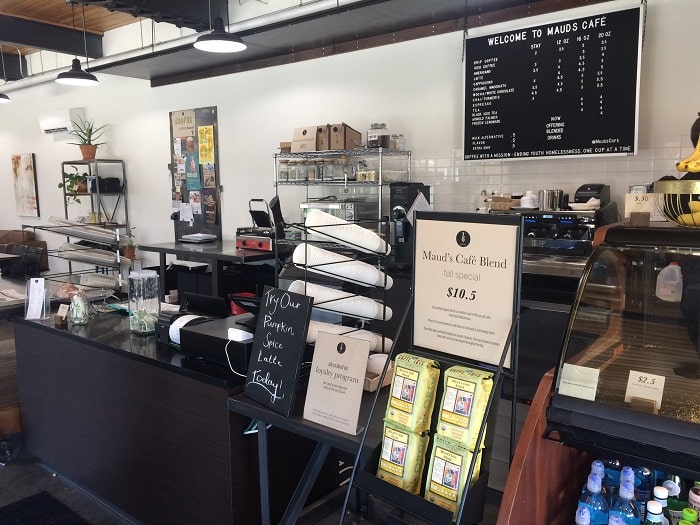
Teen homelessness is becoming an ever-growing problem in Utah. The reasons are many, but frequently, teens find they are no longer welcome in their family home; so they leave, often finding themselves facing the heavy responsibility of trying to “grow up,” hold a job and finish school all on their own. All of these tasks become more difficult to accomplish without safe and stable housing.
A resource is now available for Utah teens who find themselves without a stable home. Maud Ballington Booth, the co-founder of Volunteers of America in 1896, has been recently memorialized in the naming of the new Salt Lake City coffee shop, Maud’s Café. Ms. Booth’s life was committed to the service of the populations who were most at risk; the homeless and destitute, the addicted and abused, persons displaced by natural disasters, and prisoners and their families. The coffee shop that bears her name follows in her footsteps.
Maud’s Café
Maud’s Café, a non-profit program overseen by the Volunteers of America Utah is run on teen power—specifically teens who are taking the steps needed to leave, or avoid, homelessness. By means of an 8-12 week employment program, Maud’s Café provides employment for the youth from Volunteers of America Utah, Utah’s Homeless Youth Resource Center, and the Young Men’s and Women’s Transitional Housing programs.
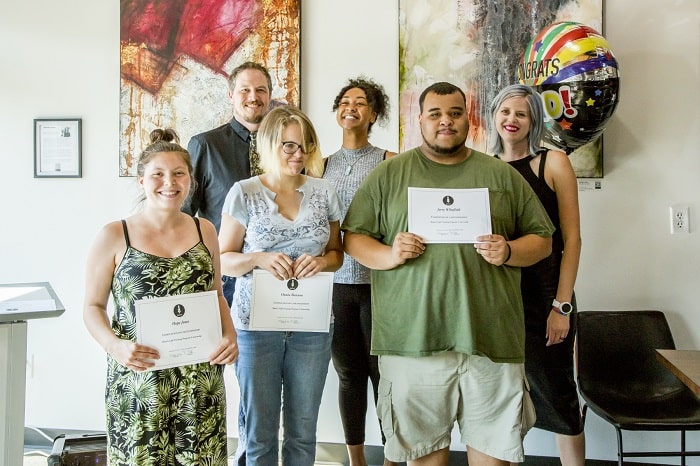
While working behind the counter these young people gain some of the job skills that they will need to help them succeed in today’s workforce. Each latte, Americano, and blueberry muffin sold not only helps a young person develop job performance skills, but also funds the program. Each dollar that comes in feeds back into the program to help these kids succeed.
Today, Sheela is a well-adjusted, middle-aged woman. She has raised three children in a home that she has lived in for more than 20 years.
“For me, growing up was tough, but I did it,” Sheela states proudly. “But, if I had had access to a program like what is found at Maud’s Café, it would have been much easier!”
Maud’s Café is open Monday-Friday 7-4, Saturday 9-2
422A West 900 South in Salt Lake City
Follow them @maudscafe
*Because of the sensitive nature of this story, pseudonyms have been used.