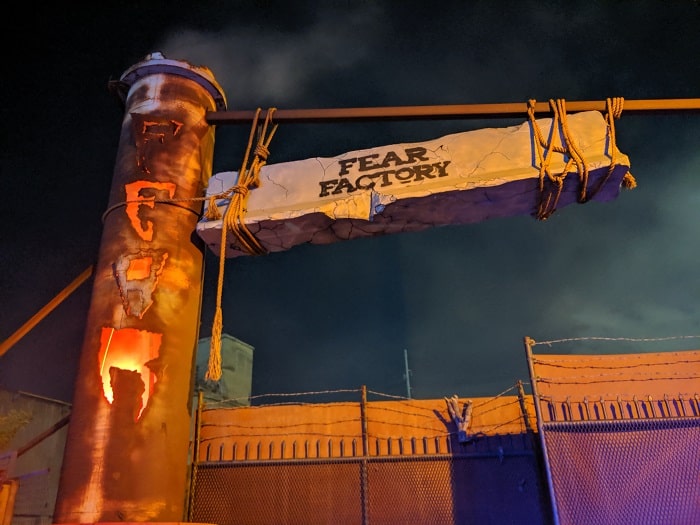
Standing outside an abandoned cement factory turned haunted house, I stood in line, waiting to be scared out of my wits. But, I pondered, why would I deliberately scare myself?
The Psychology Behind Fear Factory
According to Rob Dunfield, one of the founders and COO of Fear Factory, the reason is escape. “It is an adrenaline rush, a release, and an escape from reality. Getting scared makes you forget your problems. When the general economy goes down, haunted house sales go up,” Rob says.
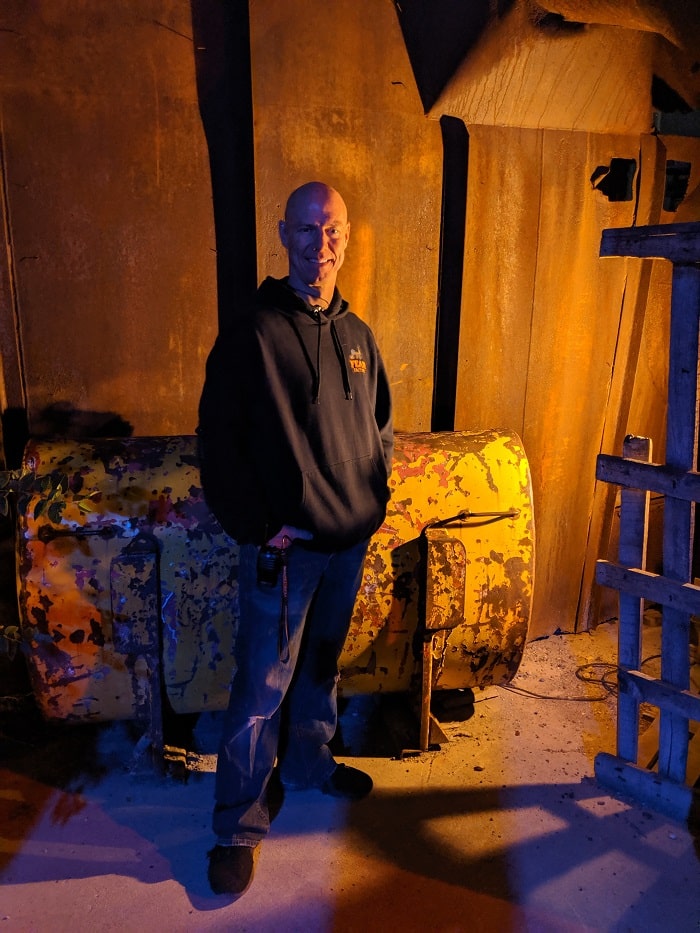
Haunted Haunted
In 2011, Rob Dunfield, with his wife Heidi, and friends, Keith and Cindy Sharp, and Rob’s dad, Bob, opened Fear Factory at the site of the old Portland Cement Company, under the viaduct at 666 W 800 S. Seriously. They boast that they are Utah’s only “haunted, haunted house.” With an address like that, they had better be!
The cement company had a long history of paranormal activity, including unexplained sightings and unfortunate accidents dating back to 1894. People started believing the site was cursed. According to Jeremy Kartchner, who handles PR for Fear Factory and works as a consultant, “One group of actors getting ready for a night of fright exited the building saying something was in there, and they weren’t going back in until it was gone. They performed a sage purification, and, finally, the actors agreed to go back inside.”
Touring Attraction
It takes 45 minutes to completely tour the attraction, moving from room to room, upstairs, downstairs, through the basement, across a catwalk three stories high, over dirt, between close cement walls, while more than 100 clowns, vampires, zombies, and just plain old monsters jump out of shadowy corners and hidden places to get up close and personal with patrons. (There is a no-touch policy in place unless you waive that right and wear a glow necklace signaling the actors that it is okay to reach out and touch you.)
One of the most terrifying rooms was inhabited by chainsaw wielding maniacs, a la Texas Chainsaw Massacre. It was loud and smoky and I couldn’t wait to move on.
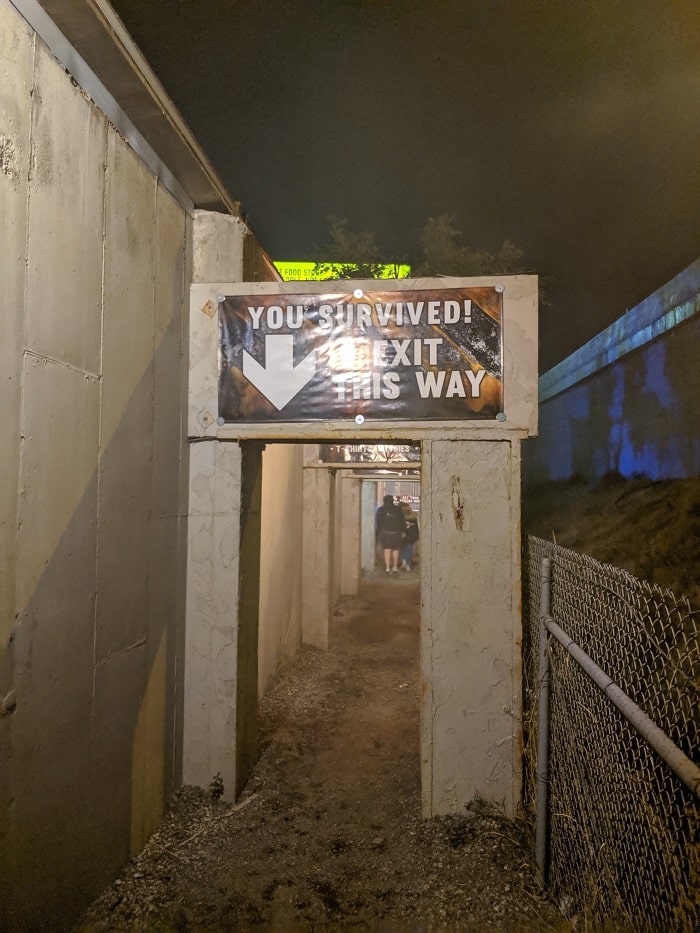
When I finally emerged back into the night air, I was so relieved; and then I realized that Rob had been right. For the last 45 minutes I didn’t once think about my problems or worries. It was an escape from reality, and in a way, energizing. I expected to be tired and ready for bed, but instead I was wide awake and ready for anything.
Design
Each year, the group starts work in December to plan for the upcoming year by designing new areas, remodeling, and changing themes and costumes. “The owners meet every week during the cold months to plan and organize,” Rob says. A lot of manufacturing and fabricating work is done in-house. In the spring, they start work on the outside facilities, always adding something new. They also start auditioning actors and makeup artists for the coming season.
Bob Dunfield ran the March of Dimes Haunted House back in the 80s and 90s; and Rob used to help out, all the while developing his love of haunted houses.
This year they added a selfie station and a fear sphere. There is a 65-foot free-fall attraction called the Fear Fall between the cement factory towers, and a 300-foot Last Ride zipline. There is also a virtual reality booth, seances, magic shows, and Grimm Ghost Tours.

Fear Factory has been lauded with many distinguished awards for being one of the scariest haunted houses in America by USA Today, The Travel Channel, BuzzFeed, FrightFind, and Scary Overload. Last year, they achieved Legendary Haunt status from the Haunted Attraction Association.
Giving Back To The Community
This year, Fear Factory partnered with Don’t Be A Monster, Nate Wade Subaru, and the Inclusion Center, using Fear Factory actors to present anti-bullying assemblies in schools across the Wasatch Front. The assemblies explore the implications and consequences of bullying to raise awareness about the seriousness of the issue, with the goal of prevention.
While the assemblies are over for this year, any interested schools or districts can reach out to schedule an assembly next year. Fear Factory has a goal to reach 10,000 students. The assemblies are free to schools and are funded by Fear Factory ticket sales and Fear Factory’s partners.
Whether you’ve never been to a haunted house, or you’re an addicted fear aficionado, Fear Factory provides an experience you will never forget!
Fear Factory is located at 666 W 800 S, Salt Lake City
WATCH THE VIDEO
LISTEN TO THE PODCAST
FOR MORE UTAH STORIES PODCASTS GO HERE.