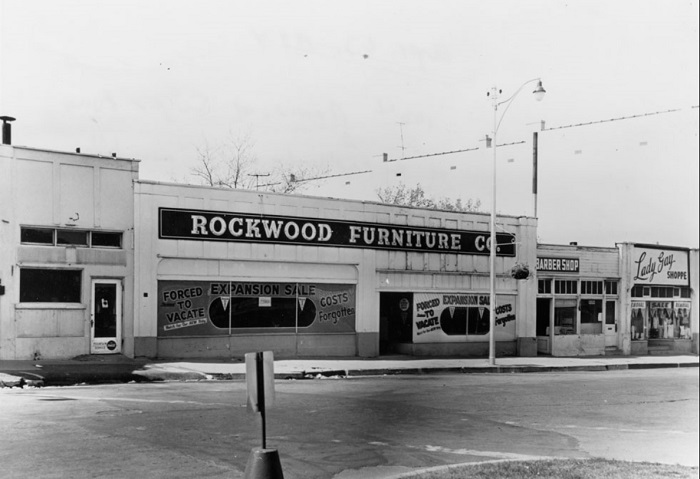
 “Rockwood Furniture, the oldest name in Sugar House, has just become the newest, most up-to-date furniture concern in the Intermountain West.” – Sugar House Bulletin, December 1954.
When Marian Rockwood Johnson was born, Sugar House was struggling through the Depression of 1920-21; Bamberger Coal Company was operating from the old sugar mill; Hyland Theatre (known later as the Marlo) had just opened its doors; and Sprague Library was still new.
Marian’s father, J.A. Rockwood, was president and general manager of the Granite Furniture Company, which was growing and had already expanded several times. But in 1929, in a dispute with Rockwood over the direction in which the company and the economy were going, W.D. Richards bought a majority share of the company and replaced Rockwood as its president.
Rockwood severed his connection with Granite. In 1931, he leased the former Sugar Bank building on the northeast corner of 11th East and 21st South, and opened the first J.A. Rockwood Furniture store. Because trolley service ended at that corner, their newspaper ads declared that Rockwood was “Where the Car Stops!”
Through the years of the Great Depression, businesses in Sugar House persevered. During the most difficult times, Marian Johnson recalled hearing her father mention bankruptcy, but said he survived on a system of bartering and trade-ins. After potential customers sold their old furniture across the street at Granite Furniture’s second-hand store, she said they came to J.A. Rockwood to buy new things.
The town center changed during the 1930’s, due in part to increased traffic on 21st South. Success Market opened in a modern “car-friendly” strip mall where the sugar mill used to stand. Laura Larson Ice Cream moved up the street, and Roy’s Drive-In opened on 10th East. In 1934, Rockwood Furniture relocated to the former Sugar House Exchange store at 1064 E and 21st South. Sterling Furniture Company opened in the old bank building in 1937.
 Marian’s brothers managed the new Rockwood store. They expanded the main floor by building over the old Jordan and Salt Lake Canal. Water from the canal sometimes rose through the floor of the showroom, and Marian said that floor lamps on display in the store would short out when the water reached the electrical outlets. Her brothers raised the floor 18 inches to keep merchandise out of the flood.
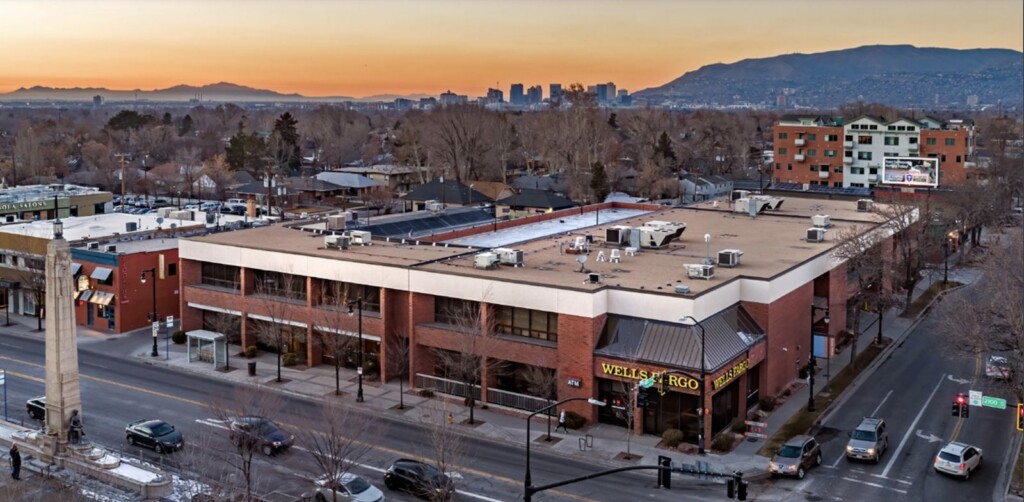
In 1954, the Rockwood’s tore down the original building and replaced it with a modern, three-level store with office space on the second floor, a warehouse, and a specialty shop called “Dads and Lads” in the basement. Home furnishings were displayed on interior balconies overhanging the main floor.
Rockwood was one of seven furniture stores in Sugar House that year which contributed to the area’s reputation as “the Furniture Capital of the West.” Together, the stores had an estimated annual sales volume of $10,000,000.
After Rockwood Furniture closed in 1998, only four family members retained an interest in the building, and they chose to turn it into an art center. With one artist already installed on the top floor, they built 24 studios on the two floors, and had every space rented before the remodeling was finished.
Marian Rockwood Johnson passed away in May of 2016, but the Rockwood family can still lay claim to being the oldest name in the Sugar House Business District. They hold several parcels on 21st South and intend to hold onto them as the properties around them are redeveloped and renamed. Jim Johnson, Marian’s son, confirmed that the Rockwood Art Studios will remain at the heart of the Sugar House art scene.
FOR MORE SUGAR HOUSE STORIES GO HERE