How does it sound to work with your neighbors to advocate for a healthier environment here in Utah? Would you like to help bring about cleaner air this winter? Perhaps you’re interested in lobbying politically, or maybe it sounds more fun to dig your hands in the soil.
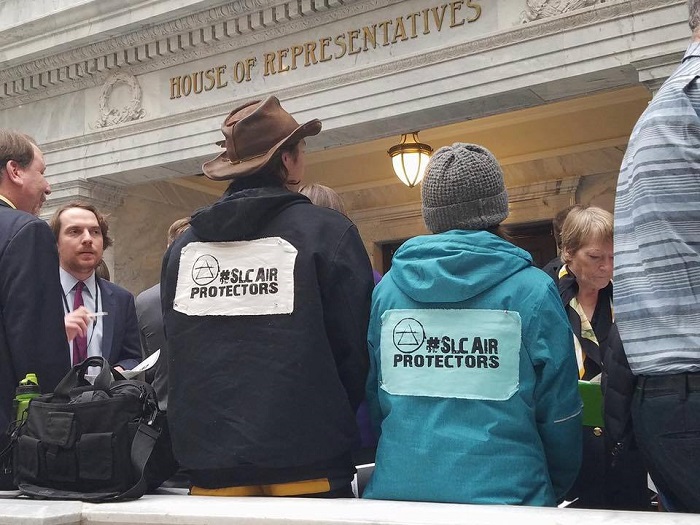
The Native American-led SLC Air Protectors may be the group you’re looking for. Co-founded in 2016 by Salt Lake City residents, Carl Moore, of the Hopi tribe, and Michael Cundick, their mission is to address the ongoing air pollution crisis and other environmental challenges faced by Native American tribes and all Utahns. They work through direct political action, environmental stewardship initiatives, and neighborhood sovereignty campaigns.
The genesis of SLC Air Protectors was Standing Rock, the 2016 protest led by North Dakota’s Sioux Tribe against construction of the Dakota Access Pipeline. During this event, tribal leaders encouraged non-local protesters to bring the spirit and momentum of Standing Rock home with them. Cundick and Moore answered that call by spearheading an environmental movement here in Salt Lake City.
Environmental Protectors Network
Conceived as a more effective alternative to the federal Environmental Protection Agency, SLC Air Protectors created the Environmental Protectors’ Network, an initiative working to advocate politically for Utah’s environmental issues by generating neighborhood sovereignty.
Their vision for the Environmental Protectors’ Network is a decentralized group of activists, called ‘Air Protectors’, functioning as a living organism of resistance—a truly revolutionary method of organizing. Local residents can become Air Protectors by starting or joining small lobby teams made up of 8-12 people called ‘cells’. In order to inspire leadership and foster autonomy, each cell functions with it’s own agency independent from the greater body.
Cells meet on a monthly basis to break bread while learning and conducting political advocacy through legislative lobbying. They also learn to provide for themselves through earth stewardship education including homesteading and local food production skills.
Earth Stewardship Corps
The second arm of SLC Air Protectors, the Earth Stewardship Corps, is an initiative that connects activists back to the land and loops them into a network of local nonprofit organizations.
With any cause, individual activists and nonprofit organizations rely upon each other to make progress advocating for their shared values, but often struggle to communicate effectively.
SLC Air Protectors are partnered with local nonprofit organizations who are already advocating for Utah’s environment, like Utah Physicians for a Healthy Environment and HEAL Utah, the Earth Stewardship Corps serves to bridge the communication gap between Air Protectors and these organizations.
The Earth Stewardship Corps grants Air Protectors with enhanced access to and engagement with nonprofit organizations by offering regular updates on Utah’s latest environmental obstacles and wins, and by encouraging quick response when called to action.
With a focus on hyper-local food production, the Earth Stewardship Corps also provides Air Protectors with access to plots of land called ‘sovereignty hubs’, where anyone can learn homesteading and urban agriculture skills.
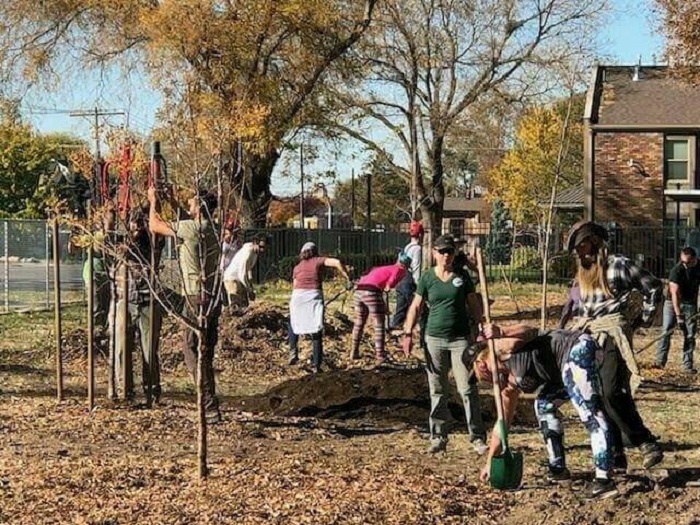
While participating at a sovereignty hub, activists donate time and labor helping to grow and distribute food amongst themselves and in their community. The first sovereignty hub is an existing community garden at the Krishna Temple in Millcreek. They are aiming for two more sovereignty hubs across the valley within the year.
As they answer the call to advocate for a healthier environment here in Utah, Air Protectors show others in our community the way toward empowerment and ownership of environmental challenges by building a stable community.
Join
Would you like to build stronger bonds with your neighbors and advocate together for a healthier environment? You can sign up to start or join a cell on the SLC Air Protectors’ website or Facebook page. There you’ll be invited to complete a survey, take the Air Protectors’ pledge, and join their newsletter to stay abreast of upcoming meetings in your neighborhood. SLC Air Protectors looks forward to unveiling a brand new website in December and an app scheduled for a February release.