
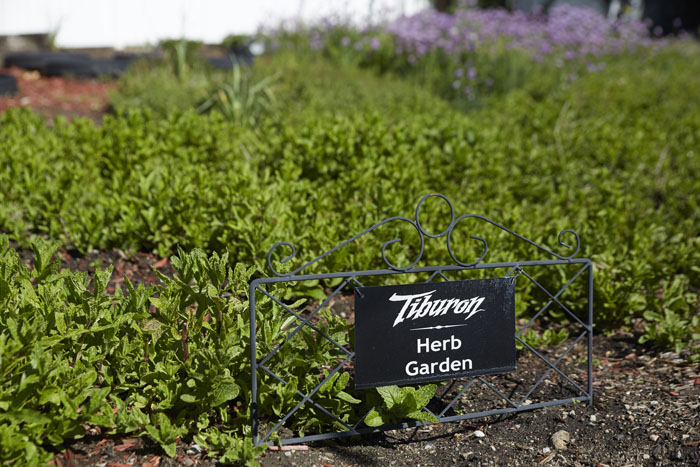
When Ken Rose started Tiburon in Sandy, he planned to eventually put blacktop over the top of a gravel parking lot. He then learned that Sandy City would “allow” him to blacktop his parking lot, but only if he also invested over $200,000 in a sidewalk, curb and gutter, street lamps, and an incredibly expensive storm drain system. “They wanted the property to be set for a 500-year storm,” says Rose. The improvements they force small business owners to finance is a mechanism for the beautification of the very busy 700 East corridor, offering better pedestrian access.
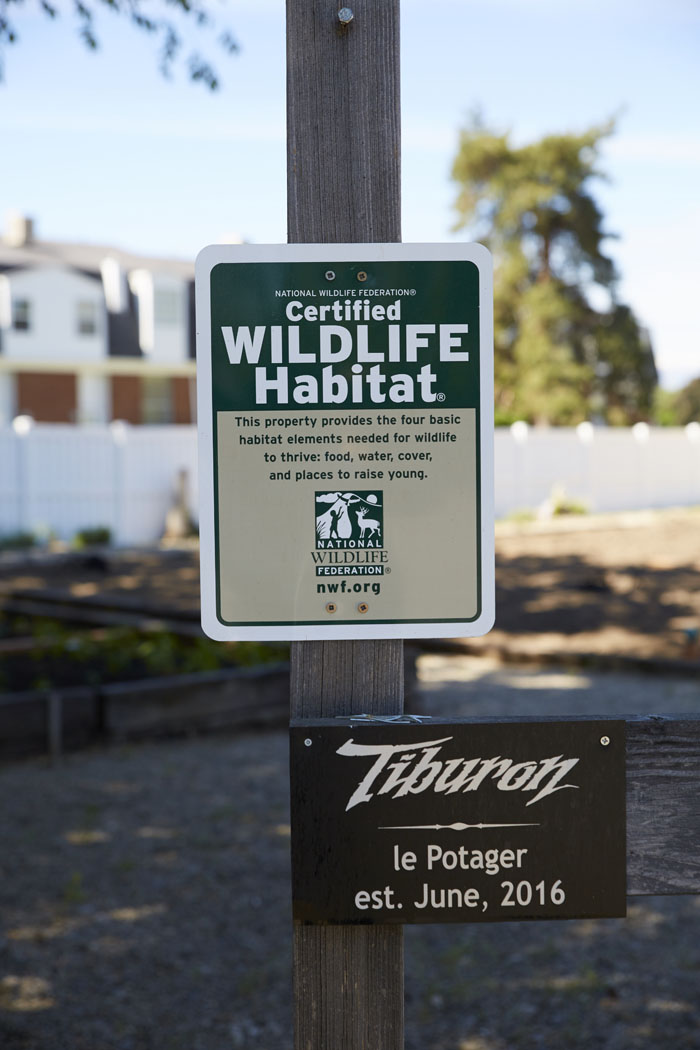
Sandy City has so few locally-owned, chef-operated restaurants, it seemed that Rose was learning first-hand how to start something unique in the suburbs; almost like putting a round peg into a square hole. But rather than considering moving or closing, he decided to convert the extra parking lot space into a garden. He started by growing produce he believed he could improve by growing it in-house, beginning with heirloom tomatoes. Customers appreciated the difference in the fresh ingredients and the cool colors of the heirlooms. That was twelve years ago.
Today, Tiburon’s gardens also supply Rose’s sister restaurants, Hoof and Vine, and Wild Rose, as well as Andrea Dulle’s Epic Casual Dining. Dulle was once the server at Tiburon while she was getting her Master’s Degree. She planned to leave after she graduated. Rose offered her a manager position, but she didn’t want to be a manager—she wanted to be an owner. Dulle and Rose started Epic Casual Dining together, with the concept of offering a higher level of sourced local and farm-fresh ingredients than was available anywhere on Fort Union.
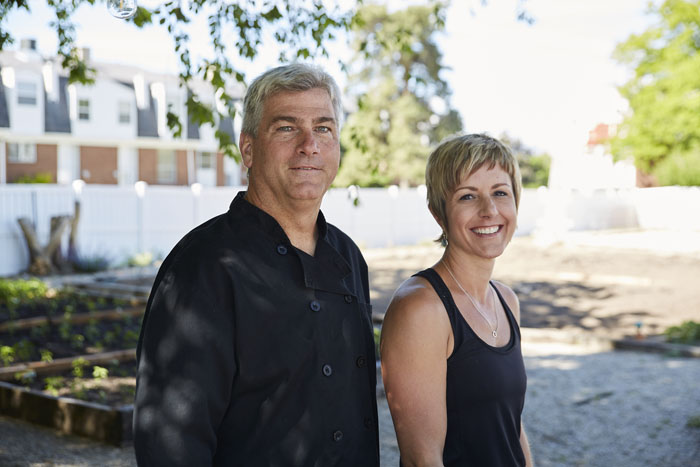
Dulle and Rose carefully select peppers, varieties of bell and chili, heirloom tomatoes, all of their fresh herbs, carrots, beets, and baby squash that work well for specific seasonal dishes like salads, and always a special with tomatoes. Last year they offered a grilled swordfish with a roasted corn and jalapeno relish, topped with a sunsugar heirloom tomato salsa.
Sandy City is not known as a destination for it’s culinary scene, which made the American steakhouse, Tiburon, a hit. Epic Casual Dining has enjoyed the same quick success and patronage by local residents. The mayor and city council members often dine there, enjoying steaks and crab cakes as a nice break from the multitudes of chain and fast-food restaurants.
In order to expand seating and to build a patio butting up against the garden, Rose found himself again at odds with the city. He wanted to build an arbour around the patio and enclose it to offer year-round seating. But again the city wouldn’t permit him; not without excessive zoning, building, and permitting burdens. While in the midst of trying to satisfy the city’s requirements, the mayor was dining at Tiburon one afternoon. Rose says he came in and asked the mayor why they were giving him such a hard time. “The mayor and city council members were there, and I was livid, and I expressed my outrage,” says Rose. The next day they told me to add a few unnecessary reinforcements to the patio arbour, which I did, and they signed off.
Rose says he now has a good relationship with the city. He can call the mayor when he needs to, but he is a little tired of how much both the city and the city council members cater to huge developers rather than helping small businesses.
I asked Rose if he would still like to blacktop the garden. “No I wouldn’t. It’s been a great addition. To supply all four restaurants with such excellent fresh produce and herbs throughout the summer is great. It really sets us apart.”
The four restaurants that Rose has established are Tiburon, Wild Rose, Hoof and Vine, and Epic Casual Dining. All have received excellent reviews and are enjoyed by the community.