
While you may be a conscientious consumer of many products and services, you are most likely not a smart consumer of healthcare. According to the British Medical Journal, error is the third leading cause of death in the US, equal to two jumbo jets crashing every day with no survivors. When even one jet crashes, it’s on every news channel.
But what would happen if hundreds of people died every day due to an auto manufacturer error? Congress, and US consumers would demand immediate change. Medical consumers can wait weeks or months for an appointment with a four-minute conversation as the only result, with astounding costs adding insult to injury.
What would happen if your favorite restaurant suddenly increased the price of their salad from $12 to $150? You’d probably refuse to pay and the restaurant would quickly go out of business.
What would happen if your accountant recommended that you only needed to check the health of your company’s financials once per year… just to make sure everything is OK? Would you laugh it off as as a joke? Yet most of us get a health check-up only once a year, maybe. There is a better way to approach our medicine and that is to empower our personal education. A little about me will reveal how I arrived at my conclusions.
Almost twenty years ago I was diagnosed with cancer. Health insurance helped defray many of my medical costs, physicians helped me not die from cancer, and today I take a prescription medication that keeps me alive. To be sure, physicians, pharmaceutical companies, and insurance companies are important components of the healthcare industry. Collectively, they are a vital part of preventing disease and improving health outcomes. However, we have a tremendous responsibility to be well-educated and informed medical consumers. This knowledge will lead to a significant increase in our ability to effectively spend money, prevent disease and medical error, and improve health and happiness, both as individuals and as a society.
When did it go wrong?
One of my internal medicine doctors, Dr. Michael Finkelstein, was a chief medical director, when in the prime of his career, he left his job, purchased a small farm, and now runs a successful holistic medical clinic in Upstate New York. I recently queried Dr. Finkelstein. “You went to medical school to solve problems and help people before landing a job as Chief Medical Director at a thriving hospital. At what point did you become disenfranchised with the system?” His answer? “It was fairly soon after I left medical school that I started to become aware of the limitations of western medicine.”
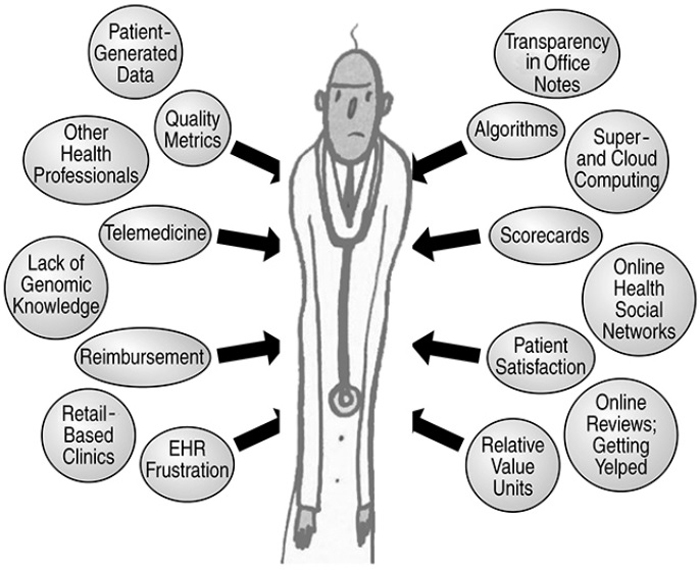
Indeed, evidence suggests that many doctors have a nearly impossible job. They are highly frustrated with health insurance companies’ ever-increasing power to dictate the delivery of medicine. They work long hours and typically treat only the symptoms of disease, not the causes. They get paid less and less while being asked to learn and do more. As a result, many physicians are burned out and depressed.
Health is our most important asset. Let’s face it, when you’re sick, life sucks. When you or a loved one is really sick, it can be terrifying.
Aside from the occasional “WebMD look-up,” we typically spend almost no time improving our medical knowledge. And, we’re willing to accept a level of customer service that we would not tolerate in any other consumer domain. It’s what I call “Deer in the headlights medicine.”
Let’s shift the discussion. This is, after all, the wellness issue, and there is hope. An important solution is to become a better consumer of medicine. The US healthcare system offers a very impressive array of great products and services. Indeed, it’s a great time to be a consumer of medicine. And it’s a great time to be a cancer survivor!
Improved consumer knowledge is a shift (or breakthrough) in how we understand, navigate, and consume medicine, health, and wellness.
There are basically three important aspects of being a smart consumer:
- Have a strategic health plan
- Assemble a health team you trust
- Know your numbers
Have a strategic health plan.
You must have a strategic health plan to optimize your health outcomes. Humans are great planners. We plan for our vacations but for most of us, our “health plan” is provided to us by our a health insurance company or benefits manager. Health insurance companies are in the business of making money for their shareholders. Most health insurance companies are not in the business of improving your health or making sure you do not get sick and die.
For example, even though we have evidence-based technologies that can predict your risk for a prescription medical error, most insurance companies do not cover comprehensive genetic testing for drug metabolism risk. Too often, the cost of preventing a disease (or medical error) for a large population is more than the cost of covering the treatment. That’s good for business, but not so good for the person who gets sick or dies.
For a more Machiavellian scenario, what if medical errors actually make money for the provider? A medical error can result in a significant net revenue increase for the health care provider. Again, great for the corporation; not so great for the patient who needs additional invasive surgeries to fix the latest invasive surgery.
There are myriad companies available to help develop a plan to optimize your health outcomes. And while you need to be an engaged participant, you do not need to develop or even manage this plan. Again, comparing other consumer experiences, I recently purchased a new car. The car dealer sends me an email informing me of my next service appointment and updates me on the “health” of my car.
The dealership has developed a plan. They know what to check and when. They do this multiple times throughout the year to prevent and detect mechanical problems early. My job is to show up after doing some research to see whether or not a particular repair is covered under warranty. After my “25-point checkup,” I get a call from a customer service representative asking me about my experience. Indeed, we take better care of our cars than our own health.
Assemble a health team you trust.
Determine with precision who is on your healthcare team. In part, your plan will determine this path. Know your physicians and support clinicians including personal trainers, nutritionists, massage therapists, chiropractors, acupuncturists, and naturopaths. Know what kind of providers you have and what kind of providers you need.
What kind of consumer are you? How much would you spend annually to be in an optimal state of health? I consider myself a smart medical consumer, so it’s important that I have very knowledgeable physicians who respect my opinions and provide enough time to thoroughly explore medical issues and options when necessary. My doctors are my friends and my key advisers. I learned this important concept as a cancer patient.
Know your numbers.
Know your numbers. You can probably tell me what an IRA is and the balance of your IRA (and if you can’t you can generally get this number within a few minutes). However, do you know your A1C, hs-CRP, MTHFR or apoB and LDL-P score? Health is our most important asset yet we know our financial numbers much better than our health numbers.
There are a mind-boggling number of human biological markers that can be tested through blood, urine, saliva, and feces. And there seems to be an equal number of companies willing to test your biological markers. Many of these important tests are covered by insurance, but you have to ask your provider to have the tests done. Your strategic health plan will provide a valid map to your optimal biological marker testing plan.
Conclusion.
Medical errors are a serious problem for health consumers. There is much more to to discuss regarding how to significantly improve your ability to be a skilled medical consumer. Additionally, there is a plethora of spectacular consumer products and services in medicine, health, and wellness available to well-educated, informed medical consumers.
Being a smart medical consumer can both decrease the risk of becoming a victim of medical error and increase one’s ability to purchase and use healthcare products and services that can significantly increase your personal health and happiness.
John J. Librett, PhD, MPH
Founder/CEO, Survivor Healthcare
Executive Chairman, Cancer Wellness House
Editor-in-Chief, Utah Cancer Connections
John@cancersurvivorplan.com