Utah Stories

Backyard Birds of Sugar House

Meet the owners of the “Best Birding Retailer of the Year” award.

|


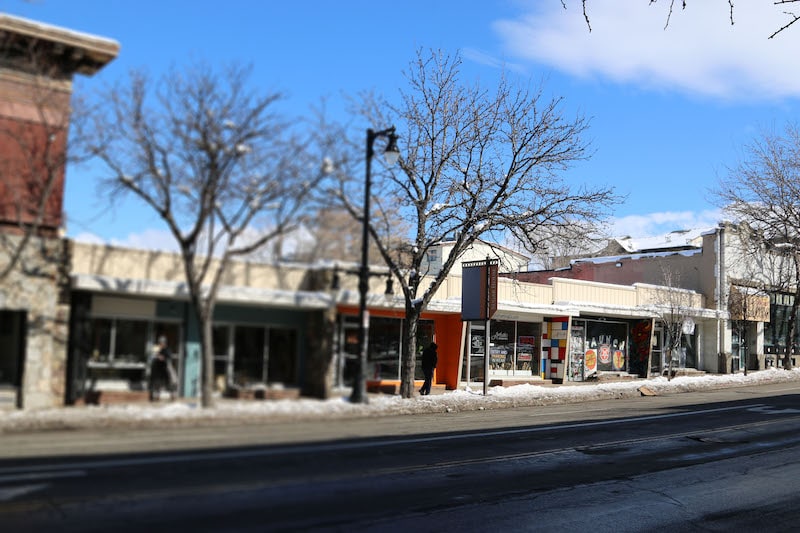
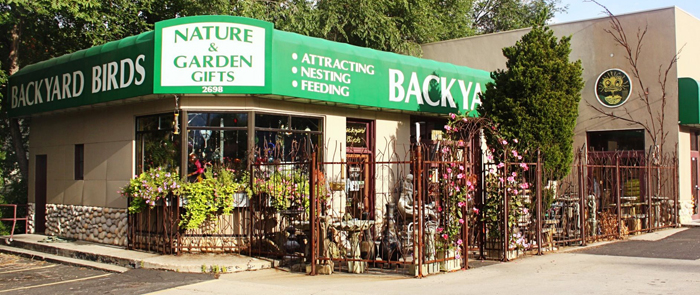
Backyard Birds is located at 2698 Highland Drive, and has all the supplies for making a home for Utah birds.

Backyard Birds offers one of the most enchanting retail experiences in Sugar House. Wind chimes, and the sound of water fountains draw one into the store decorated with dozens of artisan-made items and other pieces to turn a backyard into a bird sanctuary.

Owners Rob Blackhurst and Trace Sweeten opened The Bay dance club together almost 40 years ago when they were in their twenties. Using the experience of building a business from the ground up, they opened Backyard Birds. Trace recalls, “It was just going to be this little, small shop making bird feeders and houses, with a sofa and TV out front so Rob could watch Oprah. One thing led to another and it took on a life of its own.” In 2016 they were voted the Best Birding Retailer of the Year at the North American Wild Bird Expo.

Even during the Great Recession, they continued to grow, mainly due to their business savvy and filling a niche market that was overlooked in Salt Lake. When asked about their secret to success, both summed it up as hard work, great value, and loving your customers. The love is easy to see when Trace’s 14-minute interview was interrupted twice by customers coming over to say “Hi.” A few customers stopped to give him a hug.

The staff, which has grown from 3 to 6 over the years, is led by the ever helpful JB Leonard, who has been there 13 years. All are attentive and knowledgeable. When asked about hummingbirds, I learned from JB that there are more than 300 species worldwide, with 12 in North America and 4 in Utah. The Utah hummingbirds start arriving in April and leave in October.

For those interested in feeding hummingbirds, he gave a nectar recipe of 4 parts water and 1 part plain white table sugar, no substitutes, and cautioned not to add red dye. Heat to dissolve the sugar and change the nectar every 2 to 3 days. He said red feeders placed in the shade are most attractive to the birds.

Customers are also secure in knowing that the seed/food is always fresh because it’s delivered one to three times a week. Both Rob and Trace explain their pricing model simply as “Give them the best price we can,” explained further as, “if we get our seed at a better price, we pass that on.” Two big box stores located nearby were more expensive per pound. Last year they offloaded, stacked, then sold over 348,000 pounds of birdseed. As Rob explained, because of their turnover, Backyard Birds’ seed is always fresh with no filler or milo in it that birds don’t eat.

And the birds can tell the difference. Rob said, “Have you seen a Jay picking up a number of peanuts? They’re weighing them and flying off with the heaviest. Why? It has the most meat in it! And all birds do that to one degree or another. ‘Where’s the beef!’ If you have old and/or stale seed they just push it out and then move on to someplace that has better seed. Here in Utah, we enjoy some 30 different species of birds that frequent our backyards. Treat them well and you’ll enjoy them for years.”

When asked to sum up their store, he pointed to the sign out in front that says, “Salt Lake’s Most Enchanting Store.” Whether you’re preparing for the only three days at the end of April when a particular rare species of bird flies through Salt Lake (such as the Bunting), or buying a birdhouse for the chickadees that are starting to nest now, Backyard Birds is the place to go.

Follow Backyard Birds on Facebook for helpful information and FYI tips.

Join our newsletter.
Stay informed.


  • Highway 6 and the Midland Trail: Utah’s Transcontinental Highway History

    From Price Canyon to Delta’s desert stretch, Utah played a central role in building the Midland Trail, one of America’s earliest transcontinental highways and the foundation of today’s Highway 6.


  • Utah Acquires US Magnesium Assets in $30M Deal to Protect the Great Salt Lake

    Utah leaders announced the state has successfully won the bid to acquire key assets of the defunct US Magnesium facility on the Great Salt Lake, including its associated water rights and property.


  • Whiskey, Bullets & a Buried Town: Archaeologists Reveal Alta’s Wild Past

    Before Alta was known for powder days and lift lines, it was a silver mining town clinging to the side of a narrow canyon. In the late 1800s, men lived at 8,000 feet, went underground each day, and endured winters that regularly buried buildings in snow. This past summer, that mining town resurfaced — literally — during construction at the Alta Ski Area.

    To understand what Alta really looked like, you don’t begin with legend. You begin with its trash — and this time, that happened almost by accident.

    Alta Ski Area was installing underground water reservoirs to support snowmaking. Because the project sits on Uinta-Wasatch-Cache National Forest land, an archaeologist was required to monitor the excavation. No one expected the trench to produce much.

    But, It did.

    Artifacts began surfacing almost immediately. Enough that the Forest Service contacted the Utah State Historic Preservation Office for help. Lexi Little, who coordinates the Utah Cultural Site Stewardship Program, helped mobilize nearly 30 volunteers to assist with what quickly became a focused two-week excavation.

    Winter deadlines were approaching. The pipes for the reservoirs had to go in the ground. There wasn’t time for a slow, extended dig.

    “It was two weeks of digging in the dirt and helping figure out exactly what we were looking at,” Little said.

    Most of the people screening soil weren’t professional archaeologists. They were trained stewards from around Utah — part of a statewide volunteer network that now approaches 500 people. They poured dirt through shaker screens, scanning for fragments that could piece together a town long buried.

    “Archaeology is human trash,” Little explained. “Archaeologists are very into trash.”

    Alta had left plenty behind.

    https://youtu.be/hzIHzx3OGoo?si=dKcl2CEz-t6FZzYw

    Victorian-style ceramics appeared first — the kind typically used in hotels. Medicine bottles followed. Ink bottles. Hand-blown glass. A porcelain doll’s foot surfaced from the soil, a small detail that shifted the mental image of the town. Families were here. Children were here. This wasn’t only a camp of miners.

    The bottles helped establish time. Manufacturing details — whether glass was hand-blown or mold-made, whether a maker’s mark appeared on the base — allowed archaeologists to date many of the artifacts to the 1870s through the 1890s, when Alta was booming as a silver mining town.

    “That gives you that range of dates for when Alta was really booming,” Little said.

    One reusable soda bottle clearly stamped “Salt Lake City” connected the canyon to the valley economy below.

    Then something unusual rolled out of a dirt pile.

    A corked bottle. Intact. Liquid still inside.

    To access this post, you must purchase Utah Stories (Digital + Print) or 3 month free trial (Digital).


  • The Only Full Bottle of Alcohol Ever Found in Utah Was Unearthed in Alta

    When a backhoe rolled a corked bottle out of the dirt at Alta this summer, no one immediately grasped what they were holding. It wasn’t empty. It wasn’t shattered. It was full. “The bottle that was discovered up at Alta is the only bottle of alcohol ever discovered in an archaeological excavation in the state…