
Development Projects

Greenprint Apartments – An Urban Micro-Housing Experiment

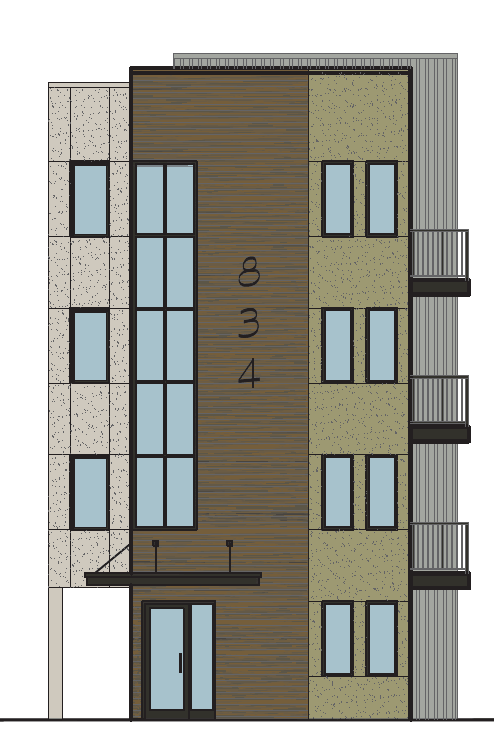
Energy efficient, affordable, comfortable and small describe the new apartments at 800 South and 200 West of Salt Lake City.

|


Steve Ruf learned early in his search for financing that “affordable housing” can be a subjective term to bankers. “They said, ‘Who’d want to live in this?’” Steve laughs, as he recounts his conversations with lenders. But the Orem-based developer persisted, and he expects to rent units in the first of two apartment buildings in May.

Greenprint Apartments, located on the 800 South block of 200 West, represents a new trend in micro-unit affordable housing. Each of the two buildings will have 60 apartments ranging in size from about 250–350 square feet. “They’re not very large,” Steve acknowledges, “but people can afford it.” Monthly rents are expected to be between $700 and $800.

Steve saw this new style of housing in other cities, such as Seattle and Portland. He thought the urban design made matter-of-fact good business sense, and believes that Salt Lake’s housing circumstances favor this kind of development, noting the city’s “hot market and low vacancy” status. Steve anticipates that the concept, enhanced by its location, will attract a predictable demographic, which points back to the question: Who’d want to live in this?

Steve imagines his target renters will be 18–30 year-old single professionals or students who want to live in an urban environment with easy access to public transportation. The size of the units also assumes that would-be renters may prefer a minimalist lifestyle, an ideology that’s been a topic in the national simple living conversation.

Living with less doesn’t mean having less. 21st-century minimalists consciously focus on culling the essential possessions from the non-essential, and this new breed of non-materialists may also shift their energy from consuming and managing personal property to finding meaning by engaging in life’s intangible but important aspects. That’s a lot of life-philosophy to pack into 300 square feet, but Steve thinks the developing values of a younger generation will translate to full occupancy. “We could have a thousand units and they’d be filled,” he says confidently.

Steve also anticipates potential renters will appreciate Greenprint’s energy efficiency. “We couldn’t fit solar on the roof,” he says, “but we’ve basically done everything we could to make it efficient.”
Construction includes a high-efficiency HVAC system, luxury vinyl tile flooring, low-flow shower heads and “probably” Energy Star appliances. The two apartment buildings will have a total of 12 ADA compliant units for tenants with disabilities.
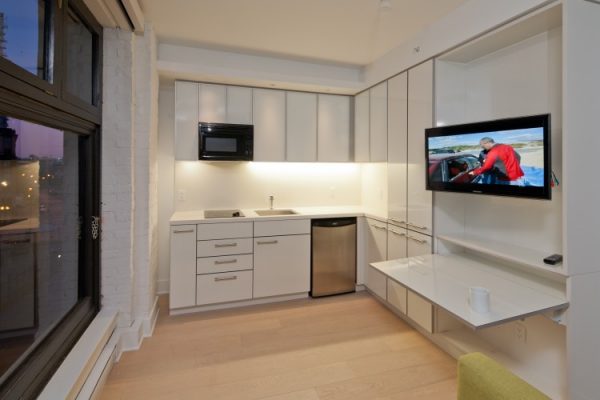
In a society that broadcasts the message “More is more,” it will be interesting to note who chooses the “Less is more” lifestyle.

One thing we know here at the magazine is that Utah Stories is the right size to complement one of Greenprint’s apartments.

Ruf Associates is accepting applications, and those interested in applying for a unit may contact Steve at steve@rufassociates.com .


Join our newsletter.
Stay informed.


  • A Ski Village or a Tipping Point? Nordic Valley Expansion Divides Ogden Valley

    The project, known as Nordic Village, is expected to roll out over the next decade and represents one of the largest tourism developments in the valley’s history.


  • Ogden Utah: Boomtown, Bargain, or Utah’s Next Unaffordable City?

    With its reinvigorated downtown and close proximity to mountains and river pathways, this northern Utah city is enjoying a renaissance. Ogden’s stock of affordable housing — compared to other metros along the Wasatch Front — currently draws people in for a closer look. 


  • The End of an Era? FanX and the Salt Palace Closure

    For more than a decade, FanX has called the Salt Palace home. With the convention center set to close for a massive renovation, founder Dan Farr is preparing for a new chapter while planning one final celebration in its longtime venue.


  • The Stratos Project and Corporate Power: Who Controls Utah’s Future?

    If we were all just consumers, Governor Cox, Mike Lee, Speaker Schultz, and Kevin O’Leary would have it easy. If we were just more concerned about money, jobs, and tech, and less concerned about raising our kids in communities (not in front of screens), culture, the environment, and water, those smart dudes would get exactly what they want — Stratos: a city of the future, buzzing with processors and transistors, making all of our AI dreams come true! 

    The world we could live in would be a dazzling, Mr. Wonderful kind of place. We would beat those pesky Chinese in the AI war; our AI robots could do all of our farming and ostensibly harvest the water we need for the Great Salt Lake out of thin air. But apparently, we just don’t get it. We haven’t yet reached the point predicted by Aldous Huxley’s vision in Brave New World, where we are completely distracted, dopamine-driven consumers who only need sex, drugs, and stuff to remain happy.

    Maybe Stratos will be an amazing marvel, and somehow, as Governor Cox claims, “. . . add more water to the Great Salt Lake.” But we aren’t sold. While this Stratos project has received considerable attention, it’s worth taking a step back to attempt to understand how corporate power appears to have usurped civic power.

    Civics is the practice of shaping our society through our collective voices and community involvement. Ask the residents in Tremonton, Utah how well that is working out for them. Can we still shape our world through our elected leaders? Does it matter who we vote for at the ballot box if organizations like UDOT, UTA, and MIDA can supersede our local government authority and citizen backlash? 

    The corporatization of our communities and the interests that impact our political leaders’ decision making processes are seen as far more of a concern than the average Utah resident’s concerns. Special interests and corporate power are shaping Utah’s future more than ever. 

    It’s worth asking: ‘How can we regain control over shaping Utah’s future in light of the growing power and billions that the technocrats now wield in shaping our world today?’ Amazon’s market cap exceeds the GDP of Canada. The “Magnificent Seven” tech stocks now have a greater market cap than the entire GDP of Europe ($23.6 trillion. EU countries have $19.3 trillion GDP). Will tech companies become their own nation-states and dominate their own chunks of various states? Will we become their subjects?

    There are two sides to this coin: We love Utah not just because we have the most outdoor wilderness playgrounds, but also because of Utah’s prosperity and job market. This is because Utah has become a tech hub. Our tech leadership has minted several billionaires and billion-dollar businesses. Utah offers a market and an educated workforce that more businesses and giant corporations want to be a part of. This is a benefit for even non-tech Utahns.

    The problem with this success is that as we dole out more money to attract more tech businesses, data centers, fulfillment centers, and big corporate retailers, it becomes more difficult to carve out our “sense of community.” As corporate sovereignty replaces local business sovereignty, we see that our voices and our votes matter less.

    Ask who our politicians work for, and nearly every Utahn believes they work far more for their corporate donors than they work for the average Utah citizen. So how do we best regain control over our communities?

    Continue reading and support independent Utah journalism with a purchase of Utah Stories (Digital + Print) or 3 month free trial (Digital).