Utah Stories

Ice Fishing in Utah

If you shed a tear when you hang up your fishing pole, maybe it’s time to try ice fishing.

|


More Utahns are trying to eat healthier foods, and one of those foods is fish. Unfortunately, fish from the ocean is becoming less healthy as it accumulates human pollutants like mercury.

 Health experts do not recommend that pregnant women, those planning to become pregnant, and younger children eat canned tuna and other ocean fish due to higher levels of mercury and PCBs.

Studies in other parts of the world do indicate, however, that the benefits of eating fish often outweigh the negative effects of human-created pollutants.

So, if one does not know the source of their fish, or the potential dangers, what is a person to do? I suggest they harvest fish from our own Utah waters that do not have high levels of these pollutants.

Many Utahns think that becoming an angler is too difficult and expensive. They have visions of $60,000 bass boats and the vehicles required to tow them, until they learn that they do not need all of that “elitist crap.” Almost anyone can obtain a fishing rod for free or buy one at a yard sale.

An annual Utah fishing license is free for those under 12 years of age, less than $16 for up to 17 years, and only $34 for those up to 64. Learning to catch fish through the ice is far easier, safer, and less expensive than most people think.

To get started, you could take my annual ice fishing class through West High School Community Education that usually starts about second week in January. I try to cover everything, including the food fishes and how to catch them here in Utah’s waters. Equipment can be a simple as insulated rubber boots, a warm hat, windbreaker, sunglasses, a chemical hand warmer, a five-gallon bucket with a lid, and a small kiddie sled to drag stuff on.

We make our own fishing rods in my class, and we learn a couple of easy fishing line knots to tie on the relatively simple fishing tackle required.

You could learn that one does not even need to drill holes in the ice, as plenty of holes are usually available in good areas, and experienced ice fishermen are generally pretty friendly and willing to help newcomers out.

Ice fishing can be cold if it is overcast and windy, however, if it is clear and calm, the temperatures on the ice can be as much as 20-degrees warmer above the winter inversions of the Wasatch Front.
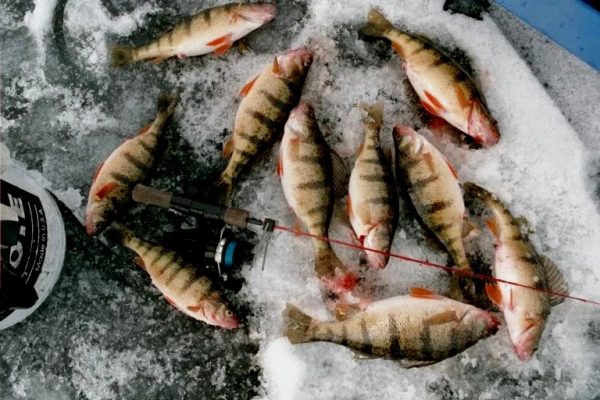
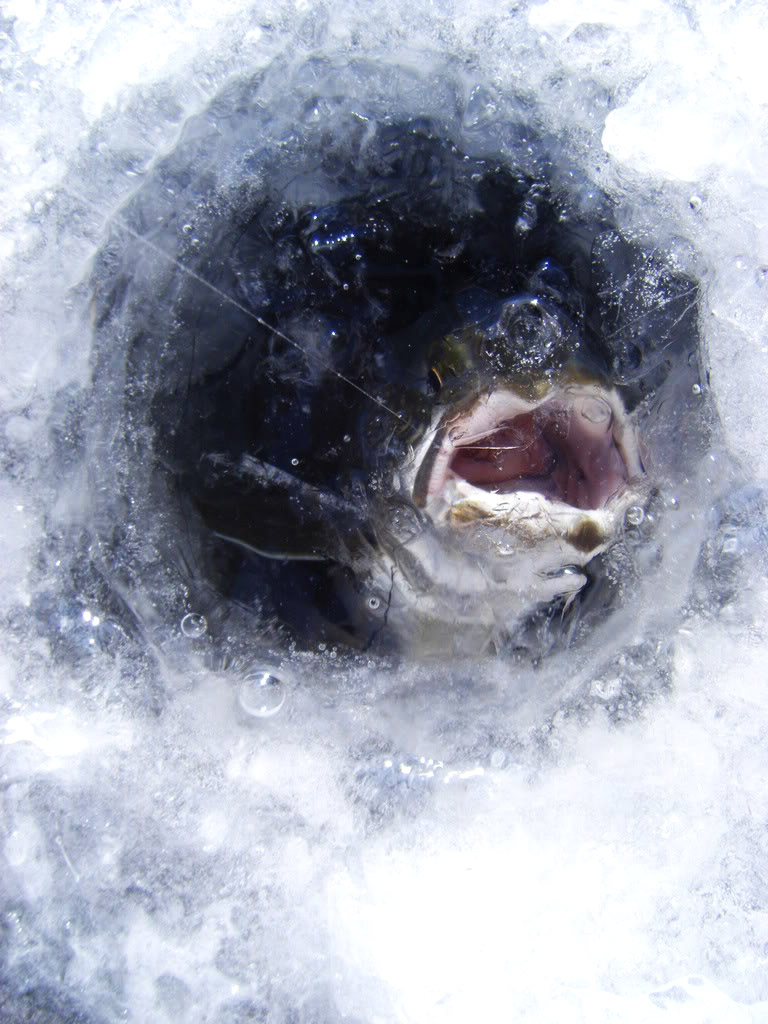
Utah Yellow Perch – Photo by Dan Potts

So, what the heck! Learn to ice fish. Get out into the sunlight. Catch and eat some of Utah’s yummy trout. Be happier and healthier. 

 

, ,


Join our newsletter.
Stay informed.


  • Highway 6 and the Midland Trail: Utah’s Transcontinental Highway History

    From Price Canyon to Delta’s desert stretch, Utah played a central role in building the Midland Trail, one of America’s earliest transcontinental highways and the foundation of today’s Highway 6.


  • Whiskey, Bullets & a Buried Town: Archaeologists Reveal Alta’s Wild Past

    Before Alta was known for powder days and lift lines, it was a silver mining town clinging to the side of a narrow canyon. In the late 1800s, men lived at 8,000 feet, went underground each day, and endured winters that regularly buried buildings in snow. This past summer, that mining town resurfaced — literally — during construction at the Alta Ski Area.

    To understand what Alta really looked like, you don’t begin with legend. You begin with its trash — and this time, that happened almost by accident.

    Alta Ski Area was installing underground water reservoirs to support snowmaking. Because the project sits on Uinta-Wasatch-Cache National Forest land, an archaeologist was required to monitor the excavation. No one expected the trench to produce much.

    But, It did.

    Artifacts began surfacing almost immediately. Enough that the Forest Service contacted the Utah State Historic Preservation Office for help. Lexi Little, who coordinates the Utah Cultural Site Stewardship Program, helped mobilize nearly 30 volunteers to assist with what quickly became a focused two-week excavation.

    Winter deadlines were approaching. The pipes for the reservoirs had to go in the ground. There wasn’t time for a slow, extended dig.

    “It was two weeks of digging in the dirt and helping figure out exactly what we were looking at,” Little said.

    Most of the people screening soil weren’t professional archaeologists. They were trained stewards from around Utah — part of a statewide volunteer network that now approaches 500 people. They poured dirt through shaker screens, scanning for fragments that could piece together a town long buried.

    “Archaeology is human trash,” Little explained. “Archaeologists are very into trash.”

    Alta had left plenty behind.

    https://youtu.be/hzIHzx3OGoo?si=dKcl2CEz-t6FZzYw

    Victorian-style ceramics appeared first — the kind typically used in hotels. Medicine bottles followed. Ink bottles. Hand-blown glass. A porcelain doll’s foot surfaced from the soil, a small detail that shifted the mental image of the town. Families were here. Children were here. This wasn’t only a camp of miners.

    The bottles helped establish time. Manufacturing details — whether glass was hand-blown or mold-made, whether a maker’s mark appeared on the base — allowed archaeologists to date many of the artifacts to the 1870s through the 1890s, when Alta was booming as a silver mining town.

    “That gives you that range of dates for when Alta was really booming,” Little said.

    One reusable soda bottle clearly stamped “Salt Lake City” connected the canyon to the valley economy below.

    Then something unusual rolled out of a dirt pile.

    A corked bottle. Intact. Liquid still inside.

    Continue reading and support independent Utah journalism with a purchase of Utah Stories (Digital + Print) or 3 month free trial (Digital).


  • The Only Full Bottle of Alcohol Ever Found in Utah Was Unearthed in Alta

    When a backhoe rolled a corked bottle out of the dirt at Alta this summer, no one immediately grasped what they were holding. It wasn’t empty. It wasn’t shattered. It was full. “The bottle that was discovered up at Alta is the only bottle of alcohol ever discovered in an archaeological excavation in the state…


  • How Horses Help Kids Heal: Inside Utah’s Equine Therapy World

    Kelty Johnson trains horses for a living, but her deeper work happens in the quiet space between animal and human. On the Utah Stories podcast, she explains how equine therapy helps children regulate emotions, build confidence, and reconnect through presence rather than pressure.