Utah Stories

Farms VS. Suburbia

Will Utah’s population growth and urban sprawl be the end of family farms along the Wasatch Front?

|


This video shows the problems with Utah family farms in the eyes of the city, state and UDOT. This is the story of the Cook Family who have decided to hold their ground despite constant challenges by state leaders who make it clear they wish they were gone.

Now into their fourth generation on the same ground, the Cook Family Farm and Greenhouse in Vineyard is a rarity in family farming. Six years ago, Verl Cook was faced with some tough choices. The city wanted to treat Cook’s greenhouse business like any other big-box store, requiring him to spend $200,000 for a paved parking lot.
unspecified
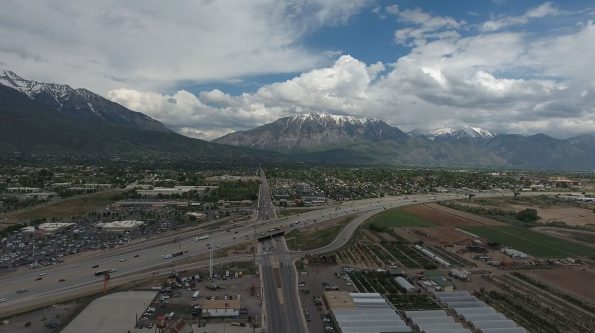
Urban sprawl and population growth threaten family farms like the Cook Family Farm and Greenhouse

At the same time, UDOT, via eminent domain, was planning to take a bite out of the Cook farm to widen the I-15 freeway corridor and build an off-ramp. To further complicate matters, the city needed to run a new sewer line through Cook’s farm to service the huge developments under construction on Geneva Road. But Cook, his wife, Londa, and their eight children decided to stand their ground rather than sell.

Business is good at the Cook Greenhouse, but still, Cook says, “They make it clear they would like us gone.” Verl’s son, Tony, added, “Orem City recently did a study for ‘best use’ of this property and they determined that we are a detriment to the area and we shouldn’t be here.”

The only reason why the Cook Farm can survive at all is due to the reduced amount of property taxes they to pay thanks to Utah’s Green Belt statute, formally known as the Farmland Assessment Act. But state legislators, many of them developers, want to kill the Act, which would force the Cook’s to sell.
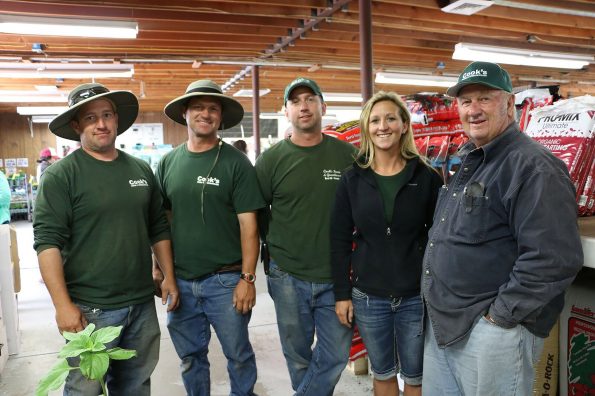
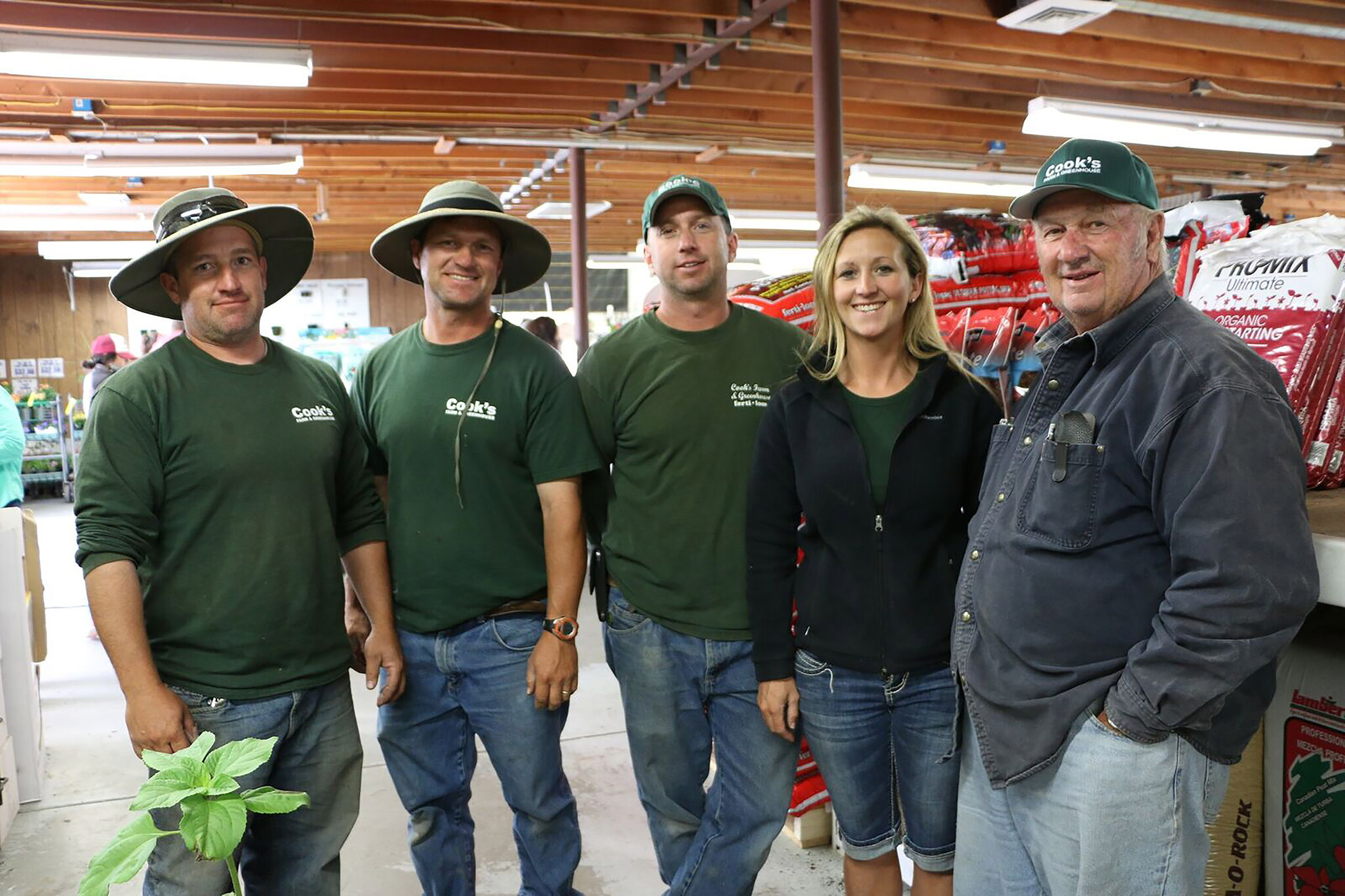
Jeff Cook Ryan Cook Tony Cook Trina Cook and Ve…ineyard Utah
Jeff Cook, Ryan Cook, Tony Cook, Trina Cook, and Verl Cook of Cook Family Farm and Greenhouse

Tony Cook doesn’t believe the city factors in the value of his green space, the significant amount of produce the farm grows, and the general good they provide to the local community, including part of its food supply. Instead, Orem City and the State of Utah only valuate the property in economic terms when considering “Highest and Best Use,” or in other words, more revenue.

A study conducted by Envision Utah found that nearly eighty percent of residents want to preserve agricultural lands in Utah and increase the availability of local food sources. Utah only supplies three percent of its fruit and vegetable needs, and residents are in favor of increasing this amount, or of at least maintaining current levels without the continuing loss of agriculture to the encroachment of a big-box and strip mall invasion. And while many residents consider themselves “preppers,” ready for any catastrophe, most urban Utahns would be faced with a massive shortage of fresh fruits and vegetables in the event of even a minor disruption in the food supply chain.

The Sacco’s family has operated a local produce store in Ogden, working with the same local farmers for the past 80 years. According to Carlo Sacco, “Everything is going downhill right now. It’s getting harder to find produce and prices are getting higher. The tree products are the hardest to supply; the cherries, peaches, apricots. Apples are pretty much gone now. People, every year, they ask for McIntosh, Winesap, Black Twig apples. Those are all old-school apples you can’t even get any more.”
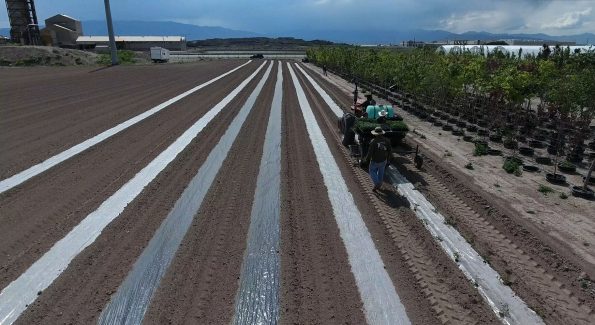
planting tomatoes at Cooks Farm in Vineyard Utah.
Planting tomatoes on the Cook farm just east of former Geneva Steel

Tony Cook says, “We don’t want to go anywhere.” Two of the Cook’s customers, Ted and Kim, agree, “We love coming here because we know where our money is going, and we would rather patronize people we know. There are enough Wal-Marts in this area.”

If it seems like there’s a massive disconnect between what residents want and the economic tax benefits to the city and state, there is. My question for Cook is, “Why is there such a divide between what residents want and what the City and State are doing to this area?” For the farmers who don’t want to sell, is the pressure too great?
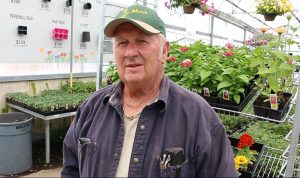
verl cook smiling
Verl Cook at home in his greenhouse

“That is a question I really wish I had an answer for,” says Cook. “The State Engineer is currently pulling water shares away from farmers and allocating it for other uses, while the greatest soil in Utah County is sitting under residential and commercial developments,” he explains. In other words, watering crops is no longer considered a beneficial use of water according to the State of Utah.

Just down Geneva Road from the Cook farm is the shuttered Holdaway farm and greenhouse. Grant Holdaway was already forced to hand over his land to the city of Orem through eminent domain. He lives across the street from his former business and still holds ownership. Meanwhile, his children, like most of their generation, have decided to pursue careers other than farming.


Join our newsletter.
Stay informed.


  • Highway 6 and the Midland Trail: Utah’s Transcontinental Highway History

    From Price Canyon to Delta’s desert stretch, Utah played a central role in building the Midland Trail, one of America’s earliest transcontinental highways and the foundation of today’s Highway 6.


  • Utah Acquires US Magnesium Assets in $30M Deal to Protect the Great Salt Lake

    Utah leaders announced the state has successfully won the bid to acquire key assets of the defunct US Magnesium facility on the Great Salt Lake, including its associated water rights and property.


  • Whiskey, Bullets & a Buried Town: Archaeologists Reveal Alta’s Wild Past

    Before Alta was known for powder days and lift lines, it was a silver mining town clinging to the side of a narrow canyon. In the late 1800s, men lived at 8,000 feet, went underground each day, and endured winters that regularly buried buildings in snow. This past summer, that mining town resurfaced — literally — during construction at the Alta Ski Area.

    To understand what Alta really looked like, you don’t begin with legend. You begin with its trash — and this time, that happened almost by accident.

    Alta Ski Area was installing underground water reservoirs to support snowmaking. Because the project sits on Uinta-Wasatch-Cache National Forest land, an archaeologist was required to monitor the excavation. No one expected the trench to produce much.

    But, It did.

    Artifacts began surfacing almost immediately. Enough that the Forest Service contacted the Utah State Historic Preservation Office for help. Lexi Little, who coordinates the Utah Cultural Site Stewardship Program, helped mobilize nearly 30 volunteers to assist with what quickly became a focused two-week excavation.

    Winter deadlines were approaching. The pipes for the reservoirs had to go in the ground. There wasn’t time for a slow, extended dig.

    “It was two weeks of digging in the dirt and helping figure out exactly what we were looking at,” Little said.

    Most of the people screening soil weren’t professional archaeologists. They were trained stewards from around Utah — part of a statewide volunteer network that now approaches 500 people. They poured dirt through shaker screens, scanning for fragments that could piece together a town long buried.

    “Archaeology is human trash,” Little explained. “Archaeologists are very into trash.”

    Alta had left plenty behind.

    https://youtu.be/hzIHzx3OGoo?si=dKcl2CEz-t6FZzYw

    Victorian-style ceramics appeared first — the kind typically used in hotels. Medicine bottles followed. Ink bottles. Hand-blown glass. A porcelain doll’s foot surfaced from the soil, a small detail that shifted the mental image of the town. Families were here. Children were here. This wasn’t only a camp of miners.

    The bottles helped establish time. Manufacturing details — whether glass was hand-blown or mold-made, whether a maker’s mark appeared on the base — allowed archaeologists to date many of the artifacts to the 1870s through the 1890s, when Alta was booming as a silver mining town.

    “That gives you that range of dates for when Alta was really booming,” Little said.

    One reusable soda bottle clearly stamped “Salt Lake City” connected the canyon to the valley economy below.

    Then something unusual rolled out of a dirt pile.

    A corked bottle. Intact. Liquid still inside.

    To access this post, you must purchase Utah Stories (Digital + Print) or 3 month free trial (Digital).


  • The Only Full Bottle of Alcohol Ever Found in Utah Was Unearthed in Alta

    When a backhoe rolled a corked bottle out of the dirt at Alta this summer, no one immediately grasped what they were holding. It wasn’t empty. It wasn’t shattered. It was full. “The bottle that was discovered up at Alta is the only bottle of alcohol ever discovered in an archaeological excavation in the state…