Utah Stories

Helping Fido Heal

Discover healthy alternatives for treating your ailing pet.

|


unnamed
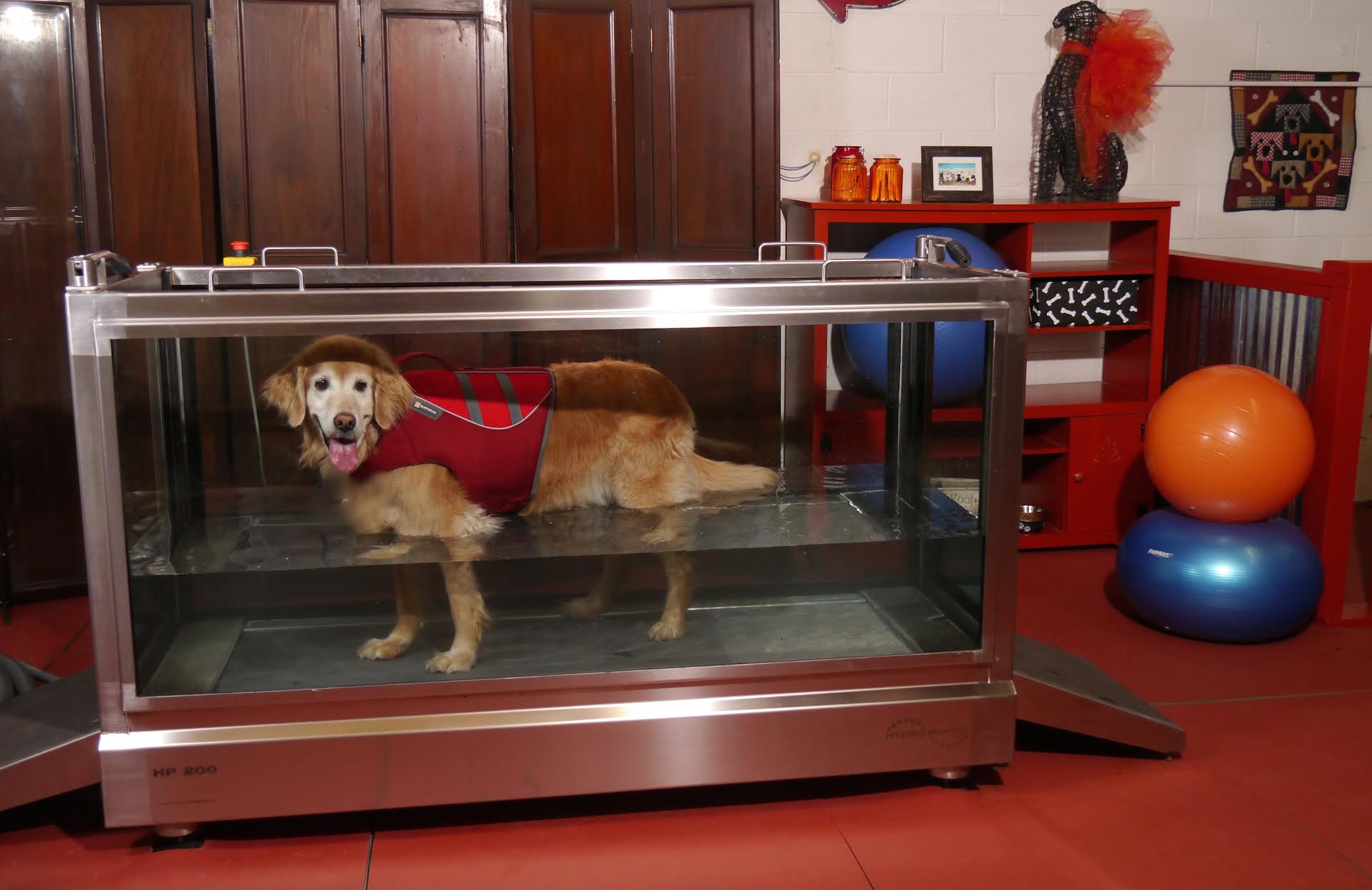
Underwater treadmill therapy can benefit older and injured dogs. Photo by Jeri Abel

Western medicine is the current mainstream health care option for our society’s pets, but alternative and holistic options are gaining in popularity. Unfortunately, herbs and acupuncture still will not cure cancer, but taking your pet to a provider who uses natural remedies to correct system imbalances is a great way to help your four-legged friend.

Dr. Debbie Hadlock, VMD, and Dr. Kimberly Henneman, DVM, of Animal Health Options in Jeremy Ranch, have an integrated practice. Both are trained in traditional western medicine and in holistic health care including acupuncture, Chinese herbology and Tui Na, one of the five branches of Chinese Medicine.

Tui Na has been practiced for over 3,000 years and is similar to acupuncture, but without using needles.

“Tui Na is a very good thing to offer clients that have older animals not up to needling,” Hadlock said. “I knew there had to be something else besides treating animals with antibiotics and steroids. The holistic approach views medicine differently. Using a holistic philosophy, you view symptoms as a clue to a bigger problem, which connects in the whole body. The objective is to strengthen the whole body, not just one organ.”

Dr. Hadlock has had great success treating large and small animals using alternative methods. From food therapy to herbology, she goes to great lengths to connect to the animal and treat them according. She recently treated a 5-year-old Labrador with paralysis of his hind end. Hadlock was able to access the animal using her western neurological training and determined that the dog had a lesion high up in his thoracic area. She then chose to perform electro-acupuncture on the dog. After treatment, the dog sat up, and started to wag his tail.

“If you can’t define a specific diagnosis, then you need to make a list of differential diagnoses and problem solve through each of those. That’s how I approach my cases,” Hadlock said.

Tena Hosie, PT, CCRT of Alta Dog Rehabilitation uses physical therapy and/or massage on dogs with orthopedic or neurological issues, and injured or elderly dogs. Hosie was a human physical therapist for 26 years before becoming certified in canine rehabilitation.

“I think one of the advantages with canines and felines is that by nature they are athletes. They are very motivated to participate and do all the things we ask of   them, so it is a very effective treatment, especially in injured or elderly animals,” Hosie said. “One of my patients is an amputee and his parents were telling me he was getting grumpy. After doing some physical therapy treatments on him, and swimming on the underwater treadmill, he seems a lot more comfortable.”

Hosie has found that using these alternatives allows owners to cut down on pain medication. Hosie also uses cold laser, electrical stimulation and stretching along with massage, often with great results.

Join our newsletter.
Stay informed.


  • Highway 6 and the Midland Trail: Utah’s Transcontinental Highway History

    From Price Canyon to Delta’s desert stretch, Utah played a central role in building the Midland Trail, one of America’s earliest transcontinental highways and the foundation of today’s Highway 6.


  • Utah Acquires US Magnesium Assets in $30M Deal to Protect the Great Salt Lake

    Utah leaders announced the state has successfully won the bid to acquire key assets of the defunct US Magnesium facility on the Great Salt Lake, including its associated water rights and property.


  • Whiskey, Bullets & a Buried Town: Archaeologists Reveal Alta’s Wild Past

    Before Alta was known for powder days and lift lines, it was a silver mining town clinging to the side of a narrow canyon. In the late 1800s, men lived at 8,000 feet, went underground each day, and endured winters that regularly buried buildings in snow. This past summer, that mining town resurfaced — literally — during construction at the Alta Ski Area.

    To understand what Alta really looked like, you don’t begin with legend. You begin with its trash — and this time, that happened almost by accident.

    Alta Ski Area was installing underground water reservoirs to support snowmaking. Because the project sits on Uinta-Wasatch-Cache National Forest land, an archaeologist was required to monitor the excavation. No one expected the trench to produce much.

    But, It did.

    Artifacts began surfacing almost immediately. Enough that the Forest Service contacted the Utah State Historic Preservation Office for help. Lexi Little, who coordinates the Utah Cultural Site Stewardship Program, helped mobilize nearly 30 volunteers to assist with what quickly became a focused two-week excavation.

    Winter deadlines were approaching. The pipes for the reservoirs had to go in the ground. There wasn’t time for a slow, extended dig.

    “It was two weeks of digging in the dirt and helping figure out exactly what we were looking at,” Little said.

    Most of the people screening soil weren’t professional archaeologists. They were trained stewards from around Utah — part of a statewide volunteer network that now approaches 500 people. They poured dirt through shaker screens, scanning for fragments that could piece together a town long buried.

    “Archaeology is human trash,” Little explained. “Archaeologists are very into trash.”

    Alta had left plenty behind.

    https://youtu.be/hzIHzx3OGoo?si=dKcl2CEz-t6FZzYw

    Victorian-style ceramics appeared first — the kind typically used in hotels. Medicine bottles followed. Ink bottles. Hand-blown glass. A porcelain doll’s foot surfaced from the soil, a small detail that shifted the mental image of the town. Families were here. Children were here. This wasn’t only a camp of miners.

    The bottles helped establish time. Manufacturing details — whether glass was hand-blown or mold-made, whether a maker’s mark appeared on the base — allowed archaeologists to date many of the artifacts to the 1870s through the 1890s, when Alta was booming as a silver mining town.

    “That gives you that range of dates for when Alta was really booming,” Little said.

    One reusable soda bottle clearly stamped “Salt Lake City” connected the canyon to the valley economy below.

    Then something unusual rolled out of a dirt pile.

    A corked bottle. Intact. Liquid still inside.

    To access this post, you must purchase Utah Stories (Digital + Print) or 3 month free trial (Digital).


  • The Only Full Bottle of Alcohol Ever Found in Utah Was Unearthed in Alta

    When a backhoe rolled a corked bottle out of the dirt at Alta this summer, no one immediately grasped what they were holding. It wasn’t empty. It wasn’t shattered. It was full. “The bottle that was discovered up at Alta is the only bottle of alcohol ever discovered in an archaeological excavation in the state…