Utah Stories

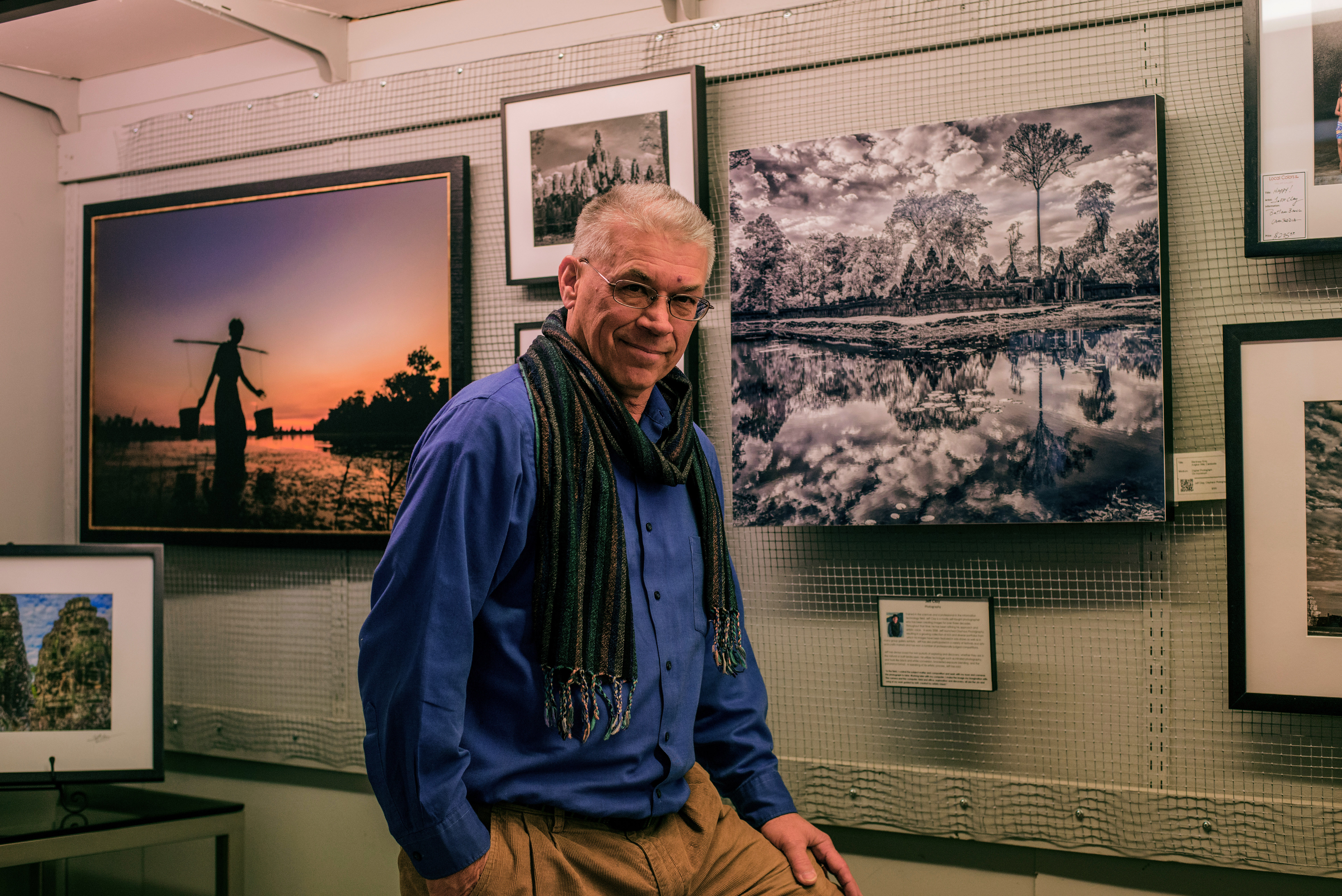
Photographer Jeff Clay of Local Colors

Professional photographer Jeff Clay, offers advice to aspiring photographers

|


Jeff Clay-18
Jeff Clay with some of his photography at Local Colors. Photo by Mike Jones

Congratulations! You are a photographer. With the affordability and availability of digital cameras, anyone can be a photographer. But what if you want to take your craft to the next level? Jeff Clay is a local photographer who has traveled the world, documenting with his camera. His work has been displayed in many venues along the Wasatch Front, and Jeff is a member of Local Colors of Utah, a Sugar House co-op gallery.

Here’s how Jeff suggests taking your photography to the next level.

  • Invest in a good camera and other equipment. Having a good camera like a DSLR (digital single-lens reflex) camera is essential. Investigate brands and decide what kind of camera and equipment will work well with your subject matter of interest.
  • Get to know your camera and lenses. You’ll be no good with your equipment if you don’t know the limitations of what your specific camera can do. “If you’re not the type to read manuals, join a photography club or Meetup group,” Jeff says. “I have seen photographers who went from novice to advanced in a matter of months just by associating with other photographers and groups.
  • Photograph as often as you can.”Get out there and take photos. Eventually your style as a photographer will start to become apparent,” Jeff says.
  • Learn software tools. “Taking the picture is not making the picture. Post-processing with Lightroom and/or Photoshop is critical to creating the image that YOU want.
  • Develop a style or vision. “When you start shooting, you generally shoot what interests you and are thinking only from shot-to-shot. Eventually though, your vision as a photographer starts developing. Fine tune what you shoot. Maybe it’s something that has been done before, but find a different way to do it.”
  • Get your work out there. “Cafes and restaurants can be great places to start to get your work seen. Most of those venues are just looking to get art on the walls and are pretty open about working with emerging artists. You may eventually want to approach galleries. You can also go the festival route and try to sell at markets and the big summer festivals in Salt Lake, Park City, and elsewhere. Getting your name out there is essential. Use social media sites such as Instagram, Tumblr, Google+ and Facebook, all of which I use as mini-blog platforms. Write about your work. As I travel and take photos, I like to add commentary to images I publish,” Jeff says. “Moving to the next level also means having a proper website. For me, that means that I can create easily navigable galleries, the look-and-feel can be configured to my liking, and a shopping cart is available for people to order online. Finally, make sure you frame your work properly. A relationship with a good frame shop or two can be beneficial on many levels.”
  • Build portfolios. “Make sure that your portfolios have themes. You will want to develop different projects on diverse subjects. Explore what interests you and discover how to present it. These can lead to portfolios that interest galleries.”

There you have it. While there is no one direct path to success, following Jeff’s advice can definitely help steer you toward becoming a better photographer.


For more information on Jeff Clay visit clayhausphotography.com

Local Colors of Utah: localcolorsart.com
Join our newsletter.
Stay informed.


  • Highway 6 and the Midland Trail: Utah’s Transcontinental Highway History

    From Price Canyon to Delta’s desert stretch, Utah played a central role in building the Midland Trail, one of America’s earliest transcontinental highways and the foundation of today’s Highway 6.


  • Whiskey, Bullets & a Buried Town: Archaeologists Reveal Alta’s Wild Past

    Before Alta was known for powder days and lift lines, it was a silver mining town clinging to the side of a narrow canyon. In the late 1800s, men lived at 8,000 feet, went underground each day, and endured winters that regularly buried buildings in snow. This past summer, that mining town resurfaced — literally — during construction at the Alta Ski Area.

    To understand what Alta really looked like, you don’t begin with legend. You begin with its trash — and this time, that happened almost by accident.

    Alta Ski Area was installing underground water reservoirs to support snowmaking. Because the project sits on Uinta-Wasatch-Cache National Forest land, an archaeologist was required to monitor the excavation. No one expected the trench to produce much.

    But, It did.

    Artifacts began surfacing almost immediately. Enough that the Forest Service contacted the Utah State Historic Preservation Office for help. Lexi Little, who coordinates the Utah Cultural Site Stewardship Program, helped mobilize nearly 30 volunteers to assist with what quickly became a focused two-week excavation.

    Winter deadlines were approaching. The pipes for the reservoirs had to go in the ground. There wasn’t time for a slow, extended dig.

    “It was two weeks of digging in the dirt and helping figure out exactly what we were looking at,” Little said.

    Most of the people screening soil weren’t professional archaeologists. They were trained stewards from around Utah — part of a statewide volunteer network that now approaches 500 people. They poured dirt through shaker screens, scanning for fragments that could piece together a town long buried.

    “Archaeology is human trash,” Little explained. “Archaeologists are very into trash.”

    Alta had left plenty behind.

    https://youtu.be/hzIHzx3OGoo?si=dKcl2CEz-t6FZzYw

    Victorian-style ceramics appeared first — the kind typically used in hotels. Medicine bottles followed. Ink bottles. Hand-blown glass. A porcelain doll’s foot surfaced from the soil, a small detail that shifted the mental image of the town. Families were here. Children were here. This wasn’t only a camp of miners.

    The bottles helped establish time. Manufacturing details — whether glass was hand-blown or mold-made, whether a maker’s mark appeared on the base — allowed archaeologists to date many of the artifacts to the 1870s through the 1890s, when Alta was booming as a silver mining town.

    “That gives you that range of dates for when Alta was really booming,” Little said.

    One reusable soda bottle clearly stamped “Salt Lake City” connected the canyon to the valley economy below.

    Then something unusual rolled out of a dirt pile.

    A corked bottle. Intact. Liquid still inside.

    Continue reading and support independent Utah journalism with a purchase of Utah Stories (Digital + Print) or 3 month free trial (Digital).


  • The Only Full Bottle of Alcohol Ever Found in Utah Was Unearthed in Alta

    When a backhoe rolled a corked bottle out of the dirt at Alta this summer, no one immediately grasped what they were holding. It wasn’t empty. It wasn’t shattered. It was full. “The bottle that was discovered up at Alta is the only bottle of alcohol ever discovered in an archaeological excavation in the state…


  • How Horses Help Kids Heal: Inside Utah’s Equine Therapy World

    Kelty Johnson trains horses for a living, but her deeper work happens in the quiet space between animal and human. On the Utah Stories podcast, she explains how equine therapy helps children regulate emotions, build confidence, and reconnect through presence rather than pressure.