
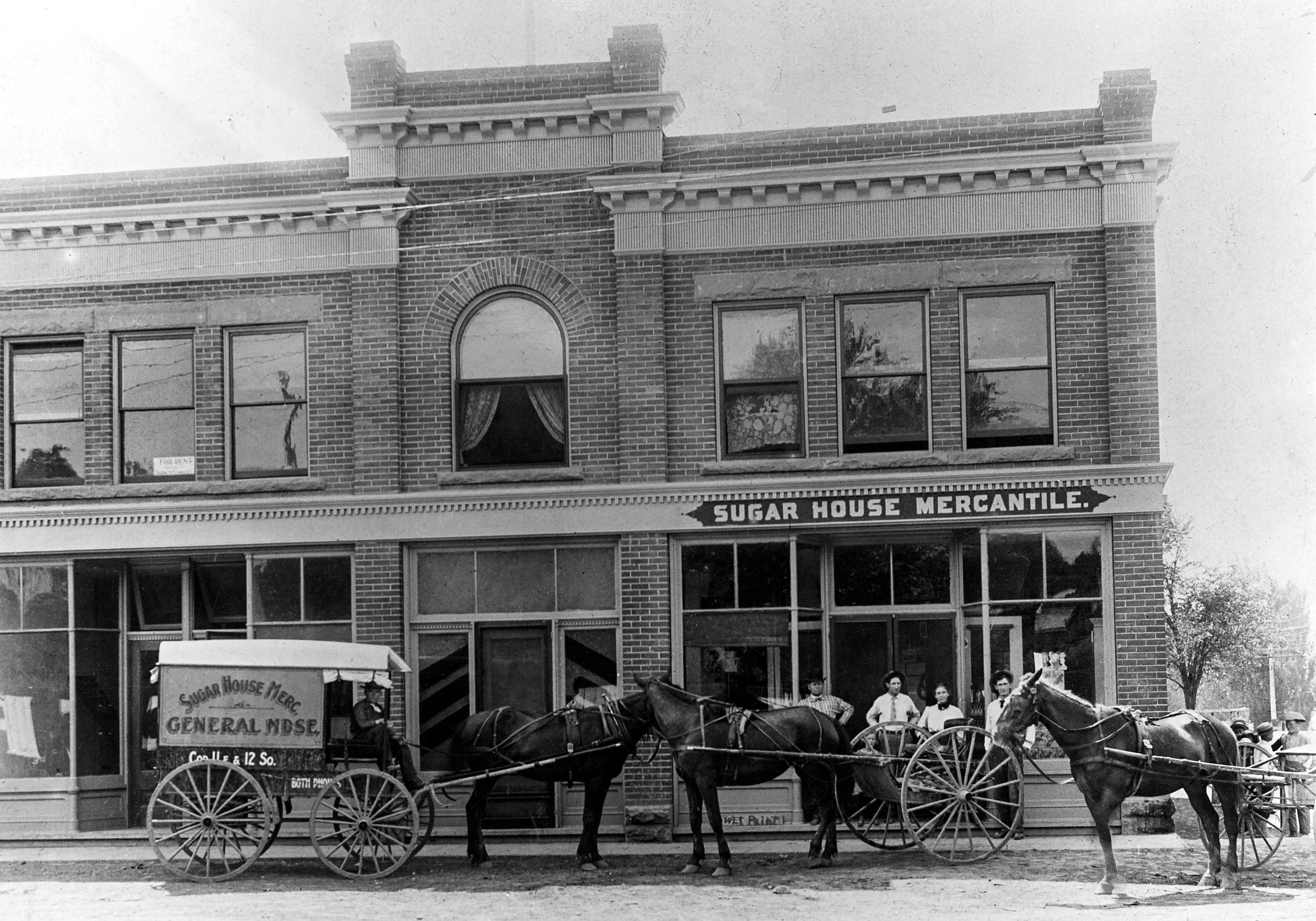
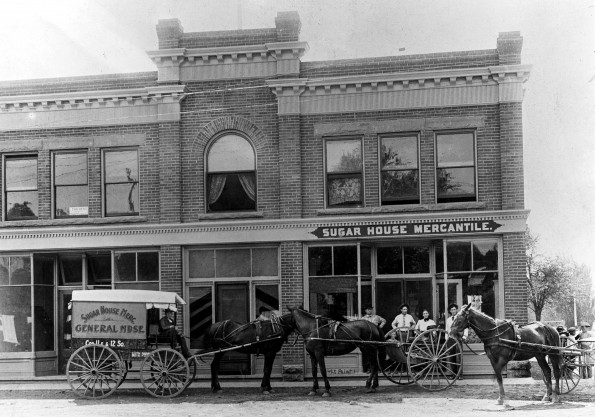
The recent demise of three more historic buildings in the central business district signals a turning point in Sugar House history. Their loss marked the second passing of Sugar House, echoing the changes that occurred in the late 1920s and 30s, when pioneer-era buildings were replaced by more modern structures. There are no surviving buildings dating from the 19th century. The Sugar Mill, the Territorial/State Prison, and the A.C. Smoot Mercantile (on the site of the present-day Monument Plaza) are long gone. Many of the replacement buildings, including Forest School, the Denver and Rio Grande Railroad Station, the first Sprague Library, and the first two Sugar House Ward meetinghouses, still figure prominently in stories told by long-time residents, but were demolished decades ago.
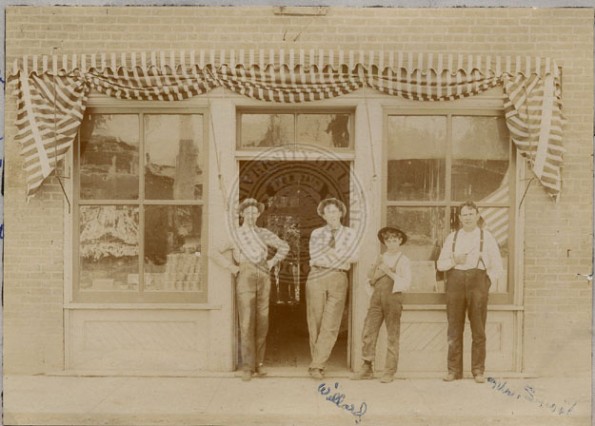
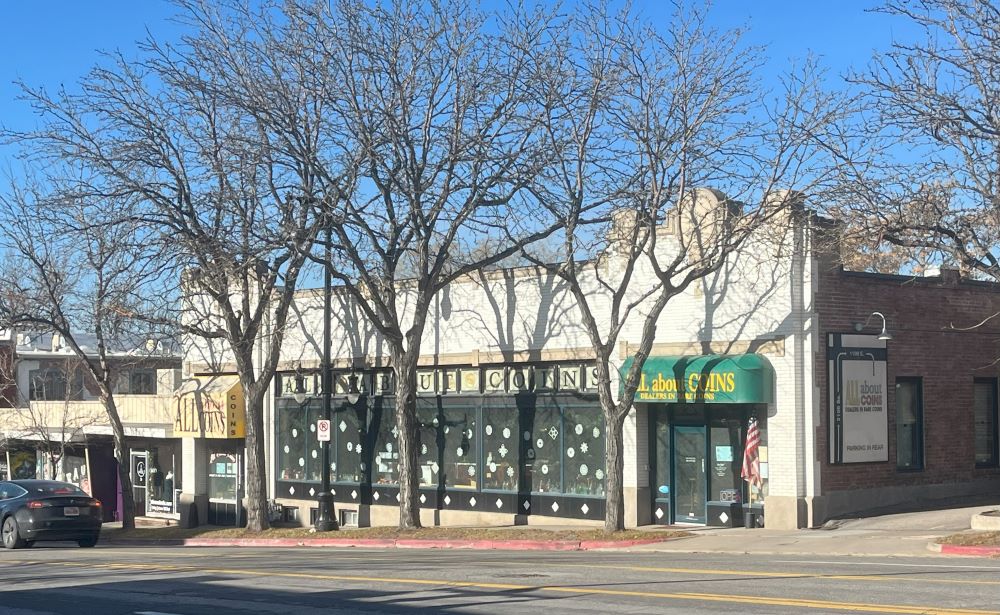
Most of the remaining old commercial buildings in Sugar House have been renovated to achieve a “modern” look for the structures. A historic survey conducted in October 2000 identified thirty-one commercial buildings within the area of study that dated from the period from 1910 to 1954. Today, only eleven retained their historic integrity.
Ten years ago, Salt Lake City was poised to submit documents to the National Register of Historic Places that would establish the Sugar House center as a historic district. Historic Planner Elizabeth Giraud said that it was worth submitting the nominations because the flavor and scale of Sugar House as a business district was still evident. If a few buildings could be renovated, she said, it would help reinforce the traditional scale that was evident in the business center.
That opportunity has passed. Despite public outcry to save the old buildings, they continued to disappear. What seemed to some to be a callous disregard for community values and sensibilities was seen by others as the lawful exercise of private property rights. Regardless, the historic buildings are gone forever, replaced by structures that dwarf the traditional one-and-two story streetscape.
But the Sugar House Chamber of Commerce is ready to embrace the new era. Board Chair Summer Shumway said that for Sugar House to continue to thrive and be relevant, gentrification is inevitable. However, she added, that does not mean that the history and uniqueness of Sugar House must also vanish. “We must keep in mind that a truly successful revitalization includes preservation of history and culture,” she said.
In April, the Chamber of Commerce will celebrate the 162nd anniversary of the naming of Sugar House. Special events will pay tribute to the history of the area, through an art walk, community activities, and sales promotions. It will be one of the ways Sugar House honors its history, which can never be demolished as long as it is remembered.