Utah Stories

Backyard Chicken Farming

Chicken farming is easy, fun, and can be done in any yard. Read up on how you can start your own poultry paradise.

|


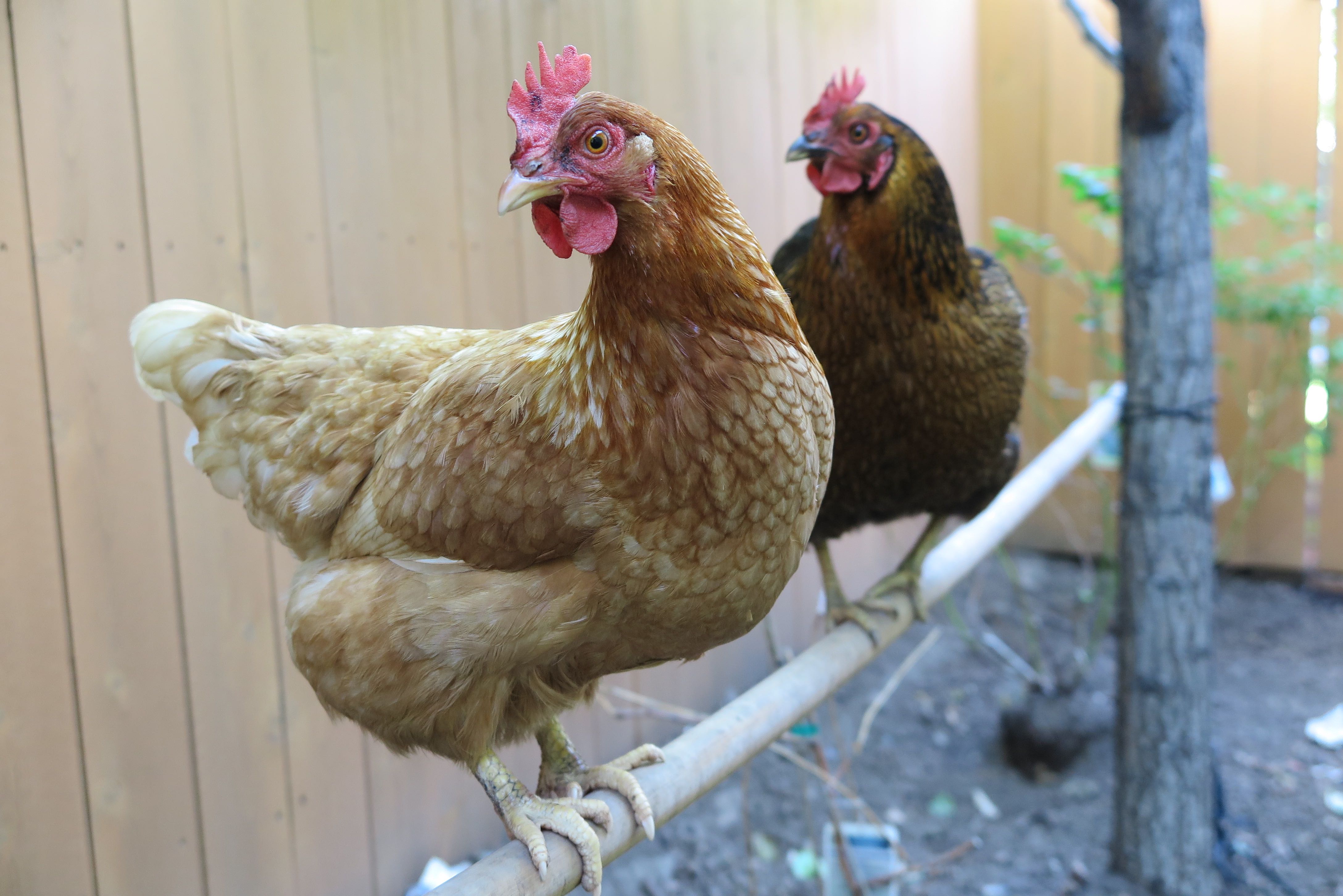
IMG_2105
Photo by Sarah Lappe

You Can Be a Farmer Too!

Did you know that you could raise your very own backyard chickens in Salt Lake City? Generally, once a coop is up and running, chickens are low maintenance and easy to take care of. Plus, they will produce the best eggs you have ever had with dark, yellow yolks and clear whites, and rich with vitamins.

Why raise chickens? Raising your own chickens gives you the opportunity to control the production of eggs. Factory chickens are likely to have poor living conditions and low-quality food options. In addition, factory eggs travel far to reach your plate. For example, Iowa is one of the nation’s top egg producers, but it is over 900 miles away. With your own backyard chickens, you can raise chickens that are happy and healthy, and you can eat eggs that have traveled only a few feet.

Which came first, the chicken or the egg? While this may be a perplexing philosophical question, it is also an important question to ask before getting started. You can begin raising your chickens starting from eggs, chicks or full-grown chickens. Keep in mind that each stage of life has different shelter and feed requirements. I would suggest starting your flock as chicks. Our local IFA County Stores sells a wide variety of chicks in the springtime. There are many species of chicks to choose from, so do your research and find a breed that suits your needs. In general you will want to pick out breeds that will fare well in the local climate.

It takes about 6-8 weeks for your chicks to grow into chickens. Once they are grown you can move your them to their coop. Chicken coops range in size, shape, color and design, however, there are a few standard features that create ideal living conditions. Your chickens need at least 4-square feet of space per chicken, protection from predators, and good ventilation. Your coop needs a roosting area that is at least a few feet off the ground, and nesting boxes filled with straw for egg laying. You can build your own coop or purchase a ready-made coop online or at IFA. Lastly, in addition to the coop, it is important to have a chicken run where your chickens can play and roam. After about 4-months of living in the coop, you can start to expect your chickens to produce their eggs.

Aside from producing delicious nourishment, your chickens are going to provide you with endless entertainment. Chickens are fun and a joy to watch. Chickens love scratching around to look for bugs, taking dirt baths, and being high on a perch. Chickens have different personalities that can range from sweet to aggressive, and they are very smart. As an added bonus, there is nothing funnier than watching chickens run to you.

When raising chickens it is important to know that every city and town in Utah has its own laws and ordinances. In Salt Lake City, you are permitted to own up to 15 chickens (but no roosters!) and your coop must be at least 25-feet away from your neighbor’s’ yard. Before beginning your chicken project, make sure you research the specific laws in your area because you can easily get hit with a hefty fine. Nevertheless, since the movement to be more local is staying strong, urban chickens can be your next step towards growing as a food producer, not just a consumer.


 

Join our newsletter.
Stay informed.


  • Highway 6 and the Midland Trail: Utah’s Transcontinental Highway History

    From Price Canyon to Delta’s desert stretch, Utah played a central role in building the Midland Trail, one of America’s earliest transcontinental highways and the foundation of today’s Highway 6.


  • Whiskey, Bullets & a Buried Town: Archaeologists Reveal Alta’s Wild Past

    Before Alta was known for powder days and lift lines, it was a silver mining town clinging to the side of a narrow canyon. In the late 1800s, men lived at 8,000 feet, went underground each day, and endured winters that regularly buried buildings in snow. This past summer, that mining town resurfaced — literally — during construction at the Alta Ski Area.

    To understand what Alta really looked like, you don’t begin with legend. You begin with its trash — and this time, that happened almost by accident.

    Alta Ski Area was installing underground water reservoirs to support snowmaking. Because the project sits on Uinta-Wasatch-Cache National Forest land, an archaeologist was required to monitor the excavation. No one expected the trench to produce much.

    But, It did.

    Artifacts began surfacing almost immediately. Enough that the Forest Service contacted the Utah State Historic Preservation Office for help. Lexi Little, who coordinates the Utah Cultural Site Stewardship Program, helped mobilize nearly 30 volunteers to assist with what quickly became a focused two-week excavation.

    Winter deadlines were approaching. The pipes for the reservoirs had to go in the ground. There wasn’t time for a slow, extended dig.

    “It was two weeks of digging in the dirt and helping figure out exactly what we were looking at,” Little said.

    Most of the people screening soil weren’t professional archaeologists. They were trained stewards from around Utah — part of a statewide volunteer network that now approaches 500 people. They poured dirt through shaker screens, scanning for fragments that could piece together a town long buried.

    “Archaeology is human trash,” Little explained. “Archaeologists are very into trash.”

    Alta had left plenty behind.

    https://youtu.be/hzIHzx3OGoo?si=dKcl2CEz-t6FZzYw

    Victorian-style ceramics appeared first — the kind typically used in hotels. Medicine bottles followed. Ink bottles. Hand-blown glass. A porcelain doll’s foot surfaced from the soil, a small detail that shifted the mental image of the town. Families were here. Children were here. This wasn’t only a camp of miners.

    The bottles helped establish time. Manufacturing details — whether glass was hand-blown or mold-made, whether a maker’s mark appeared on the base — allowed archaeologists to date many of the artifacts to the 1870s through the 1890s, when Alta was booming as a silver mining town.

    “That gives you that range of dates for when Alta was really booming,” Little said.

    One reusable soda bottle clearly stamped “Salt Lake City” connected the canyon to the valley economy below.

    Then something unusual rolled out of a dirt pile.

    A corked bottle. Intact. Liquid still inside.

    To access this post, you must purchase Utah Stories (Digital + Print) or 3 month free trial (Digital).


  • The Only Full Bottle of Alcohol Ever Found in Utah Was Unearthed in Alta

    When a backhoe rolled a corked bottle out of the dirt at Alta this summer, no one immediately grasped what they were holding. It wasn’t empty. It wasn’t shattered. It was full. “The bottle that was discovered up at Alta is the only bottle of alcohol ever discovered in an archaeological excavation in the state…


  • How Horses Help Kids Heal: Inside Utah’s Equine Therapy World

    Kelty Johnson trains horses for a living, but her deeper work happens in the quiet space between animal and human. On the Utah Stories podcast, she explains how equine therapy helps children regulate emotions, build confidence, and reconnect through presence rather than pressure.