Utah Stories

Ogden Runband – iPhone Running Armband

Ogden man turns a $100 loan from his mother into a great business.

|


AnatomyArmpackWeb
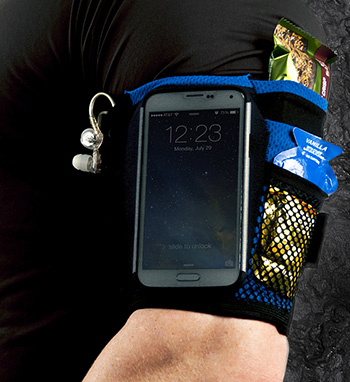
Runband – iPhone holder that accommodates snacks and other runner’s necessities

Cameron Paul had a great job in corporate America but he had a dark, lurking secret that would cost him his job, several friendships and many other things. Alcohol abuse tends to work out that way; a loss of many things.

 Cameron turned to running as a means to rehab himself both mentally and physically and in June of 2014 he discovered the Bonneville Shoreline Trail. A switch flipped, “Suddenly running changed from an obligation to an adventure.”

On those early trail runs he realized there was something lacking in the fitness packs he was using. Storing an energy bar might not mean storing a cell phone. Water was its own issue. It was frustrating.

Unemployed Cameron had some time on his hands and few great resources. His mom, a seamstress, helped Cameron create the first Runband. ““I wanted something all-fabric, machine washable, and durable.” The design took a little longer than he expected. “That first one was pretty terrible, just terricloth and it didn’t work right. But it gave me an idea of where to go next. Within a month I tested multiple prototypes by running over 100 miles on the Ogden trails”

After several prototypes, Cameron was ready to launch a kickstarter campaign for his hydration arm pack which he was certain would literally kick-start his business and a new life.

It didn’t happen that way. As it turns out, most people weren’t interested in carrying water on their arms. “People wanted a cell phone specific Runband. That was a big revelation and in October I canceled my Kickstarter campaign mid-run. I began immediately offering cellphone specific arm packs to the public.”

How Mom’s Loan Turned Into A Huge Success

Cameron borrowed $100 from his mom and registered for the “What a Woman Wants” expo at the recommendation of a friend. The first day was rough but by day two it was clear they were on to something.

“On day two, we sold almost our entire inventory.” As they say, the rest is history. Cameron now operates Runband on a full-time basis. He has sold hundreds of the packs and is working his way through the expo circuit while preparing his product for retail stores. They can barely keep up with the orders and are looking for a local facility to expand their manufacturing capacity. Cameron is really interested in partnering with a local nonprofit “Give Me a Chance” which helps low-income women learn skills and get employed. He loves the idea of honoring his mother by supporting women through this organization.

What Cameron loves most about his business, besides the fact that it lets him be 100 percent himself, is that he hears from people all the time how they are utilizing the Runband beyond running.

“Aside from its utility while exercising, nurses were excited to use Runband for more storage while on the job. A girl traveling to Europe wanted to discreetly carry her personal belongings under her jacket… At one of the expos, a mother put her daughter’s inhaler and epipen in the various Runband pockets. I hadn’t even thought of the medical possibilities. That mom’s smile is pretty much the greatest thing I’ve seen to date.”

Cameron lost his job in June of 2013 and in the short 18 months since has found sobriety, health, happiness and launched a business that is poised for success. “Going from unemployed to building a business from scratch does not leave me with a lot of financial wiggle room and it can still be scary but my little company has a promising future. While I may have lost a promising career in corporate America, I could not have invented the armpack without having gone through that.”

Read another story about a Utah inventor (artists with lasers)

Join our newsletter.
Stay informed.


  • Highway 6 and the Midland Trail: Utah’s Transcontinental Highway History

    From Price Canyon to Delta’s desert stretch, Utah played a central role in building the Midland Trail, one of America’s earliest transcontinental highways and the foundation of today’s Highway 6.


  • Whiskey, Bullets & a Buried Town: Archaeologists Reveal Alta’s Wild Past

    Before Alta was known for powder days and lift lines, it was a silver mining town clinging to the side of a narrow canyon. In the late 1800s, men lived at 8,000 feet, went underground each day, and endured winters that regularly buried buildings in snow. This past summer, that mining town resurfaced — literally — during construction at the Alta Ski Area.

    To understand what Alta really looked like, you don’t begin with legend. You begin with its trash — and this time, that happened almost by accident.

    Alta Ski Area was installing underground water reservoirs to support snowmaking. Because the project sits on Uinta-Wasatch-Cache National Forest land, an archaeologist was required to monitor the excavation. No one expected the trench to produce much.

    But, It did.

    Artifacts began surfacing almost immediately. Enough that the Forest Service contacted the Utah State Historic Preservation Office for help. Lexi Little, who coordinates the Utah Cultural Site Stewardship Program, helped mobilize nearly 30 volunteers to assist with what quickly became a focused two-week excavation.

    Winter deadlines were approaching. The pipes for the reservoirs had to go in the ground. There wasn’t time for a slow, extended dig.

    “It was two weeks of digging in the dirt and helping figure out exactly what we were looking at,” Little said.

    Most of the people screening soil weren’t professional archaeologists. They were trained stewards from around Utah — part of a statewide volunteer network that now approaches 500 people. They poured dirt through shaker screens, scanning for fragments that could piece together a town long buried.

    “Archaeology is human trash,” Little explained. “Archaeologists are very into trash.”

    Alta had left plenty behind.

    https://youtu.be/hzIHzx3OGoo?si=dKcl2CEz-t6FZzYw

    Victorian-style ceramics appeared first — the kind typically used in hotels. Medicine bottles followed. Ink bottles. Hand-blown glass. A porcelain doll’s foot surfaced from the soil, a small detail that shifted the mental image of the town. Families were here. Children were here. This wasn’t only a camp of miners.

    The bottles helped establish time. Manufacturing details — whether glass was hand-blown or mold-made, whether a maker’s mark appeared on the base — allowed archaeologists to date many of the artifacts to the 1870s through the 1890s, when Alta was booming as a silver mining town.

    “That gives you that range of dates for when Alta was really booming,” Little said.

    One reusable soda bottle clearly stamped “Salt Lake City” connected the canyon to the valley economy below.

    Then something unusual rolled out of a dirt pile.

    A corked bottle. Intact. Liquid still inside.

    Continue reading and support independent Utah journalism with a purchase of Utah Stories (Digital + Print) or 3 month free trial (Digital).


  • The Only Full Bottle of Alcohol Ever Found in Utah Was Unearthed in Alta

    When a backhoe rolled a corked bottle out of the dirt at Alta this summer, no one immediately grasped what they were holding. It wasn’t empty. It wasn’t shattered. It was full. “The bottle that was discovered up at Alta is the only bottle of alcohol ever discovered in an archaeological excavation in the state…


  • How Horses Help Kids Heal: Inside Utah’s Equine Therapy World

    Kelty Johnson trains horses for a living, but her deeper work happens in the quiet space between animal and human. On the Utah Stories podcast, she explains how equine therapy helps children regulate emotions, build confidence, and reconnect through presence rather than pressure.