Utah Stories

Leia Bell: The Princess of Poster Art

A local artist uses her struggles to reinvent herself and create a new passion.

|


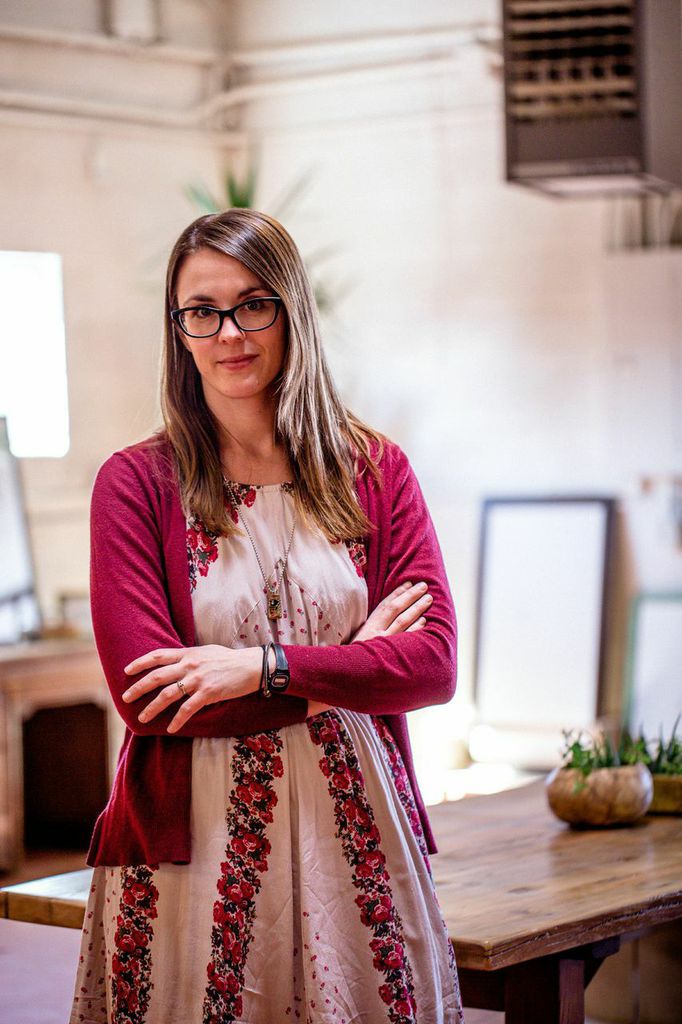
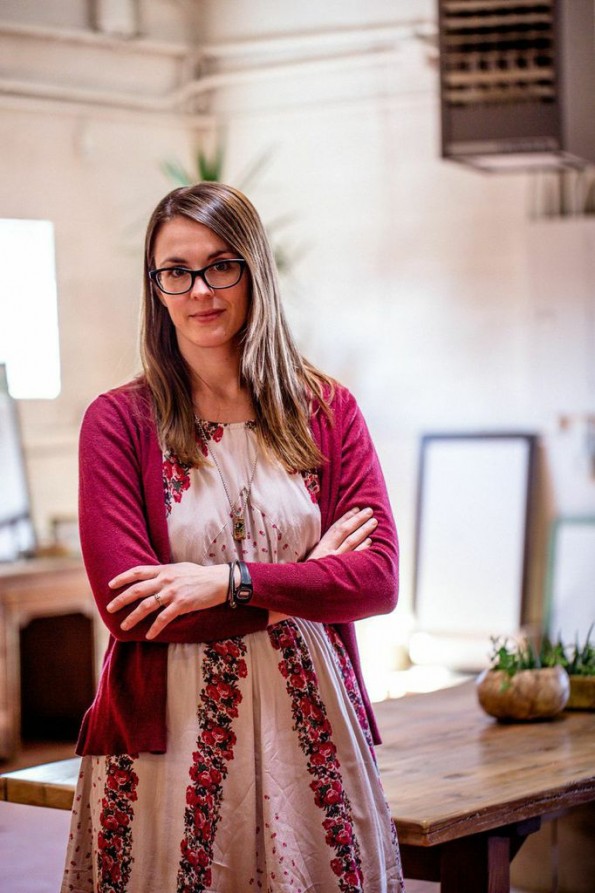
Leia Bell stands in her SLC studio
Leia Bell stands in her SLC studio Photo by Dung Hoang


Leia Bell always knew she wanted to do art but she didn’t know how to make it a career. “Luckily, my parents were really supportive,” she recalls. “They didn’t tell me I needed to do some other kind of ‘real job.’”

After graduating from the University of Utah with a degree in printmaking, her now husband, Phil Sherburne, suggested she start printing posters for his music venue, Kilby Court. He helped her set up a screen printing studio and she began to create posters for all the shows.

“It was not only an advertisement, but it was a cool way to display art without getting into a gallery,” she says. “We just put them around town, and it snowballed from there. I fell into it by accident.”

Leila describes her art as illustrative and cartoon-like. “I simplify things,” she says. “I draw characters using the least amount of lines possible to get the point across. I use thick, black lines, like a coloring book. It’s how I see things; when I look at something I’m going to draw, I see the lines.”

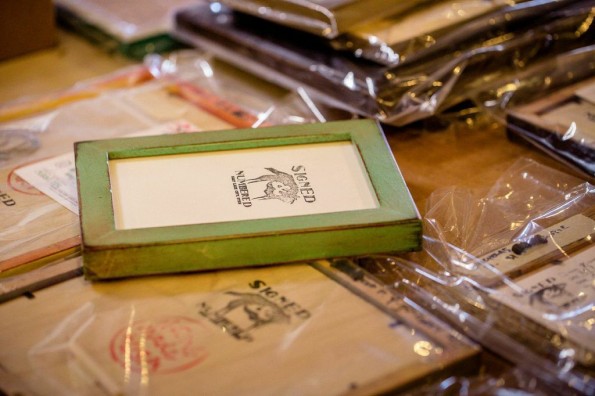
signed and numbered framing Drawing inspiration from her own life, Leia began by depicting young adults, but once she and Phil began having children, she started drawing animals with personified child-like characteristics relatable to children. “It has become more childlike as I’ve gotten older,” she says. Every morning, she draws art on the lunch bags of her three boys, ages eight to thirteen, fulfilling their personal requests, from animals to movie characters. “But now that my kids are getting older, I may shift again. My art is basically the story of my life.”

However, working 60 hours a week at a poster and framing shop she and her husband opened in Salt Lake City has left her little time for creativity in recent years. Moreover, her website was stolen by a hacker demanding money to return her site.

But instead of allowing circumstances to derail her passion, she’s using them as an excuse to reinvent herself. “It’s a great way for me to start over,” she says. “I’ve been doing these rock posters for so long, and now I’m ready to move on and do something different with my art. I want a fresh start. Now that the business is taking off and we have employees who can handle some things, it’s easier to feel creative.”
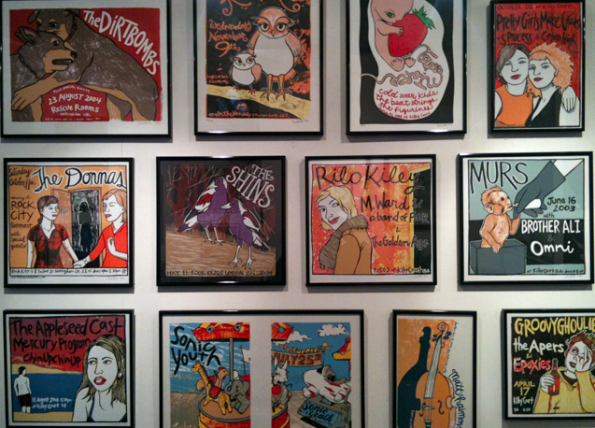
Screen-shot-2011-10-14-at-15.29.36The timing couldn’t be better.

“It’s a wonderful time to be a self-employed artist,  since you don’t have to necessarily get into galleries. Anyone can do it these days because of the Internet.”But she cautions that artists have to really stand out to get noticed.

“If  it’s your passion, pursue it,” she recommends. “If you don’t have enough time for all you want to do, if your brain is just swimming with ideas and you can’t get them all out, then you should definitely pursue art. However, if you have difficulty coming up with things to do, then it probably isn’t for you.”

Leia’s work can be found at her store, Signed and Numbered, located at 2320 S. West Temple.
qpZ3_IqilxpE9o39hUpioPKBYDzLZshCulmBBzM6Q9Y

Join our newsletter.
Stay informed.


  • Highway 6 and the Midland Trail: Utah’s Transcontinental Highway History

    From Price Canyon to Delta’s desert stretch, Utah played a central role in building the Midland Trail, one of America’s earliest transcontinental highways and the foundation of today’s Highway 6.


  • Whiskey, Bullets & a Buried Town: Archaeologists Reveal Alta’s Wild Past

    Before Alta was known for powder days and lift lines, it was a silver mining town clinging to the side of a narrow canyon. In the late 1800s, men lived at 8,000 feet, went underground each day, and endured winters that regularly buried buildings in snow. This past summer, that mining town resurfaced — literally — during construction at the Alta Ski Area.

    To understand what Alta really looked like, you don’t begin with legend. You begin with its trash — and this time, that happened almost by accident.

    Alta Ski Area was installing underground water reservoirs to support snowmaking. Because the project sits on Uinta-Wasatch-Cache National Forest land, an archaeologist was required to monitor the excavation. No one expected the trench to produce much.

    But, It did.

    Artifacts began surfacing almost immediately. Enough that the Forest Service contacted the Utah State Historic Preservation Office for help. Lexi Little, who coordinates the Utah Cultural Site Stewardship Program, helped mobilize nearly 30 volunteers to assist with what quickly became a focused two-week excavation.

    Winter deadlines were approaching. The pipes for the reservoirs had to go in the ground. There wasn’t time for a slow, extended dig.

    “It was two weeks of digging in the dirt and helping figure out exactly what we were looking at,” Little said.

    Most of the people screening soil weren’t professional archaeologists. They were trained stewards from around Utah — part of a statewide volunteer network that now approaches 500 people. They poured dirt through shaker screens, scanning for fragments that could piece together a town long buried.

    “Archaeology is human trash,” Little explained. “Archaeologists are very into trash.”

    Alta had left plenty behind.

    https://youtu.be/hzIHzx3OGoo?si=dKcl2CEz-t6FZzYw

    Victorian-style ceramics appeared first — the kind typically used in hotels. Medicine bottles followed. Ink bottles. Hand-blown glass. A porcelain doll’s foot surfaced from the soil, a small detail that shifted the mental image of the town. Families were here. Children were here. This wasn’t only a camp of miners.

    The bottles helped establish time. Manufacturing details — whether glass was hand-blown or mold-made, whether a maker’s mark appeared on the base — allowed archaeologists to date many of the artifacts to the 1870s through the 1890s, when Alta was booming as a silver mining town.

    “That gives you that range of dates for when Alta was really booming,” Little said.

    One reusable soda bottle clearly stamped “Salt Lake City” connected the canyon to the valley economy below.

    Then something unusual rolled out of a dirt pile.

    A corked bottle. Intact. Liquid still inside.

    Continue reading and support independent Utah journalism with a purchase of Utah Stories (Digital + Print) or 3 month free trial (Digital).


  • How Horses Help Kids Heal: Inside Utah’s Equine Therapy World

    Kelty Johnson trains horses for a living, but her deeper work happens in the quiet space between animal and human. On the Utah Stories podcast, she explains how equine therapy helps children regulate emotions, build confidence, and reconnect through presence rather than pressure.


  • Angela Brown: The Woman Behind SLUG Magazine and Craft Lake City

    Angela Brown is the publisher and owner of SLUG Magazine, one of the city’s longest-running independent publications and a central voice in Utah’s alternative arts and music scene. She is also the founder of Craft Lake City, a nonprofit that has grown into one of the state’s largest platforms for local makers and creative entrepreneurs.