Utah Stories

Fixed Gear Bikes for City Cycling

Local riders are switching to fixed gear bikes for around town.

|


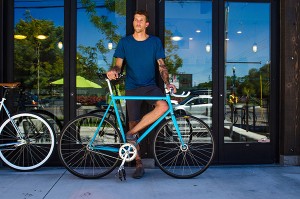
Jermey Danger and his Fixie-for-web
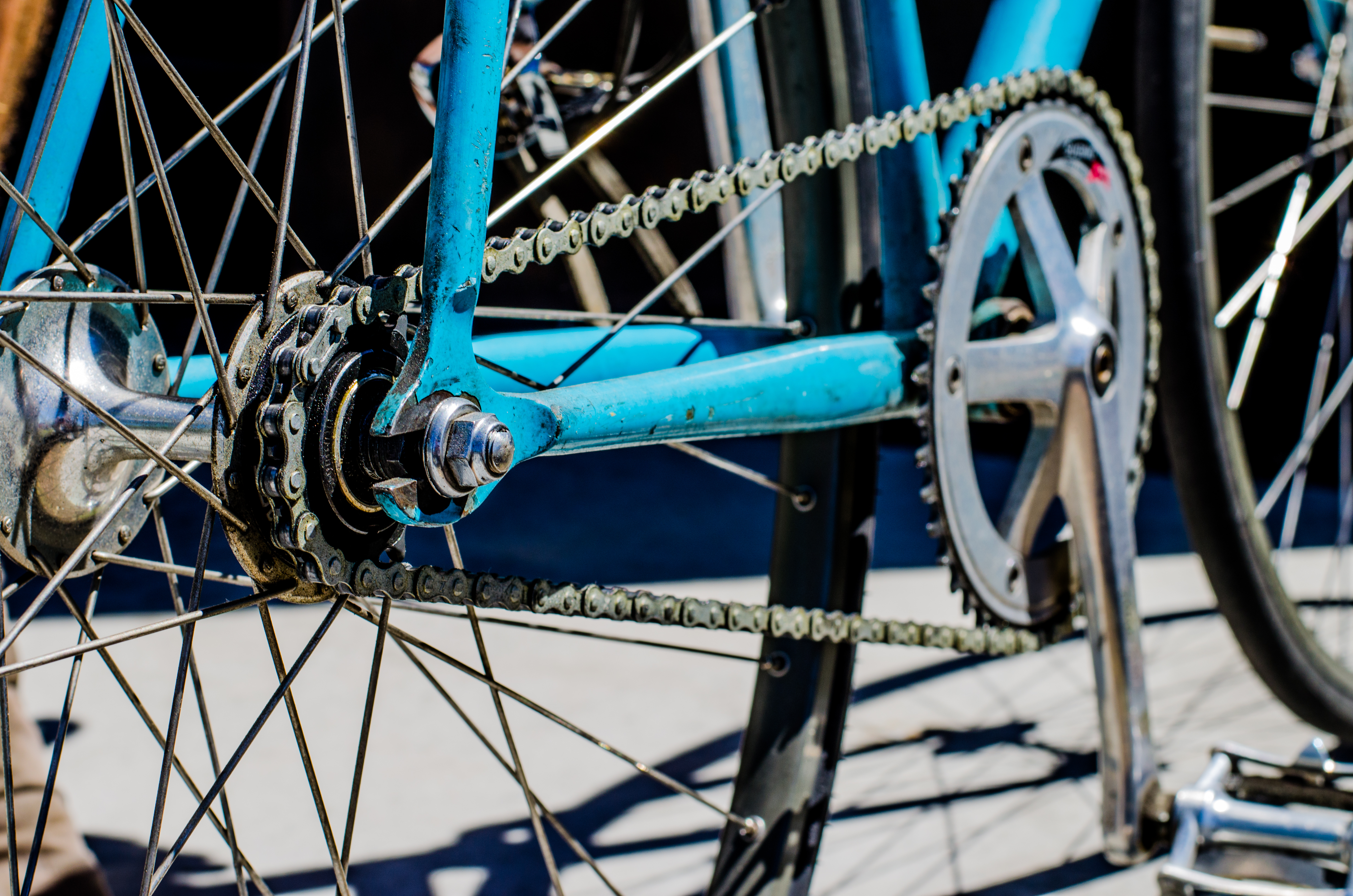
Jeremy Danger and His “Fixie” Photos by Mike Jones

Utah’s bike community comes in all different forms: more low rider bikes, complete with hydraulics, are showing up. There are more guys in spandex, Lance Armstrong wannabes complete with clean-shaven legs, ascending canyons while downing energy gel.  There is also a growing crowd of hipsters and skinny jeans-wearing urbanites seemingly infatuated with the idea of a brakeless bike with crankshaft directly connected to the movement of the wheel. Think of kids on tricycles racing downhill, feet flailing out on either side because their legs can’t keep up with the pedals. These are the “fixie” riders, the most hard core of whom ride even without brakes.


Jeremy Danger sums it up this way. “I don’t think it’s necessary to have a bunch of gears if you’re riding downtown. Riding a fixed gear bike makes me more aware of my surroundings and it’s easier and safer to use for around-town riding.  I have a road bike, but I mostly use it for longer rides where shifting gears makes more sense. I don’t think any kind of bike is dangerous, I think it’s the operator that makes it dangerous.“ It’s true that fixed gear bikes tend to attract a younger crowd which seem to be more reckless. As far as fixed gear bikes go, you definitely have to learn how to ride them.  I spent a couple of weeks practicing in parking lots before I took mine to the streets.”


To gain a bit of clarity on fixies, I stopped by the SLC Bicycle Collective and spoke with Owen Geary. “The first bikes made were more or less fixies. Back then they were called safety bikes. Olympic track bikes are where fixies originated.  Bike messengers ride all over the city and beat the crap out of their bikes so they need something durable. They took to fixed gear bikes because they are easier to maintain and can take a pounding.”  As bike messenger culture caught on and became popular (think messenger bags) more and more people started converting broken “geared bikes” over to fixed gear.  The SLC Bicycle collective does sell fixies when they come in, which these days isn’t often, but they always equip them with brakes.


There has been some ebb and flow in the fixie fad and Salt Lake seems to be on the cusp of another boom.  Chain stores like Urban Outfitters trying to keep up on the latest in what’s new and cool have started selling fixies that feature brakes, added in part to comply with U.S. laws. It is entirely possible to add brakes to a fixie, it’s just that most riders don’t feel it’s necessary and, admittedly, some leave them off to follow the fad.  So, while the brakeless version of fixies might still be popular with daredevils and die-hard riders, the mainstream seems to be pushing fixies with brakes.

Fixed gear bike
Fixed gear bicycle

Join our newsletter.
Stay informed.


  • Highway 6 and the Midland Trail: Utah’s Transcontinental Highway History

    From Price Canyon to Delta’s desert stretch, Utah played a central role in building the Midland Trail, one of America’s earliest transcontinental highways and the foundation of today’s Highway 6.


  • Utah Acquires US Magnesium Assets in $30M Deal to Protect the Great Salt Lake

    Utah leaders announced the state has successfully won the bid to acquire key assets of the defunct US Magnesium facility on the Great Salt Lake, including its associated water rights and property.


  • Whiskey, Bullets & a Buried Town: Archaeologists Reveal Alta’s Wild Past

    Before Alta was known for powder days and lift lines, it was a silver mining town clinging to the side of a narrow canyon. In the late 1800s, men lived at 8,000 feet, went underground each day, and endured winters that regularly buried buildings in snow. This past summer, that mining town resurfaced — literally — during construction at the Alta Ski Area.

    To understand what Alta really looked like, you don’t begin with legend. You begin with its trash — and this time, that happened almost by accident.

    Alta Ski Area was installing underground water reservoirs to support snowmaking. Because the project sits on Uinta-Wasatch-Cache National Forest land, an archaeologist was required to monitor the excavation. No one expected the trench to produce much.

    But, It did.

    Artifacts began surfacing almost immediately. Enough that the Forest Service contacted the Utah State Historic Preservation Office for help. Lexi Little, who coordinates the Utah Cultural Site Stewardship Program, helped mobilize nearly 30 volunteers to assist with what quickly became a focused two-week excavation.

    Winter deadlines were approaching. The pipes for the reservoirs had to go in the ground. There wasn’t time for a slow, extended dig.

    “It was two weeks of digging in the dirt and helping figure out exactly what we were looking at,” Little said.

    Most of the people screening soil weren’t professional archaeologists. They were trained stewards from around Utah — part of a statewide volunteer network that now approaches 500 people. They poured dirt through shaker screens, scanning for fragments that could piece together a town long buried.

    “Archaeology is human trash,” Little explained. “Archaeologists are very into trash.”

    Alta had left plenty behind.

    https://youtu.be/hzIHzx3OGoo?si=dKcl2CEz-t6FZzYw

    Victorian-style ceramics appeared first — the kind typically used in hotels. Medicine bottles followed. Ink bottles. Hand-blown glass. A porcelain doll’s foot surfaced from the soil, a small detail that shifted the mental image of the town. Families were here. Children were here. This wasn’t only a camp of miners.

    The bottles helped establish time. Manufacturing details — whether glass was hand-blown or mold-made, whether a maker’s mark appeared on the base — allowed archaeologists to date many of the artifacts to the 1870s through the 1890s, when Alta was booming as a silver mining town.

    “That gives you that range of dates for when Alta was really booming,” Little said.

    One reusable soda bottle clearly stamped “Salt Lake City” connected the canyon to the valley economy below.

    Then something unusual rolled out of a dirt pile.

    A corked bottle. Intact. Liquid still inside.

    To access this post, you must purchase Utah Stories (Digital + Print) or 3 month free trial (Digital).


  • The Only Full Bottle of Alcohol Ever Found in Utah Was Unearthed in Alta

    When a backhoe rolled a corked bottle out of the dirt at Alta this summer, no one immediately grasped what they were holding. It wasn’t empty. It wasn’t shattered. It was full. “The bottle that was discovered up at Alta is the only bottle of alcohol ever discovered in an archaeological excavation in the state…