Online Exclusives

Ogden LDS Temple Open House Starts Aug. 1

Come visit the newly renovated Ogden LDS temple open house from August 1st until September 6th.

|

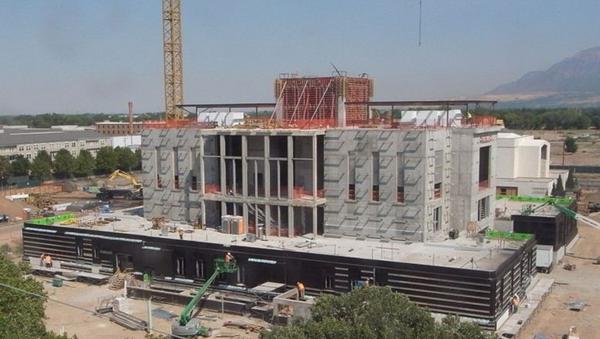
ogden temple construction

ogden temple construction
Photo courtesy of mormontemples.org

From August 1st through September 6th, Downtown Ogden will welcome nearly half a million visitors for the Ogden LDS Temple Open House. Given the number of visitors and money spent, this will be one of the largest events in Ogden’s history. The temple is one of the largest private re-development investments in the state, just a bit smaller than the City Creek complex in Salt Lake City.

In comparison to the Olympics, this event is immensely larger in scale; Ogden had about 150,000 visitors during the 2002 Olympics with spectators at Snowbasin and the Weber County Ice Sheet. During the temple open house, visitors will be in one primary location surrounding the LDS temple.

Ogden really stepped up its game during the 2002 Olympics, with cleanup efforts in preparation and the subsequent formulation of the GOAL Foundation to maintain the enthusiasm and volunteer basis for the greater Ogden area. The GOAL Foundation capitalized on the volunteer spirit leading up to the Olympics and is now an organization of more than 4,000 volunteers, putting on community driven events such as the Ogden Marathon, the Hurt in the Dirt series and several other events promoting the “Get Out and Live” concept. Through the combined efforts of several entities, Ogden has become a nationally recognized, world-class destination for visitors, events, athletes, and outdoor recreation.

With the temple open house driving nearly four times the number of visitors that were received for the Olympics, the city has more than quadrupled its efforts to prepare. Projects that have been in the works for a while, or were waylaid at some point, have returned to the priority list. Road construction and repairs have been underway since spring, a new cycle track is under construction, neighborhood cleanup projects have been divvied out amongst a volunteer group totaling nearly 5,000 people, city entities and community groups have banded together to form a coalition dedicated to showcasing pride in their town.

All of this has taken place under the broad banner of “One Ogden.” One Ogden is a marketing program and a series of committees and subcommittees spawned from Ogden City and the convention and visitor’s bureau, Visit Ogden, which have been working for the past several months to ensure that visitors coming for the temple open house and other summer events, can easily navigate the town and discover all that Ogden has to offer. These committees encompass nearly every entity from city government, Weber County, the colleges, non-profit groups, community organizers, business associations, UDOT and city administration. The marketing campaign plays off the complete package; 18 art galleries, 61 independent retailers, 252 miles of trail, 10,410 skiable acres, 63 national historic sites, 97 independent retailers: One Ogden. The idea is that the area is made up of so many wonderful things, each of which is appealing to a different subset of the population but they all come together as one town, one community, One Ogden.

One Ogden has provided resources and information to experience all that the greater Ogden area has to offer including a new One Ogden app and website. During the temple open house Ogden City will offer free Wi-Fi around the Ogden Temple. There will also be ambassadors to help visitors discover Ogden and answer questions during the open house, Tour of Utah, Masters Cycling and other large events this season.

And that’s just the beginning. Just as the Olympics were a catalyst for community organization and pride, the One Ogden committee and brand hopes the temple open house is merely another launching point for this town.

The temple open house is open to people of all beliefs. Tickets are free and reservations can be made online at: https://templeopenhouse.lds.org/tickets;jsessionid=2AD0BA0A984B5BFB7A88B55AA5F051D0.People interested in becoming an ambassador should visit One Ogden online at: http://www.visitogden.com/oneogden/ambassador.


Join our newsletter.
Stay informed.


  • Salt Lake City Newcomers Club: Finding Friendship and Belonging Since 1948

    Moving away from your hometown can come with many blessings. But for some, it also comes with just as many bouts of loneliness. That ache of not knowing where to meet people, or grieving the friends you left behind, comes in waves. Workplaces and churches can sometimes provide ready-made communities, but what happens when they don’t? Where do you go to find true belonging?


  • Highway 6 and the Midland Trail: Utah’s Transcontinental Highway History

    From Price Canyon to Delta’s desert stretch, Utah played a central role in building the Midland Trail, one of America’s earliest transcontinental highways and the foundation of today’s Highway 6.


  • A Stand-Up Wheelchair Gives Paralysis Patients Greater Independence

    After a cycling accident left him paralyzed, Bill Winchester had to relearn how to navigate daily life from a wheelchair. A stand-up wheelchair later gave him the ability to rise, move more independently, and regain parts of the active life he once knew.


  • Whiskey, Bullets & a Buried Town: Archaeologists Reveal Alta’s Wild Past

    Before Alta was known for powder days and lift lines, it was a silver mining town clinging to the side of a narrow canyon. In the late 1800s, men lived at 8,000 feet, went underground each day, and endured winters that regularly buried buildings in snow. This past summer, that mining town resurfaced — literally — during construction at the Alta Ski Area.

    To understand what Alta really looked like, you don’t begin with legend. You begin with its trash — and this time, that happened almost by accident.

    Alta Ski Area was installing underground water reservoirs to support snowmaking. Because the project sits on Uinta-Wasatch-Cache National Forest land, an archaeologist was required to monitor the excavation. No one expected the trench to produce much.

    But, It did.

    Artifacts began surfacing almost immediately. Enough that the Forest Service contacted the Utah State Historic Preservation Office for help. Lexi Little, who coordinates the Utah Cultural Site Stewardship Program, helped mobilize nearly 30 volunteers to assist with what quickly became a focused two-week excavation.

    Winter deadlines were approaching. The pipes for the reservoirs had to go in the ground. There wasn’t time for a slow, extended dig.

    “It was two weeks of digging in the dirt and helping figure out exactly what we were looking at,” Little said.

    Most of the people screening soil weren’t professional archaeologists. They were trained stewards from around Utah — part of a statewide volunteer network that now approaches 500 people. They poured dirt through shaker screens, scanning for fragments that could piece together a town long buried.

    “Archaeology is human trash,” Little explained. “Archaeologists are very into trash.”

    Alta had left plenty behind.

    https://youtu.be/hzIHzx3OGoo?si=dKcl2CEz-t6FZzYw

    Victorian-style ceramics appeared first — the kind typically used in hotels. Medicine bottles followed. Ink bottles. Hand-blown glass. A porcelain doll’s foot surfaced from the soil, a small detail that shifted the mental image of the town. Families were here. Children were here. This wasn’t only a camp of miners.

    The bottles helped establish time. Manufacturing details — whether glass was hand-blown or mold-made, whether a maker’s mark appeared on the base — allowed archaeologists to date many of the artifacts to the 1870s through the 1890s, when Alta was booming as a silver mining town.

    “That gives you that range of dates for when Alta was really booming,” Little said.

    One reusable soda bottle clearly stamped “Salt Lake City” connected the canyon to the valley economy below.

    Then something unusual rolled out of a dirt pile.

    A corked bottle. Intact. Liquid still inside.

    Continue reading and support independent Utah journalism with a purchase of Utah Stories (Digital + Print) or 3 month free trial (Digital).