 Займ на карту неработающим. Sometimes your destiny keeps tugging at you until you have no choice but to follow it. Fortunately for music lovers along the Wasatch Front and beyond, Kate MacLeod stepped into hers and hasn’t looked back.
“I tried to do other things for a long time before I decided I needed to follow the music path even though I’d been writing songs for years. It wasn’t something I’d imagined I’d do for a living. But I couldn’t stop playing music long enough to specialize in anything else. Music kept pulling me away.
“At a certain point in my life I tipped the balance and decided to start going in that direction. It was also tempered by the fact that other people were recording my songs—spread by word of mouth. I thought there was something in that that was worth following,” she says.
Kate’s songs have been recorded by indie artists such as Laurie Lewis, Mollie O’Brien, Rose Laughlin, and even a bluegrass band from the Czech Republic. Her most recorded song, “Lark in the Morning,” has become a staple in jam sessions around the country, a fact that feeds Kate’s community-minded sensibilities. “I like that my music is being shared in music communities,” she says. “I like it much more than worrying about whether I’m going to have a hit with a big artist. It would be nice, of course, but if that happens, it should happen naturally.”
Kate started down the musical path playing classical violin as a child. She quickly found herself intrigued by ethnic fiddle styles, a passion that continues with her British Isles-, folk- and Klezmer-tinged playing. Her next recording project will feature her original violin instrumentals, all inspired by landscapes.
Her love of songs began early as well. She grew up on the songs of folk artists from her childhood such as Burl Ives. “It seems to be hardwired in me,” she says. “It never occurred to me that I wanted to write songs. I just did it.” She wrote her first song at age 16. Since then, she’s written hundreds.
Recently she’s found her songwriting inspired by the “experience of now,”she says. “I’ve been putting my immediate experiences into songs. For example, I just drove across U.S. 50 in Nevada. It was such a striking experience. The section that goes through Nevada is called the ‘loneliest road in America.’ It made me think, ‘this needs a song.’
“I’m also very conscious of how music needs to mean something to people. That’s what it’s for. It’s much more about that than expressing my own individual thoughts. That’s grown for me over the years. I’m very conscious that it’s about the listener.”
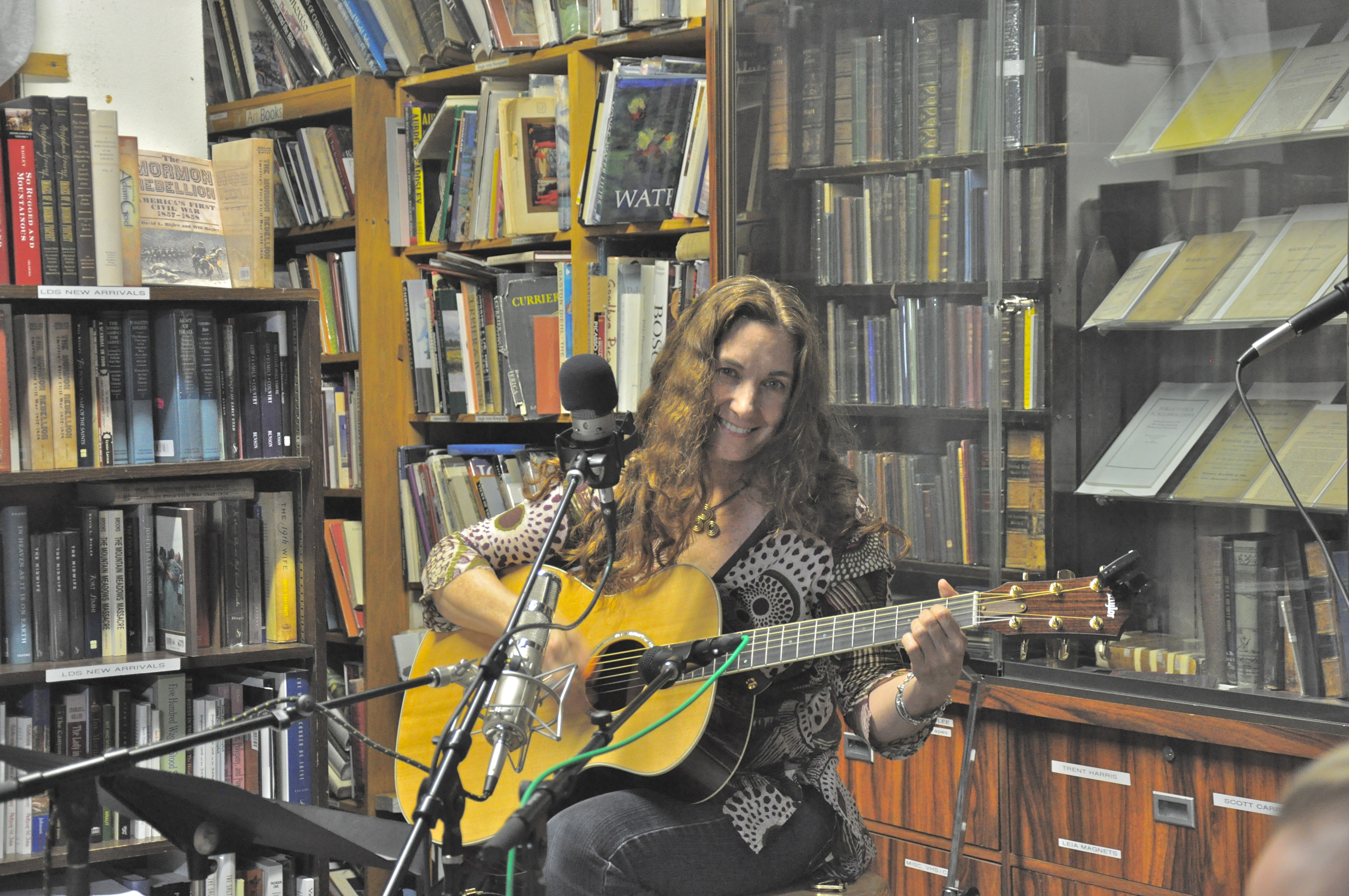
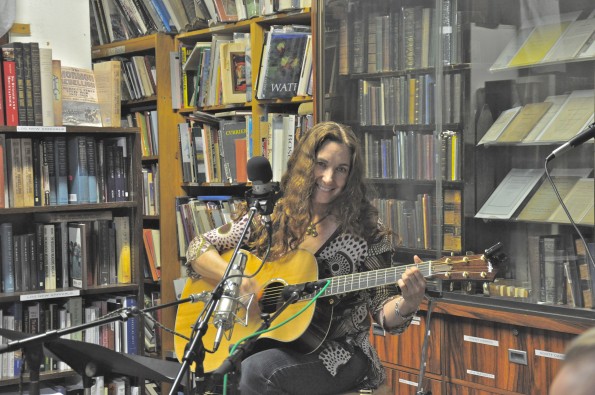
Kate’s most recent CD has garnered lots of airplay from DJs all around the country. The CD was recorded live at Ken Sander’s Rare Books, a colorful fixture in Salt Lake’s independent bookstore scene. The songs, she says, are inspired by books that excited further expression and could be taken into another medium. “I played the music mostly solo, because I thought it was important for the performance to be like reading a book to someone. I wanted to capture the intimacy of reading on the CD.” She also hopes that the CD will bring attention to the importance of local bookstores and the communities they create. Ken Sander’s Rare Books carries the CD.
As a touring musician, part of Kate’s passion is introducing Utah culture to other parts of the country. “This region has amazing talent. We have a voice that’s from the heart of the country. I find it important to be a strong voice for this region. I want to make people more aware of the area, but also to speak up for out-of-the-way cultures that don’t show up in the mainstream world.”
You can find out more about Kate’s CDs and upcoming performances, and hear her music at katemacleod.com. You can buy her CDs on her website or at waterbugrecords.com.