
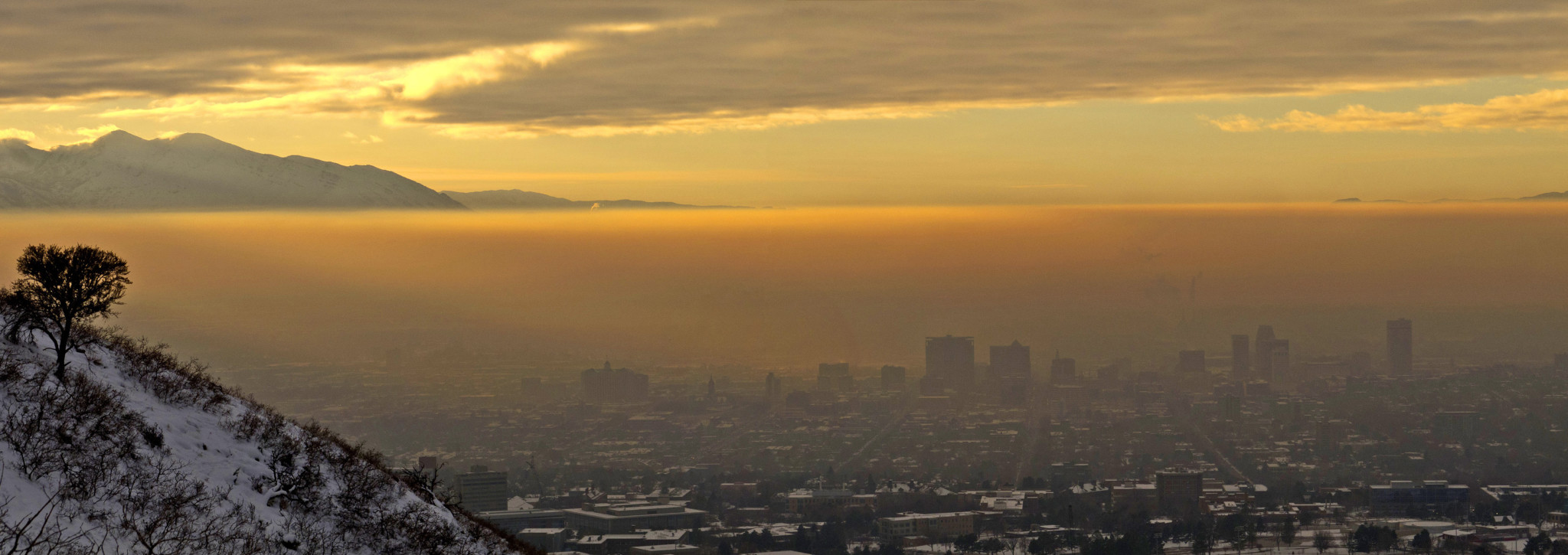
Dr. Brian Moench of Utah Physicians for a Healthy Environment says, “We should think of the air we breathe along the Wasatch Front as if we are passengers on an airplane. The mountains block circulation and the pollution doesn’t escape and we are stuck in an inversion.”
A few years ago, people were allowed to smoke on planes in a closed environment forcing everyone on the plane to breathe the same smoke. At first, people were asked to voluntarily refrain from smoking. It didn’t work. Regulations had to be passed to make it illegal. Moench thinks that the same approach will be needed to break the inversion patterns. Industries are allowed to operate and are even granted licenses to expand. Currently, there are lawsuits to halt the expansion of Tesoro Refinery, Holly Refinery, and Kennecott. The licenses have been granted by the state, but Moench’s group has filed stays and injunctions to stop them. They have also presented a petition to the state calling for polluting businesses to cut production by 50% on bad air days. The state’s response? “No.”
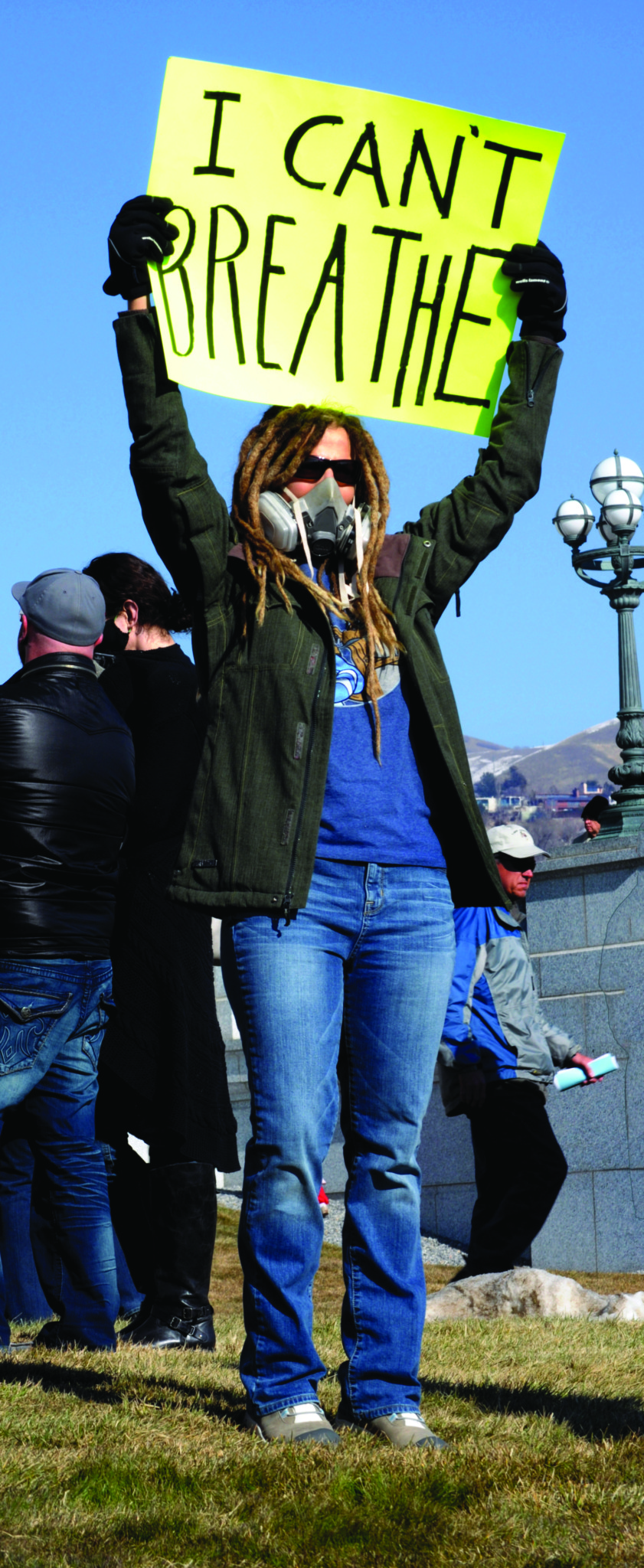
Part of the problem, according to Moench, is that the state is run by people who have an overriding concern for business. In an effort to focus more on the health of the Wasatch Front a Clean Air – No Excuses Rally was held on January 25 at the Capitol. The rally was intended to show leaders that the people want something to be done. Moench puts it this way, “We’re tired of nibbling at the edges, tired of studies and commissions. No more foot dragging. The information and data is already there. Now it’s a matter of doing it.”
The chemicals released by the top 10 industrial polluters include chlorine, hydrochloric acid, ammonia and other toxins. Some of the chemicals are corrosive and damage membrane linings in the nose, mouth, and airways. Some affect brain function, and suppress the immune and bone marrow systems. Chemicals like hexane, toluene and styrene are known carcinogens and are toxic to genes.
There are solutions: regulate these businesses. ATK does open burning of hazardous waste with no filtration at three different sights. Stericycle, a company that burns medical waste, should be shut down altogether. US Magnesium is still releasing over 8 million pounds of chemicals in the air every year. The Holly Refinery, recently granted an expansion, is owned by a company in Texas and ship their product to California and Nevada. And what does Utah get? The pollution.
The time to do something is now.