The “Greatest Generation” is now in its late 80s. Their kids, the Baby Boomers, are slowly retiring. If our current trajectory of spending and debt continues, according to economists and congressional members such as Paul Ryan and Rand Paul, by the time the Boomers pass the baton of retirement to the Millennials, Social Security, Medicare and Medicaid will be bankrupt. The Economist magazine predicts that if the U.S. maintains its spending trajectory, austerity measures will be required like they have been in Europe. When the unemployed youth in Greece learned their benefits were being cut, riots erupted. Similar riots broke out in Paris and London. Will class warfare be in our future?
Also, since little is being done regarding pollution, in 20 years we will have even worse air quality along the Wasatch Front. If the same mindset is in power in our state legislature and governor’s office, the worst polluters in our state will be ignored due to the tax revenue and jobs they provide, and more cases of asthma, bronchitis, and lung cancer will be reported in 2034 than ever before. Expect even more guilt-tripping for driving your car and not riding a train on red air days.
This is all a far less rosy picture than futurists were predicting for the 21st century. A CBS program entitled “the 21st century” hosted by Walter Cronkite in the 1960s predicted that everyone will have 20-30 hours of leisure time per week to practice hobbies. An excess of leisure was predicted because productivity would be dramatically improved thanks to robots and the mechanical automation of factories. It was further assumed that the wealth of our nation would be spread to everyone, allowing more people more time to pursue their passion.
But more futurists and prognosticators of today believe that due to current economic, educational and governmental circumstances, the opportunities that existed for previous generations are in decline and the Millennials will have a tougher time surviving and thriving than their parents and grandparents did.
But our technology (especially in the form of gadgetry) seems to be progressing faster than ever. We can ask Siri for any information we want to know at any time. If her software is improved, maybe she will fulfill even more of our desires. If Siri were attached to robots, she could be cleaning our houses, doing our laundry, maybe producing a healthy organic garden in our backyard.
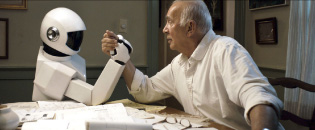
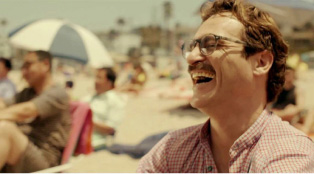
These qualities are predicted in recent films Robot and Frank and Her. Both are films where the main characters become enamored with their robot and personal assistant respectively. But another prognosticator who recently spoke at the Eccles Center in Park City, Utah says we can’t rely on future technology to solve our problems.
According to Mark R. Anderson, contributing to Forbes magazine, in an article entitled “The Big Shift,” he believes that “… based in the post-Information Age on invention, the world economy is moving to models based on copying and theft. This is happening not in single product lines or economic sectors, but across the entire globe, from agriculture to medicine, from personal computers to phones, from online companies to software firms.” Indicative of the problem, most innovative companies are no longer thriving while the best copiers are succeeding. We see Apple in decline while Apple copycats (Android and Samsung)are thriving.
So unlike in school, where the cheaters get caught and kicked out, in the tech arena the cheaters are rewarded and are even winning. As this trend continues, Anderson predicts that fewer truly innovative companies will thrive. This will mean less wealth creation due to productivity increases.
But how accurate are the futurists? Lets look back at famous science fiction writer Isaac Asimov, who made some interesting predictions about the year 2014 in 1964 and see how accurate he was:
“Men will continue to withdraw from nature in order to create an environment that will suit them better.”
—Isaac Asimov, prediction from 1964
Grand Theft Auto Five is the highest grossing video game of all time, reaching $1 billion in sales after its international release.
The game takes place in the fictional world of Los Santos, which bares a striking resemblance to Los Angeles, and gives players nearly 200 square miles of a detailed open world to explore. There are missions in the game, but the most entertaining part of GTA 5 is the player can hijack cars, trucks, tractor trailers and even jets while evading police by shooting and driving through traffic. Chases often result in death. But no worry: when you die, you simply wake up outside of a hospital with $5,000 less in your wallet.
Players can kill everybody with a variety of weapons including knives, handguns, machine guns, and, if one has enough money, a rocket launcher. Bystanders, police even animals can be dispatched of, and when they’re killed, you collect their money.
This environment suits many millennials because, unlike the real world, they have supreme control over Los Santos.
“The world of A.D. 2014 will have few routine jobs that cannot be done better by some machine than by any human being. Mankind will therefore have become largely a race of machine tenders.”
—Issac Asimov
Toyota now has one of the most automated production lines ever built. From their Georgetown, KY facility website they state, “The idea was if the tasks were easy for people to do, then the efficiency of the robots would also rise. By allowing the choice of either people or robots depending upon profitability, the line would offer the flexibility to handle everything from low-volume to mass production.”
So their choice is robots or people? Robots don’t yet have a union; I wonder who Toyota will decide to choose?
“Mankind will suffer badly from the disease of boredom, a disease spreading more widely each year and growing in intensity. This will have serious mental, emotional and sociological consequences, and I dare say that psychiatry will be far and away the most important medical specialty in 2014.”
—Isaac Asimov, prediction from 1964
Utah has a dubious distinction: more residents are prescribed antidepressants here than any other place on the planet, according to ABC News. Utah also has a higher suicide rate than any other state in the U.S. Asimov was correct that, indeed, psychiatry would be very important. Especially in Utah.
So what do you do if you are a twenty-something and you find yourself living in a polluted, over-crowded, bored, depressed world with every opportunity in decline? My suggestion: find out what you are truly passionate for and work your tail off doing what you love.
Another suggestion: inherit this world, not the world that video game makers are designing. Change this world to suit your needs, be an involved and active participant. And, finally, maintain your sanity by adopting dogs and visiting the mountains (above the inversion) with them as often as possible.