Utah Stories

Five Wives Vodka Will Drive You to Drink

Sporting an irreverent label, Utah’s Five Guys Vodka proves that perseverance is the key to success.

|


Meet Tim Smith, a polite, pleasant, sensitive man, who loves adult beverages and beautiful women. He’s built a thriving company, Ogden’s Own Distillery, around his passions and made his fair share of waves along the way. He also made Five Wives Vodka.

Some of his success with Five Wives Vodka sprang up serendipitously. But, as is almost always the case, he only got lucky after years of grinding it out in relative obscurity and near-financial ruin.

That Is Not Your Beautiful Wife
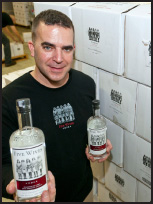
Tim Smith toasts the five women in his life

Tim had a vision for Five Wives Vodka. After he poured his heart into perfecting the product, he happily dumped thousands of dollars into the production of proper labels.

His labels featured a flattering collage of “five wives” — his own stunning bride, two of her sisters and two of her friends — radiating peace, love and joy in their wedding gowns.

Then, his business partner, Steve Conlin, found a peculiar and provocative image on the Internet. It was a black-and-white photo of five conservatively dressed maidens carrying cats at crotch level.

“When Steve first showed it to me, I was a little worried,” Tim says. “I thought, ‘That’s going to cause some issues.’ ”

But Steve was persistent, perhaps even insistent. These guys are selling booze, after all, not hula hoops or Happy Meals. To sell enough booze to survive, especially in today’s rough-and-tumble market, you’ve got to stand out with a strong brand.

And so, Five Wives Vodka was born — complete with the iconic image of Vaudeville’s Barrison Sisters flaunting their crotch kitties in all of their in-your-face glory.

Drama at the Distillery

It didn’t take long before Tim was contacted by the Utah Department of Alcoholic Beverage Control. The DABC representative pointed out that he personally didn’t have a problem with the Five Wives label, but that he had received a complaint from a woman who found it offensive.

This was a moment of truth, so Tim played it straight.

“That’s a federally approved label,” he replied. “I can’t change it.”

And that was the end of that.

Until Tim tried to ship his irreverent vodka bottles into the heart of Spud Country.

The Spud State Has Spoken
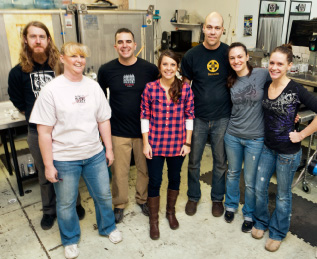
The Five Wives crew
The Five Wives crew

Tim had a hell of a time getting the state of Idaho to approve his vodka for sale within its potato-protected borders.

On May 24, 2012, the State Liquor Division sent Ogden’s Own Distillery a rejection letter stating that Idaho had no intention of carrying the Five Wives brand. The letter indicated that the Five Wives label was offensive to a “prominent segment” of Idaho’s population.

Tim and Steve naturally assumed that the “prominent segment” of the population that Idaho was trying to protect referred to Mormons. A state spokesman later disputed that the brouhaha had anything to do with religion, saying instead that women, churchgoing or not, were likely to find the labels offensive.

Either way, Tim was not overly concerned by the sternly worded rejection from the Spudmaster General. He told his business partners that if he could just sit down with Idaho’s state regulators, he could talk them into approving his product.

But Steve is one of those fiery First Amendment types. He felt that an injustice had been done and that the company should protect its rights. So, the company informed all of its major stakeholders and crafted a plan of attack.

Free at Last
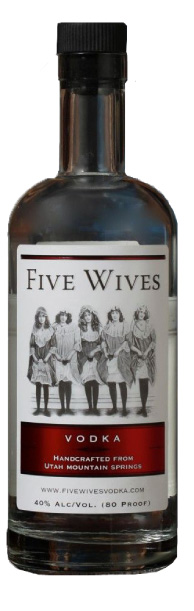
The controversial Five Wives label

Steve wrote an impassioned press release and launched the “Free the Five Wives” campaign, which included T-shirts shouting that slogan. His message piqued the interest of prominent civil rights attorney Jonathan Turley.

The powerhouse attorney scared the Spud State straight. Idaho instantly had a change of heart and decided that Five Wives Vodka wasn’t evil incarnate, after all.

But not before the story spread like wildfire through the media with mentions in such high-profile news outlets as “The Los Angeles Times,” “USA Today” and NPR.

Sales shot up fast for both Five Wives Vodka and the distillery’s other herbal spirit, Underground. Revenue more than doubled in 2012 from the previous year, and Tim expects sales to double again in 2013.

Which just goes to show that sometimes it’s good to have five wives.



Join our newsletter.
Stay informed.


  • Highway 6 and the Midland Trail: Utah’s Transcontinental Highway History

    From Price Canyon to Delta’s desert stretch, Utah played a central role in building the Midland Trail, one of America’s earliest transcontinental highways and the foundation of today’s Highway 6.


  • Utah Acquires US Magnesium Assets in $30M Deal to Protect the Great Salt Lake

    Utah leaders announced the state has successfully won the bid to acquire key assets of the defunct US Magnesium facility on the Great Salt Lake, including its associated water rights and property.


  • Whiskey, Bullets & a Buried Town: Archaeologists Reveal Alta’s Wild Past

    Before Alta was known for powder days and lift lines, it was a silver mining town clinging to the side of a narrow canyon. In the late 1800s, men lived at 8,000 feet, went underground each day, and endured winters that regularly buried buildings in snow. This past summer, that mining town resurfaced — literally — during construction at the Alta Ski Area.

    To understand what Alta really looked like, you don’t begin with legend. You begin with its trash — and this time, that happened almost by accident.

    Alta Ski Area was installing underground water reservoirs to support snowmaking. Because the project sits on Uinta-Wasatch-Cache National Forest land, an archaeologist was required to monitor the excavation. No one expected the trench to produce much.

    But, It did.

    Artifacts began surfacing almost immediately. Enough that the Forest Service contacted the Utah State Historic Preservation Office for help. Lexi Little, who coordinates the Utah Cultural Site Stewardship Program, helped mobilize nearly 30 volunteers to assist with what quickly became a focused two-week excavation.

    Winter deadlines were approaching. The pipes for the reservoirs had to go in the ground. There wasn’t time for a slow, extended dig.

    “It was two weeks of digging in the dirt and helping figure out exactly what we were looking at,” Little said.

    Most of the people screening soil weren’t professional archaeologists. They were trained stewards from around Utah — part of a statewide volunteer network that now approaches 500 people. They poured dirt through shaker screens, scanning for fragments that could piece together a town long buried.

    “Archaeology is human trash,” Little explained. “Archaeologists are very into trash.”

    Alta had left plenty behind.

    https://youtu.be/hzIHzx3OGoo?si=dKcl2CEz-t6FZzYw

    Victorian-style ceramics appeared first — the kind typically used in hotels. Medicine bottles followed. Ink bottles. Hand-blown glass. A porcelain doll’s foot surfaced from the soil, a small detail that shifted the mental image of the town. Families were here. Children were here. This wasn’t only a camp of miners.

    The bottles helped establish time. Manufacturing details — whether glass was hand-blown or mold-made, whether a maker’s mark appeared on the base — allowed archaeologists to date many of the artifacts to the 1870s through the 1890s, when Alta was booming as a silver mining town.

    “That gives you that range of dates for when Alta was really booming,” Little said.

    One reusable soda bottle clearly stamped “Salt Lake City” connected the canyon to the valley economy below.

    Then something unusual rolled out of a dirt pile.

    A corked bottle. Intact. Liquid still inside.

    To access this post, you must purchase Utah Stories (Digital + Print) or 3 month free trial (Digital).


  • The Only Full Bottle of Alcohol Ever Found in Utah Was Unearthed in Alta

    When a backhoe rolled a corked bottle out of the dirt at Alta this summer, no one immediately grasped what they were holding. It wasn’t empty. It wasn’t shattered. It was full. “The bottle that was discovered up at Alta is the only bottle of alcohol ever discovered in an archaeological excavation in the state…