
Development Projects

Signs of Life In the Sugar Hole?

Can the Sugar Hole development combine the historic with the new and innovative?

|

Sugar House Furniture in Salt Lake City

New Development in Sugar HouseSugar House is one of Salt Lake City’s oldest and most historic suburban shopping districts. Now that the infamous “Sugar Hole” might actually be developed, the question remains can the old and historic harmonize with the new and innovative?

The answer, from some of the oldest businesses in Sugar House, is that like a healthy forest, both the old and the new are critical for survival.

Gary Davis has been the proprietor of Fankhauser Jewelry since 1972 after he bought it from the Fankhauser family who opened at the same location 30 years earlier. Gary remembers when the neighbors were the Keith O’Brien clothing store (where Barnes and Noble is), Hygeia Ice Co., Red Wing shoes and Stevens-Brown sports store.

He remembers Sugar House as a locals place to shop where most of the people knew each other and the same customers would return to buy from him or to have their watches repaired by a real Swiss-trained watch repairman with a monocle and tiny tools.

For him, the big box stores and the soon-to-be-built Sugar House streetcar don’t enhance the neighborhood. He still does a good business among the people with whom he has been dealing for 39 years and who still appreciate local craftsmanship. Gary is about to retire, sell his shop, and he is certainly nostalgic for the character that Sugar House once had. Hygia Ice was part meat locker, part ice skating rink, and part swimming pool in the summer time. He remembers how hunters would dodge ice skaters as they crossed the rink on their way to store game in the lockers. The neighborhood has become less eclectic since then.
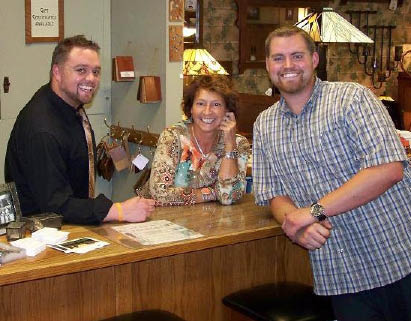
Sugar House Furniture in Salt Lake City
Sugar House Furniture has been in Sugar House for 25 Years.

Sugar House Furniture has been in business just down the street on Highland Drive for 25 years. Owner Jill Haskell raised her two sons while running the business and has always lived in the neighborhood. She was concerned when Whole Foods broke ground across the street and, for a while, the construction reduced business, but now, having more destination stores like Whole Foods and Barnes and Noble seems to have perked the area up.

Her concerns now mainly focus on business traffic being interrupted for two to three years while new housing and retail space are built along Highland Drive to fill the empty space on the corner of 21st South. She seems hopeful that the new residents in the area (much of the construction is housing) and several new businesses will enhance her customer base.

Fankhauser Jewelry in Sugar House
Fankhauser Jewelry has been in Sugar House for 70 years.

Fankhauser Jewelry and Sugar House Furniture, some of the “old-growth” do have a strong customer base already, but the “new saplings” should make for an interesting mix and a larger “neighborhood”. A forest needs new growth.

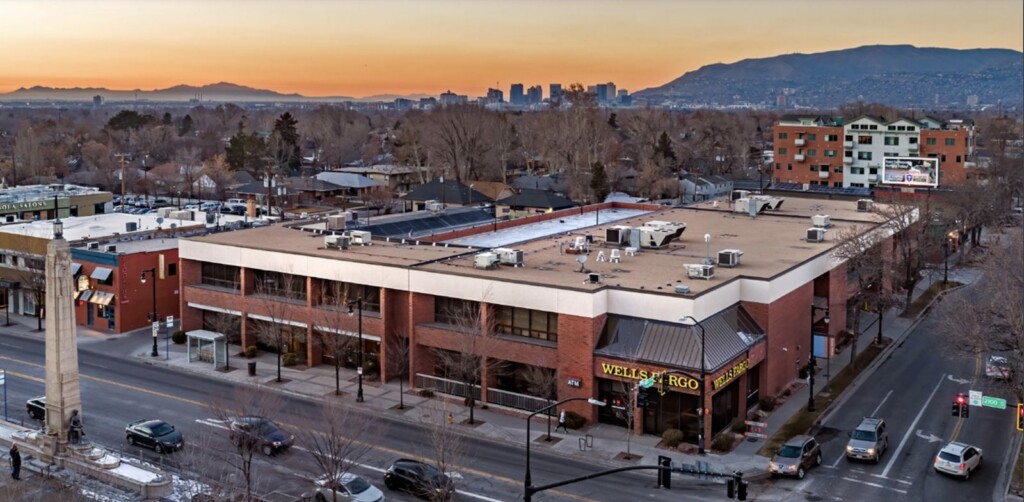
Utah Stories spoke with Craig Mecham about when he plans to break ground on the project. He says that all the plans have been sent to his attorney to hammer out the details with the RDA and Wells Fargo. While he won’t go so far as to say everything is 100% ready to move forward he says, “I’m very confident we will be breaking ground by June.” He is also excited to see the street car plans moving forward, which would possibly offer a station just east of his property.

Join our newsletter.
Stay informed.


  • Ogden Utah: Boomtown, Bargain, or Utah’s Next Unaffordable City?

    With its reinvigorated downtown and close proximity to mountains and river pathways, this northern Utah city is enjoying a renaissance. Ogden’s stock of affordable housing — compared to other metros along the Wasatch Front — currently draws people in for a closer look. 


  • The End of an Era? FanX and the Salt Palace Closure

    For more than a decade, FanX has called the Salt Palace home. With the convention center set to close for a massive renovation, founder Dan Farr is preparing for a new chapter while planning one final celebration in its longtime venue.


  • The Stratos Project and Corporate Power: Who Controls Utah’s Future?

    If we were all just consumers, Governor Cox, Mike Lee, Speaker Schultz, and Kevin O’Leary would have it easy. If we were just more concerned about money, jobs, and tech, and less concerned about raising our kids in communities (not in front of screens), culture, the environment, and water, those smart dudes would get exactly what they want — Stratos: a city of the future, buzzing with processors and transistors, making all of our AI dreams come true! 

    The world we could live in would be a dazzling, Mr. Wonderful kind of place. We would beat those pesky Chinese in the AI war; our AI robots could do all of our farming and ostensibly harvest the water we need for the Great Salt Lake out of thin air. But apparently, we just don’t get it. We haven’t yet reached the point predicted by Aldous Huxley’s vision in Brave New World, where we are completely distracted, dopamine-driven consumers who only need sex, drugs, and stuff to remain happy.

    Maybe Stratos will be an amazing marvel, and somehow, as Governor Cox claims, “. . . add more water to the Great Salt Lake.” But we aren’t sold. While this Stratos project has received considerable attention, it’s worth taking a step back to attempt to understand how corporate power appears to have usurped civic power.

    Civics is the practice of shaping our society through our collective voices and community involvement. Ask the residents in Tremonton, Utah how well that is working out for them. Can we still shape our world through our elected leaders? Does it matter who we vote for at the ballot box if organizations like UDOT, UTA, and MIDA can supersede our local government authority and citizen backlash? 

    The corporatization of our communities and the interests that impact our political leaders’ decision making processes are seen as far more of a concern than the average Utah resident’s concerns. Special interests and corporate power are shaping Utah’s future more than ever. 

    It’s worth asking: ‘How can we regain control over shaping Utah’s future in light of the growing power and billions that the technocrats now wield in shaping our world today?’ Amazon’s market cap exceeds the GDP of Canada. The “Magnificent Seven” tech stocks now have a greater market cap than the entire GDP of Europe ($23.6 trillion. EU countries have $19.3 trillion GDP). Will tech companies become their own nation-states and dominate their own chunks of various states? Will we become their subjects?

    There are two sides to this coin: We love Utah not just because we have the most outdoor wilderness playgrounds, but also because of Utah’s prosperity and job market. This is because Utah has become a tech hub. Our tech leadership has minted several billionaires and billion-dollar businesses. Utah offers a market and an educated workforce that more businesses and giant corporations want to be a part of. This is a benefit for even non-tech Utahns.

    The problem with this success is that as we dole out more money to attract more tech businesses, data centers, fulfillment centers, and big corporate retailers, it becomes more difficult to carve out our “sense of community.” As corporate sovereignty replaces local business sovereignty, we see that our voices and our votes matter less.

    Ask who our politicians work for, and nearly every Utahn believes they work far more for their corporate donors than they work for the average Utah citizen. So how do we best regain control over our communities?

    Continue reading and support independent Utah journalism with a purchase of Utah Stories (Digital + Print) or 3 month free trial (Digital).


  • The Utah Farm That Refuses to Give Up as Development Closes In

    Running a farm is hard enough, but rapid city growth makes it even tougher. More than a decade ago, the late Verl Cook faced a series of staggering hurdles that threatened to wipe out his family’s livelihood.

    First, the city decided to treat the Cook’s greenhouse — the most profitable part of the farm — like a big-box retail store. They demanded the family build a paved parking lot, a project that would cost $200,000.